


Achieving optimal thermal performance in the harsh, high-ambient temperature climate of the UAE requires more than standard cooling equipment; it demands a precise engineering approach. HVAC Integration for UAE Cold Storage Facilities is no longer just about maintaining set-point temperatures; it is a critical intersection of thermal load management, humidity control, and energy efficiency. As cold chain logistics become increasingly complex, the seamless synergy between HVAC systems and refrigeration units is the defining factor in preventing thermal degradation of high-value assets. This article explores how advanced engineering, integrated Building Management Systems (BMS), and climate-specific optimization strategies can transform operational reliability while drastically reducing energy consumption and operational expenditure (OPEX) in one of the world’s most demanding environments.
HVAC Engineering Infrastructure for UAE Cold Storage Facilities
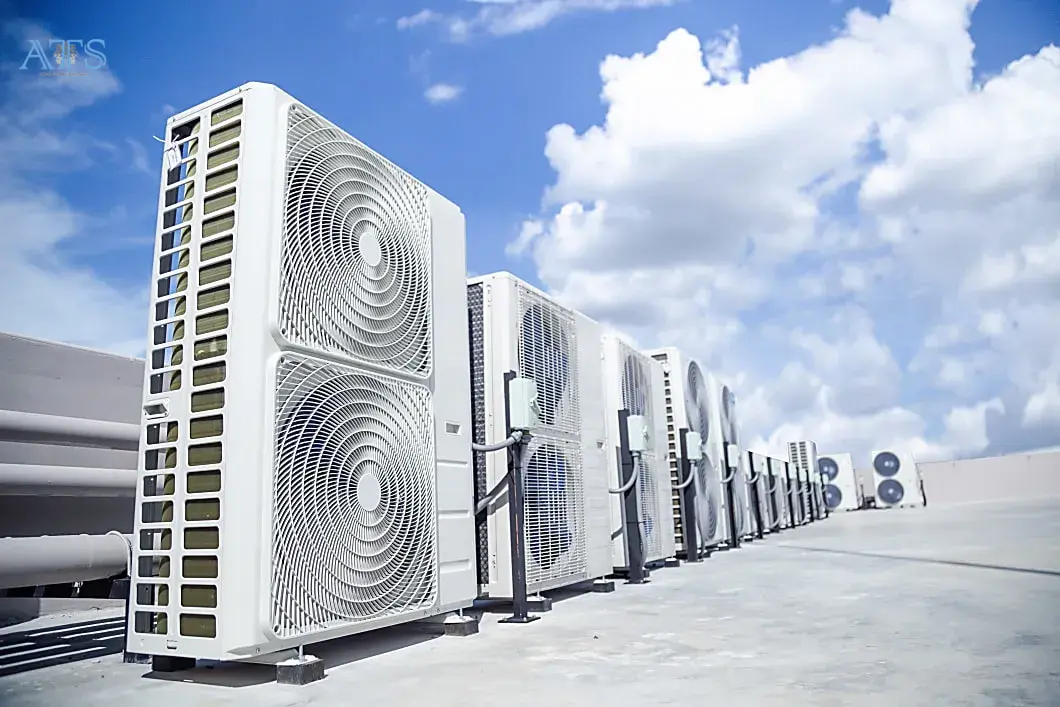
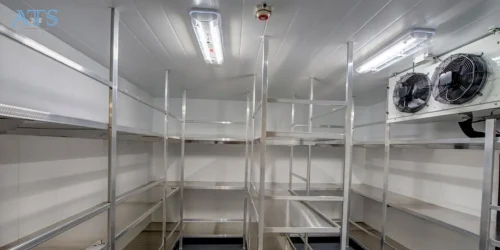
Designing robust HVAC infrastructure in the UAE requires a deep understanding of thermodynamics, specifically focusing on the high-ambient thermal load and the extreme delta T (temperature difference) between the exterior environment and the internal refrigerated space. Engineering teams must prioritize thermal integrity and redundant mechanical systems to ensure operational continuity, as the local climate imposes significant stress on cooling components. By deploying high-efficiency chilling units paired with advanced building insulation, facility managers can effectively mitigate thermal leakage, thereby ensuring the longevity of stored goods while aligning with UAE sustainability mandates.
1. Thermal Load Analysis and Climatic Adaptation
Precise thermal load calculation is the cornerstone of any industrial cooling infrastructure within the UAE. Engineers must account for not only the internal cooling requirements of the stored products but also the extreme heat gain from the building envelope due to high solar radiation and ambient temperatures. This process involves sophisticated simulation modeling to determine the peak load capacity, ensuring that the HVAC systems are neither undersized—which would lead to constant operation and premature failure—nor oversized, which leads to energy inefficiency and poor moisture control.
Furthermore, adapting infrastructure to the UAE’s climate necessitates the integration of specialized high-density insulation materials and thermal breaks within the structure. By conducting detailed heat-transfer analyses, engineers can design a facility that maintains stable internal conditions despite the external desert heat. This proactive design phase is critical for reducing the work cycle of refrigeration compressors, ultimately leading to significant reductions in energy consumption and extending the operational lifecycle of the core mechanical assets.
2. Redundancy and Reliability in Mechanical Systems
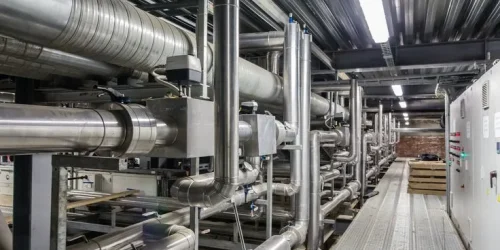
Operational reliability is paramount in cold chain logistics, where even minor fluctuations in temperature can result in the spoilage of sensitive assets. Implementing a fail-safe HVAC infrastructure requires the strategic deployment of redundant refrigeration loops and modular chiller configurations. In the event of a single compressor or pump failure, the system must be capable of automatically rerouting cooling capacity or maintaining critical set-points through auxiliary units, ensuring zero downtime for the facility’s core operations.
In the UAE’s industrial sector, where power grid stability and high temperatures present constant threats, incorporating redundant power supplies and synchronized control systems is non-negotiable. Modern engineering frameworks utilize dual-source energy integration to protect critical cooling systems from unexpected power surges or grid disruptions. This layered approach to reliability not only safeguards the inventory but also builds significant operational resilience, allowing facility managers to adhere to strict international safety standards while minimizing potential financial losses related to mechanical failure.
HVAC Automation and Intelligent Control Systems for UAE Cold Storage
In the demanding industrial landscape of the UAE, the transition from manual HVAC operation to sophisticated, AI-driven automation is a critical evolution. HVAC System Monitoring combined with intelligent control systems now forms the backbone of modern cold chain integrity. These solutions enable real-time thermal regulation that adapts instantaneously to the extreme volatility of regional ambient temperatures. By leveraging advanced Building Management Systems (BMS) and IoT-integrated sensors, facility operators can shift from reactive maintenance models to predictive operational frameworks. This digital transformation not only optimizes cooling output but also drastically mitigates energy wastage, positioning industrial facilities to meet the stringent energy efficiency standards mandated by local UAE authorities.
1. Integrating BMS with Predictive Algorithmic Control
The integration of centralized Building Management Systems (BMS) with predictive algorithms represents the pinnacle of industrial cooling control. Unlike traditional thermostats that operate on simple hysteresis cycles, intelligent controllers analyze historical data patterns, external weather forecasts, and internal thermal loads to anticipate cooling demands. This proactive methodology ensures that the HVAC infrastructure preemptively adjusts its cooling capacity before ambient spikes infiltrate the storage environment.
Furthermore, these systems utilize adaptive logic to balance the load across multiple chiller units. By continuously monitoring the energy consumption vs. cooling demand profile, the automation software dictates the most efficient operational sequence, often engaging multi-stage cooling only when absolutely necessary. This nuanced control eliminates the “short-cycling” phenomenon—a common culprit for hardware degradation—thereby significantly extending the operational life of industrial cooling assets.
Finally, the shift toward algorithmic control enables unparalleled granularity in micro-climate management. Different zones within a large-scale cold storage facility can be governed by independent control loops that communicate with the master BMS. This interconnectivity ensures that sensitive pharmaceutical or perishable assets are kept within precise temperature bands, regardless of the heat flux occurring at loading docks or perimeter walls, thus guaranteeing total inventory security.
2. IoT-Driven Analytics for Real-Time Thermal Monitoring
The deployment of IoT-enabled sensors provides a granular, 360-degree view of the facility’s thermal performance. Traditional gauges offer point-in-time data, whereas IoT networks facilitate high-frequency monitoring across every critical section of the cold storage infrastructure. These sensors continuously report variables such as air velocity, humidity levels, and coil suction pressures, feeding into a cloud-based dashboard that provides actionable insights for facility engineers.
Beyond simple monitoring, the power of IoT lies in its ability to execute automated trigger responses. If a specific sensor detects a localized heat infiltration—perhaps from a door seal failure—the control system can instantly ramp up local airflow or alert maintenance personnel to the exact geographic coordinates of the anomaly. This speed of response is critical in high-turnover environments where human monitoring is insufficient to capture rapid micro-fluctuations.
Ultimately, these data-driven insights form the foundation of a digital twin for the facility. By visualizing real-time performance against the intended design parameters, managers can identify hidden inefficiencies, such as uneven airflow distribution or thermal bridges in the structure. This level of transparency not only accelerates the troubleshooting process but also supports long-term capital investment decisions, as stakeholders can justify upgrades based on hard, granular performance data rather than anecdotal evidence.
Find Out More: HVAC monitoring challenges in 2026
Energy Efficiency and HVAC Sustainability in UAE Cold Storage Facilities
In the UAE’s industrial sector, where the ambient climate imposes extreme cooling demands, energy efficiency is no longer an optional luxury—it is a core business necessity. The operational expenditure (OPEX) associated with high-capacity refrigeration is significantly inflated by the region’s intense solar radiation and high humidity levels. Achieving sustainability in this environment requires a holistic approach, moving beyond mere equipment replacement to systemic optimization. By integrating high-performance thermal envelopes with energy-recovery technologies, facilities can dramatically reduce their carbon footprint while ensuring consistent thermal integrity for high-value inventory.
1. Advanced Energy Recovery Ventilation (ERV) Systems
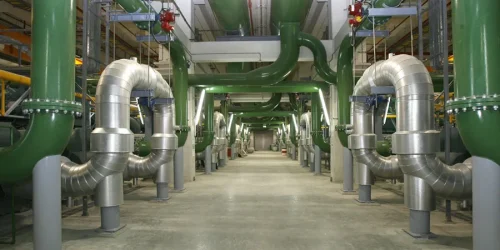
The integration of Energy Recovery Ventilation (ERV) systems is a critical strategy for managing the harsh latent and sensible heat loads inherent to the UAE climate. In conventional setups, ventilating a cold storage facility often results in massive energy loss as hot, humid air replaces the cooled internal atmosphere. ERV systems mitigate this by pre-cooling and dehumidifying the incoming ventilation air using the enthalpy of the exhaust air, significantly lowering the workload on primary refrigeration cycles.
Technically, these systems utilize desiccant wheels or heat exchangers that effectively manage moisture levels before the air reaches the cold storage chamber. This is particularly vital in the UAE, where humidity is a major driver of frost accumulation on cooling coils. By minimizing moisture infiltration, ERV systems prevent the frequent defrost cycles that traditionally plague industrial refrigeration, thereby maintaining a more stable internal temperature and reducing overall electrical demand.
From a long-term sustainability perspective, ERV implementation is a high-yield capital investment. The reduction in cumulative refrigeration load directly extends the lifespan of industrial compressors, which are prone to stress under UAE’s extreme summer conditions. By shifting the cooling burden from mechanical units to efficient ventilation management, facilities can achieve superior energy performance indices (EPI), positioning them at the forefront of the UAE’s green building and sustainable development initiatives.
2. Transitioning to Low-GWP Refrigerants and High-Efficiency Systems
The global shift toward environmental responsibility has rendered traditional synthetic refrigerants increasingly obsolete due to their high Global Warming Potential (GWP). For UAE-based cold storage facilities, transitioning to low-GWP alternatives—such as Ammonia (NH3) or CO2 (R744)—is essential for regulatory compliance and long-term sustainability. These natural refrigerants offer superior thermodynamic properties, often requiring less energy to achieve the same cooling capacity in high-ambient conditions.
Furthermore, these modern systems are designed to operate optimally within the high-pressure environments typical of Middle Eastern summers. High-efficiency variable-speed drive (VSD) compressors paired with advanced natural refrigerants allow for precise matching of cooling output to real-time load requirements. This prevents the energy-intensive “on-off” operation characteristic of older-generation chillers, ensuring that the power consumed is strictly proportional to the thermal demand of the storage space.
Finally, adopting high-efficiency cooling architectures enhances a facility’s “ESG” (Environmental, Social, and Governance) profile. As the UAE government tightens energy performance regulations, facilities that have already retrofitted to low-GWP, high-efficiency systems are shielded from potential carbon taxes and stringent operational penalties. This strategic transition not only reduces monthly utility bills but also builds institutional resilience, ensuring that the facility remains economically viable and environmentally responsible for decades to come.
HVAC Maintenance Standards for UAE Cold Storage Facilities
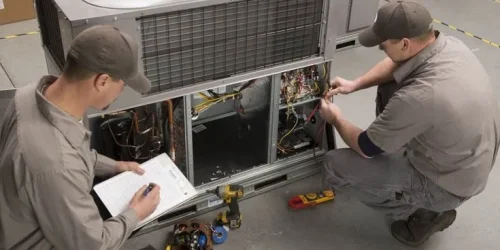
Maintaining industrial HVAC infrastructure in the UAE requires a departure from traditional “fix-it-when-it-breaks” mentalities. Given the high-ambient temperatures, saline air (in coastal zones), and the critical nature of cold chain assets, maintenance must be treated as a precise, data-driven discipline. Standardized protocols are not merely operational suggestions; they are the primary defense against catastrophic equipment failure and non-compliance with regional safety regulations. By enforcing rigorous, manufacturer-validated maintenance cycles, operators ensure that their cooling infrastructure remains within optimal performance envelopes, thereby safeguarding both product integrity and energy efficiency.
1. Preventive Maintenance (PM) Protocols for Corrosive Coastal Environments
The coastal geography of Dubai and Abu Dhabi poses a unique challenge: high salinity levels in the air, which accelerate the galvanic corrosion of aluminum fins and copper piping in condenser units. Standard maintenance in these regions must include aggressive coil cleaning schedules using non-acidic, specialized detergents. Neglecting these surfaces leads to rapid thermal resistance buildup, forcing compressors to work under excessive head pressure and drastically shortening their operational lifespan.
Furthermore, protective coating applications (such as phenolic or epoxy resins) have become the industry standard for HVAC assets in the UAE. Maintenance teams must perform quarterly inspections to check for micro-cracks in these coatings. If left unaddressed, salt-laden moisture penetrates these fissures, leading to hidden corrosion that is difficult to rectify without complete component replacement. Therefore, proactive coating renewal is essential to maintain the integrity of the heat exchanger surface.
Finally, the electrical cabinets and control panels of HVAC units are equally susceptible to salt-induced failure. Maintenance protocols must mandate the cleaning of terminal strips and the application of anti-corrosion dielectric sprays on contacts. By treating electrical and mechanical components with the same level of care, facility managers prevent the intermittent “ghost faults” that typically plague systems in humid, coastal environments, ensuring a stable and reliable operational environment.
2. Adhering to UAE Civil Defense and Energy Efficiency Regulations
Compliance with the UAE Civil Defense (UAECD) fire safety standards is non-negotiable for industrial cold storage facilities. HVAC maintenance protocols must explicitly cover the testing of fire dampers, smoke extraction systems, and emergency shutdown interlocks. Failure to maintain these components can lead to immediate operational shutdown by authorities, underscoring the critical need for documented, compliant maintenance logs that satisfy stringent safety inspections.
Energy performance compliance, governed by local regulations (such as those from the Dubai Supreme Council of Energy or similar entities), requires regular efficiency auditing. Maintenance cycles must include calibration of temperature and humidity sensors against certified standards. An uncalibrated sensor can lead to a “drift” where the system over-cools, causing massive, invisible energy waste. Validating these instruments ensures that the facility operates within the energy efficiency indices permitted by UAE law.
Moreover, the documentation of these maintenance activities is as important as the physical work itself. In the event of an audit, facility managers must provide digital maintenance records that prove adherence to both manufacturer specifications and local safety codes. Implementing a Computerized Maintenance Management System (CMMS) is the best practice for ensuring that no compliance task—from filter replacements to refrigerant leak detection—is ever overlooked, thereby minimizing legal risks.
Afzali: Leading Expertise in Industrial Cold Storage HVAC Consulting
In the complex landscape of UAE’s industrial sector, precision engineering is the difference between operational excellence and catastrophic inventory loss. At Afzali, we provide specialized HVAC consulting that bridges the gap between high-ambient environmental challenges and sustainable cold storage performance. We don’t just design systems; we architect reliable thermal environments that comply with regional regulations while optimizing energy output for long-term scalability.
Our consulting philosophy is built on technical integrity and a deep understanding of Middle Eastern climate dynamics. By partnering with Afzali, facility owners and developers gain access to a decade of expertise in managing high-thermal loads and complex industrial cooling infrastructures. We translate intricate engineering data into actionable business value, ensuring that your cold chain facility operates at peak efficiency from day one.
Data-Driven Design for UAE Climate Extremes
The UAE’s extreme ambient temperatures require more than standard cooling configurations; they demand climate-responsive engineering. Afzali employs advanced thermal modeling and load calculation software to design HVAC infrastructures that account for extreme solar gain, high humidity, and the specific energy-grid constraints of the Emirates. This data-first approach ensures that your system is neither oversized, leading to energy waste, nor undersized, risking thermal instability.
Beyond initial design, we focus on system resilience. We analyze site-specific environmental data to specify equipment that performs optimally under peak summer conditions, ensuring that your cold storage remains within strict temperature tolerances without overworking the compressors. By integrating climate-specific design strategies, Afzali helps you mitigate operational risks and significantly reduce long-term maintenance costs associated with system stress.
Strategic Optimization and Industry 4.0 Integration
Technological obsolescence is a silent killer of industrial profitability. Afzali specializes in upgrading legacy cold storage facilities by integrating modern, IoT-enabled HVAC controls. We provide strategic roadmap consulting to transition your facility toward Industry 4.0 standards, focusing on smart energy management and automated predictive maintenance. This transformation reduces downtime, increases operational control, and aligns your facility with global sustainability trends.
Our integration process is focused on maximizing Return on Investment (ROI). We identify bottlenecks in your current HVAC architecture and introduce intelligent sensors, variable frequency drives (VFDs), and centralized management systems that provide real-time visibility into your facility’s performance. With Afzali’s guidance, you transform your HVAC system from a purely mechanical asset into a strategic tool that drives profitability and energy efficiency.
Regulatory Compliance and Safety Architecture
Navigating the regulatory landscape of the UAE—including Civil Defense fire safety codes and energy efficiency mandates—can be a complex challenge for facility owners. Afzali provides expert consulting to ensure that every aspect of your HVAC infrastructure adheres to national and local standards. We handle the technical compliance details, providing the necessary documentation and validation that prevent cotly project delays and operational interruptions.
Our commitment to safety goes beyond compliance; it’s about institutionalizing risk management. We review system designs to ensure fail-safe mechanisms are built into the cooling cycle, protecting both your high-value inventory and your workforce. By partnering with Afzali, you ensure that your facility is built on a foundation of reliability, legal compliance, and safety, giving you peace of mind in a highly regulated industrial market.

No Comments
Sorry, the comment form is closed at this time.