


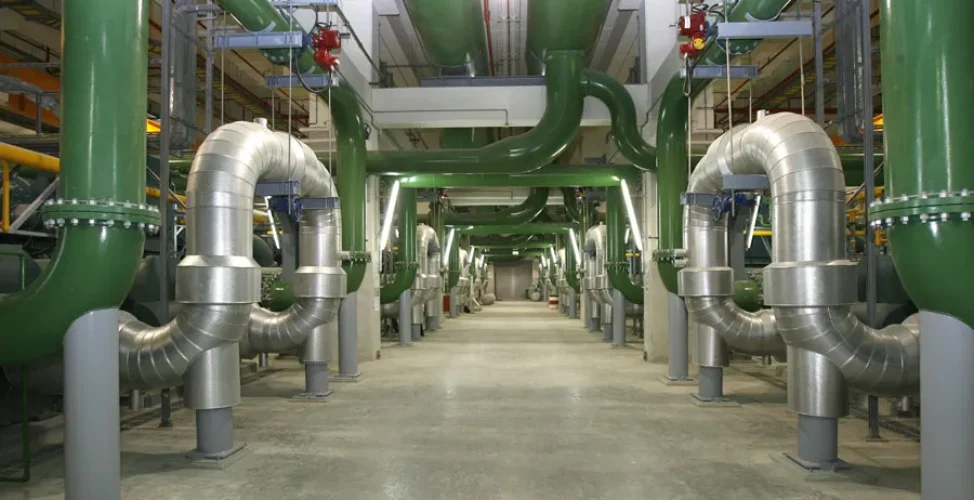
Large facilities across Bur Dubai, from commercial towers to industrial warehouses, face a common operational challenge: keeping indoor environments cool and stable without driving energy costs through the roof. This is exactly where District Cooling Solutions in Bur Dubai come into play. Rather than relying on individual chillers or split units per building, district cooling centralizes the entire cooling process, producing chilled water at a single plant and distributing it through insulated underground pipelines to multiple facilities at once. For facility managers, business owners, and engineers working in one of Dubai’s oldest and busiest commercial districts, this shift isn’t just a technical upgrade, it’s a decision that directly affects operating costs, equipment lifespan, and long-term sustainability targets. At Afzali, we work closely with facility owners in Bur Dubai to assess whether centralized cooling infrastructure fits their building’s age, layout, and load requirements, and to design solutions that deliver measurable efficiency gains from day one.
What Is District Cooling and How Does It Work in Bur Dubai?
District cooling is a centralized air-conditioning method that replaces individual chillers or split units with a single, large-scale cooling plant serving multiple buildings simultaneously. In Bur Dubai, a district that combines aging commercial structures with newer mixed-use developments, this approach offers a practical path toward consistent indoor comfort, reduced mechanical footprint, and lower long-term energy demand. Understanding how the system operates is the first step for any facility owner evaluating whether centralized cooling fits their property.
The Central Plant: Where Chilled Water Is Produced
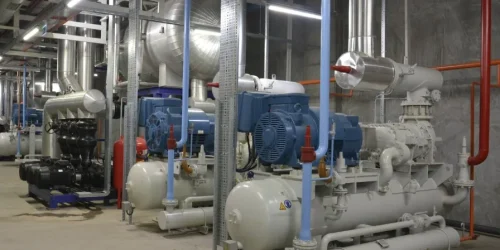
The process begins at a central plant, where large-capacity chillers cool water to a set temperature. This plant is engineered to handle the combined thermal load of every connected facility, rather than each building operating its own separate cooling equipment. In Bur Dubai’s dense commercial areas, this consolidation significantly reduces the mechanical space required on individual properties. The plant also allows for centralized monitoring and control of cooling output across the entire network.
Underground Pipeline Networks: Distributing Chilled Water
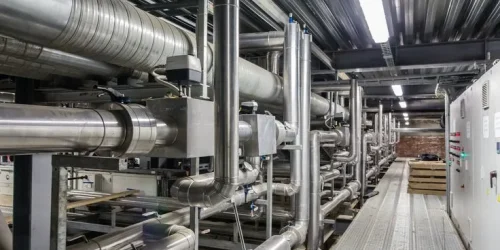
Once cooled, water is distributed through a network of insulated underground pipelines connecting the central plant to each participating facility. This infrastructure is designed to minimize thermal loss over distance, ensuring consistent cooling performance regardless of a building’s location within the network. For Bur Dubai’s mix of established and newly developed properties, pipeline routing is planned around existing underground utilities and structural constraints. The insulation standard used directly affects long-term system efficiency.
Heat Exchange at the Building Level
At each connected facility, chilled water passes through a heat exchanger that transfers cooling capacity to the building’s internal air-conditioning system without the water itself entering the building’s circuits. This separation keeps maintenance responsibilities clearly divided between the district cooling provider and the facility’s internal systems. The exchanger is typically the only equipment a building needs to install, replacing the space and maintenance demands of a full chiller unit. Return water is then sent back to the central plant for re-cooling, completing the cycle.
Why This Model Suits Bur Dubai’s Building Landscape?
Bur Dubai’s combination of high-density commercial buildings, older structures, and limited available land makes centralized systems particularly practical, since individual chiller installations often compete for the same restricted mechanical space. District cooling shifts that burden away frocm individual properties and onto a shared, purpose-built network. This is especially relevant for facility owners managing multiple properties within the same district, who benefit from unified service and consistent performance standards. The model also supports phased connection, allowing older buildings to join the network without a full mechanical overhaul.
Find Out More: District Cooling Solutions for Large Facilities in Dubai
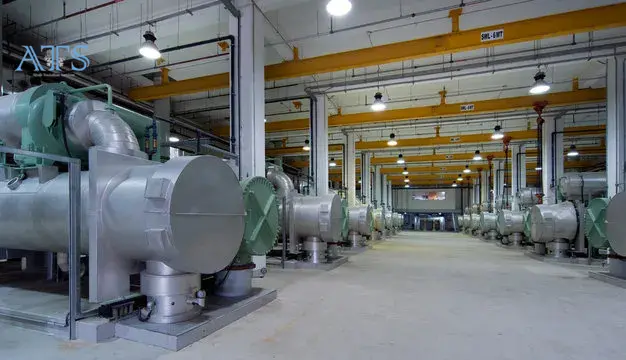
Key Benefits of Centralized Cooling Solutions for Commercial and Industrial Buildings
Centralized cooling solutions offer measurable advantages for commercial and industrial facilities beyond simple temperature control. By consolidating cooling capacity at a single plant, facility owners in Bur Dubai gain access to efficiency, reliability, and cost structures that individual chiller systems cannot match. The following sections outline the core benefits that make district cooling a strategic infrastructure decision rather than a routine equipment upgrade.
Reduced Energy Consumption and Lower Operating Costs
Centralized plants achieve higher thermal efficiency than multiple standalone chillers, since equipment operates at optimized capacity rather than individually sized loads. This translates directly into lower electricity consumption across a facility’s cooling operations. For commercial and industrial buildings running continuous cooling cycles, the cumulative savings over a full operating year can be substantial. Reduced consumption also lowers exposure to fluctuating energy tariffs.
Reduced Maintenance Burden on Facility Owners
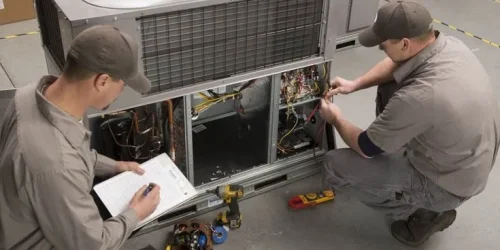
With district cooling, the responsibility for maintaining major mechanical equipment shifts to the cooling provider, since the central plant, not individual buildings, houses the primary chillers. Facility owners are left managing only the heat exchanger and internal distribution system, which requires significantly less specialized upkeep. This reduces both maintenance costs and the risk of unplanned downtime caused by chiller failure. Long-term service contracts with the district cooling provider further stabilize maintenance planning.
Consistent Temperature Control Across Large or Multiple Facilities
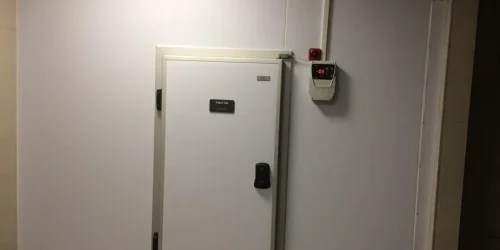
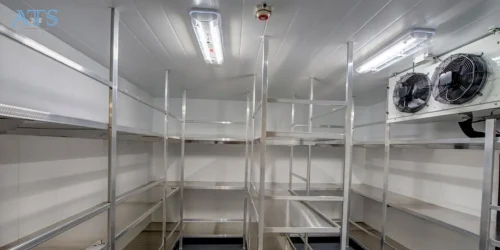
Centralized systems are engineered to deliver uniform cooling performance regardless of a building’s size or its position within the network. This consistency is particularly valuable for facilities such as cold storage warehouses, where even minor temperature fluctuations can compromise product quality. In fact, facilities pursuing precise, reliable temperature control often pair district cooling infrastructure with specialized cold room design to meet strict storage requirements. Commercial property owners managing multiple buildings within Bur Dubai also benefit from standardized cooling performance across their entire portfolio, with centralized monitoring allowing rapid identification and correction of any performance deviation.
District Cooling Retrofit Solutions for Older Buildings in Bur Dubai
Retrofitting an older building for centralized cooling is entirely feasible, and in many cases more cost-effective than replacing an aging chiller system with a new standalone unit. The process typically involves installing a heat exchanger and connecting the property to the nearest distribution network, rather than overhauling the building’s entire mechanical infrastructure. For structures in Bur Dubai, many of which were built before this cooling model became widely available, retrofitting allows owners to modernize performance without demolishing existing plant rooms or disrupting daily operations for extended periods.
The main technical considerations for a retrofit include the building’s existing pipework condition, available space for the exchanger unit, and proximity to the nearest connection point in the network. A qualified contractor typically conducts a site assessment to determine compatibility before any installation work begins. Older properties with outdated ductwork or undersized mechanical rooms may require minor structural adjustments, but these are generally far less invasive than a full chiller replacement. Once connected, the building benefits from the same efficiency and reliability standards as newly constructed facilities on the same network.
- Site compatibility assessment: evaluating pipework, mechanical room space, and structural access before any retrofit begins
- Connection distance to the nearest network node: a key factor affecting both cost and installation timeline
- Phased implementation options: allowing large properties to transition floor-by-floor or zone-by-zone without full shutdown
- Heat exchanger sizing: matched to the building’s actual thermal load rather than its original chiller capacity
- Regulatory and permitting requirements: coordination with local authorities for connection approval in established districts
- Expected payback period: typically shorter than replacing an aging standalone chiller due to lower long-term operating expenses
- Minimal disruption to tenants: retrofit work is generally confined to mechanical rooms, avoiding major interior renovation
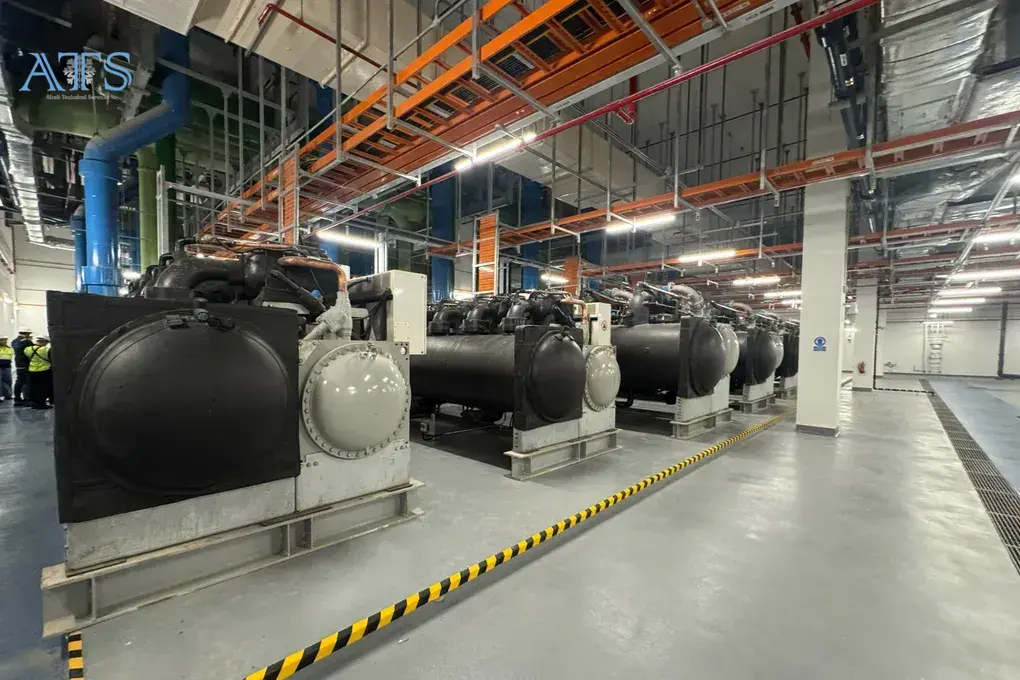
Choosing the Right District Cooling Contractor in Bur Dubai
Selecting the right contractor for a district cooling project isn’t a decision to take lightly, the quality of engineering, installation, and long-term support directly shapes how much value your system delivers over its entire operating life. A poorly executed system means higher energy bills, more frequent breakdowns, and costly rework down the line. This is exactly where Afzali stands apart. As a specialist in Industrial Refrigeration & District Cooling Services, our engineering team has hands-on experience designing and executing cooling infrastructure for commercial and industrial facilities across the UAE, with a deep understanding of the specific challenges that come with working in established districts like Bur Dubai.
What sets Afzali apart is a true end-to-end approach: from initial site assessment and system design, through installation and commissioning, all the way to long-term maintenance, all delivered by one accountable team, so you’re never left juggling multiple vendors or chasing down responsibility when something goes wrong. Our pricing is transparent from the start, and every system we design is optimized for long-term efficiency, not just the lowest upfront cost.
No Comments
Sorry, the comment form is closed at this time.