


let’s dive right in. If you manage or own a large facility in Dubai, whether it’s a sprawling shopping mall, a high-rise office tower, a hospital, or a mixed-use development — you already know the immense challenge of keeping it comfortably cool in this desert climate. The question we hear most often from clients is: How can we achieve reliable, cost-effective, and sustainable cooling for large-scale operations without the headaches of traditional systems?
District Cooling Solutions for Large Facilities in Dubai are becoming the go-to choice for developers and facility managers facing the intense heat and rising energy demands of the city. In this article, we explore the real benefits, how the system works, and why District Cooling Solutions for Large Facilities in Dubai make smart business sense. If you’re planning or managing a large project, our experienced team at Afzali is ready to help you find the right solution tailored to your needs.
Challenges of District Cooling for Large Facilities in Dubai
- If our building occupancy is low, do we still pay full capacity charges to Emicool/Empower?
Yes, providers charge a fixed fee based on contracted tonnage regardless of occupancy. However, Afzali mitigates this risk by designing phased capacity agreements and implementing smart demand-side management to match your actual operational phases.
- What happens to our facility’s cooling if the main district pipeline leaks or breaks down?
While main network shutdowns are rare, your entire facility could lose cooling. To prevent a catastrophic shutdown, Afzali engineers multi-feed energy transfer stations (ETS) and integrates localized backup chillers for your critical areas.
- Is the high initial connection and ETS infrastructure fee actually worth the long-term ROI?
Yes, because it eliminates the massive costs of on-site chiller plants, structural roof reinforcement, and heavy electrical infrastructure, delivering a realistic payback period of 3 to 6 years.
- Can we retrofit an existing large facility in Dubai to switch from traditional chillers to district cooling?
Yes, it is highly feasible. Afzali specializes in retrofitting existing HVAC systems by safely removing old chillers, modifying the hydronic piping, and installing a modern Energy Transfer Station (ETS) with minimal disruption to operations
Key Financial Benefits: CAPEX, OPEX, and Long-Term ROI
When developing or managing a large facility in Dubai, every square meter and every kilowatt counts. Switching to district cooling isn’t just an environmental choice; it is a major financial strategy. By shifting from traditional on-site chillers to a centralized network, developers can radically transform both their initial balance sheets and their 25-year operational forecast. Here is exactly how this transition optimizes your capital, slashes monthly expenses, and delivers a highly predictable return on investment.
Lower Maintenance Costs and Smart Consumption Billing
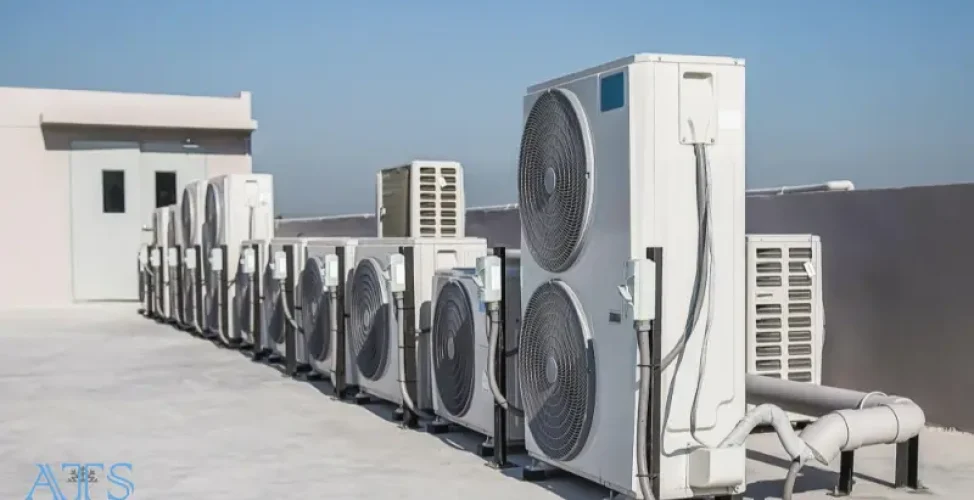
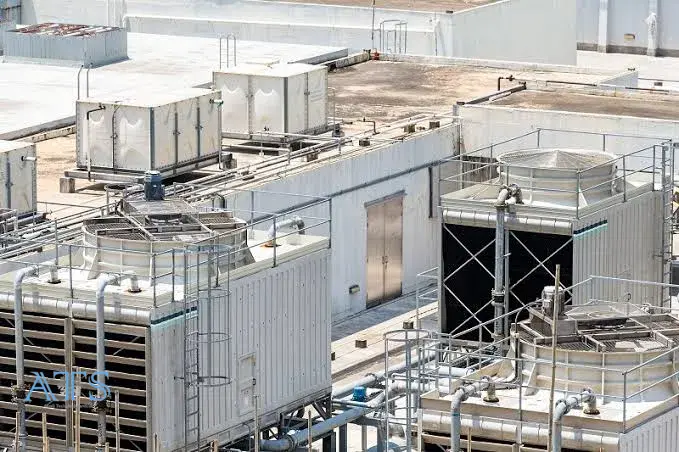
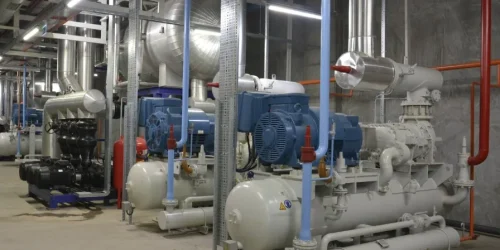
Traditional on-site chiller plants are notorious for their demanding and expensive upkeep. In Dubai’s harsh, sandy, and humid climate, maintenance teams are caught in a never-ending cycle of descaling condensers, repairing heavy industrial compressors, treating chemical water, and fixing rooftop units degraded by extreme heat. Switching to a district cooling connection completely shifts this operational burden. Since the heavy refrigeration machinery is located off-site at the central provider’s plant, your facility’s physical maintenance footprint drops to a minimum.
The Reality of Maintenance and Billing Under District Cooling
With district cooling, your on-site responsibilities are streamlined, and your expenses become completely transparent. Here is exactly how it alters your daily operations and cash flow:
- Elimination of Major Overhauls: You no longer need to worry about unexpected compressor failures or budgeting for expensive refrigerant recharges. The complex refrigeration cycle is entirely managed by the provider.
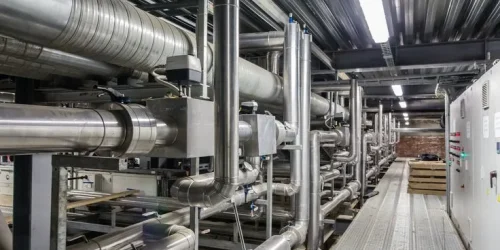
- Simplified On-Site HVAC Infrastructure: Your mechanical team only needs to maintain the secondary side of the system—mainly the Energy Transfer Station (ETS) heat exchangers, localized water pumps, and standard Air Handling Units (AHUs).
- Precision Smart Billing: Instead of guessing your HVAC energy allocation or dealing with complex split-billing disputes among tenants, smart BTU (British Thermal Unit) meters log actual thermal energy consumption in real time.
Direct Financial Takeaway: By removing the moving parts of a traditional chiller plant, your facility slashes ongoing operations and maintenance (O&M) costs by 35% to 45%. Combined with automated, transparent smart billing, you achieve highly predictable monthly utility forecasting with zero hidden surprises.
Reclaiming Premium Real Estate for Higher Revenue
By freeing up 60% to 75% of the space traditionally wasted on HVAC equipment, you instantly unlock new, high-margin revenue streams:
- Turn Your Roof into a Profit Center: Instead of noisy metal machines, your rooftop can now host a luxury infinity pool, a high-end rooftop lounge, or a premium penthouse. These amenities significantly increase the property’s rental yield and market value.
- More Rentable Square Footage: Massive basement plant rooms and thick vertical pipe shafts are shrunk down. You can instantly convert this newly found space into extra retail shops, premium office space, or secure tenant storage.
- Lighter Building, Lower Construction Costs: Removing tons of heavy machinery from the roof means you don’t need expensive structural reinforcement. Your architects can cut down on concrete and steel costs, or even add an extra occupiable floor within the same height limit.
Direct Takeaway: Every single square meter you win back from mechanical use is space you can lease out. Partnering with Afzali to optimize your ETS design means you maximize your building’s net lettable area, directly boosting your monthly cash flow and speeding up your long-term ROI.
Why Large Facilities in Dubai Are Switching to District Cooling?
Dubai’s extreme summer heat makes cooling one of the biggest operational challenges for large facilities like hotels, shopping malls, hospitals, and commercial towers. More and more developers and facility managers are moving away from traditional individual chiller systems and adopting district cooling — a centralized solution that delivers chilled water from large plants to multiple buildings. The switch isn’t just a trend; it’s driven by real business needs: lower long-term costs, better energy efficiency, reduced maintenance headaches, and stronger sustainability credentials in a city pushing hard toward net-zero goals. For large facilities that consume massive amounts of electricity for cooling, district cooling often proves to be the smarter, more future-proof choice.
Improved Reliability and Uninterrupted Cooling
In a city where temperatures regularly exceed 40°C, reliable cooling isn’t a luxury — it’s essential. District cooling plants are designed with high levels of redundancy, including backup chillers and multiple power sources, so a single equipment failure rarely affects customer buildings. This is a major upgrade from individual systems that can fail completely when one chiller breaks down.
Large facilities such as hotels and hospitals especially benefit from this stability. Guests and patients experience consistent temperatures around the clock, while critical medical equipment stays protected. Many providers also use thermal energy storage tanks that store cooling capacity during off-peak hours, ensuring steady performance even during peak summer demand. Overall, switching to district cooling gives facility managers greater confidence. With professional monitoring 24/7 at the central plant and fast response teams, unexpected breakdowns become far less common. This reliability translates into better guest satisfaction, higher occupancy rates, and protection of your reputation in Dubai’s competitive market.
Find Out More: monitoring and management of HVAC systems
Scalability for Phased and Mega Developments
District cooling is particularly well-suited for Dubai’s large-scale and phased developments. As projects grow in stages over several years, developers can connect new buildings to the existing network without installing separate cooling plants for each phase. This flexibility eliminates the need to oversize equipment early on and avoids redundant investments.
For mega developments like mixed-use communities, hospitals, or expansive malls, this scalability is a game-changer. The central plant can be expanded modularly as demand increases, ensuring efficient capacity planning. Developers no longer have to worry about coordinating multiple independent systems or dealing with mismatched capacities across different construction phases.
This approach also supports Dubai’s rapid urban growth. Whether you’re building a new tower today or planning expansions five years later, district cooling adapts smoothly. It reduces financial risk and construction complexity, making it easier for project owners to manage timelines and budgets effectively.
Space Optimization and Reduced Maintenance Burden
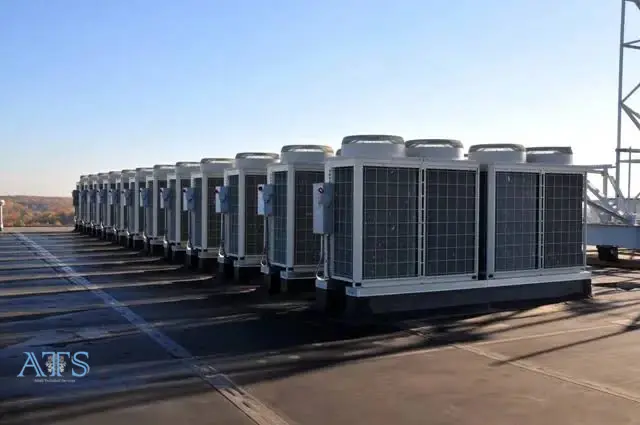
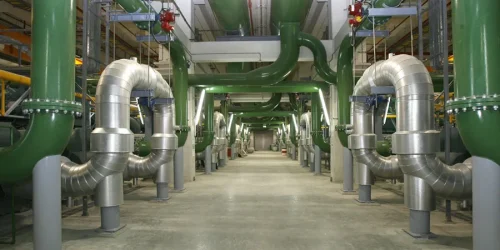
One of the biggest advantages large facilities in Dubai gain from district cooling is the massive amount of space they save. Traditional chiller plants, cooling towers, and associated equipment can take up valuable rooftop or basement areas that could otherwise be used for revenue-generating purposes like additional rooms, restaurants, or retail space. With district cooling, these bulky systems are moved to a central plant, freeing up prime real estate inside your building.
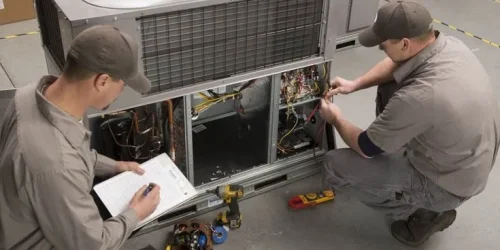
Beyond space, the maintenance burden drops dramatically. Instead of managing a complex in-house cooling system with regular servicing, refrigerant handling, and emergency repairs, facility teams only need to maintain simple heat exchangers and pumps on their side. This means fewer technical staff, lower spare parts inventory, and significantly reduced downtime risks, allowing managers to focus on their core business rather than acting as part-time HVAC engineers.
For large facilities operating in Dubai’s dusty and extremely hot environment, this shift brings real peace of mind. Equipment lasts longer in controlled central plants, and the responsibility for major maintenance falls on the experienced district cooling provider. The result is lower operational stress and more predictable budgeting year after year.
Best Practices for Integrating District Cooling in New Developments
If you have a new project in Dubai and want to use district cooling, you need to plan it properly from day one. Don’t leave it until the end of the project because it will cost more and cause more headaches later. The best projects take this seriously from the early design stages and coordinate with the provider so that pipe routing, central plant location, and load calculations are done correctly.
In practice, the earlier you talk to the specialist team, the more flexibility you will have. You can choose pipe routes intelligently, avoid expensive redesigns, and have the system designed exactly according to your project’s needs. You should also think about the facility manager who will work with this system for many years — proper training and well-placed connection points are very important.
This is where Afzali can be a great choice for your project.
Advantages of working with Afzali:
- Early consultation and planning from the concept design stage
- Strong experience in large and phased projects in Dubai
- Flexible and scalable system design for the future of your project
- Good technical support and training for the facility team
- Focus on optimizing costs and energy consumption
- Full coordination with Dubai regulations and sustainability requirements
Practical and customer-focused approach (not just sales)
If you move forward with Afzali, you will have a reliable partner from the beginning who will help you implement district cooling in the best possible way in your project and have the least problems in the long run.

No Comments
Sorry, the comment form is closed at this time.