


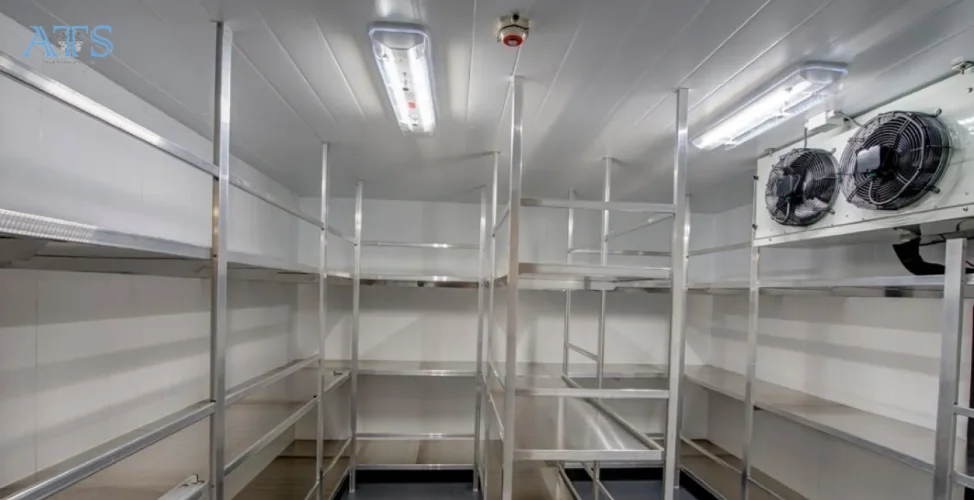
Buying cold room equipment is not a decision you make from a price list. A compressor that looks identical to another on paper can perform completely differently once installed, depending on your product type, ambient temperature, and how the room is designed around it. Many UAE businesses discover this the hard way, after installation, when energy bills climb and product spoilage becomes a recurring problem.
This is exactly where a proper Cold Room Equipment Consultation changes the outcome. Instead of relying on a supplier’s catalog or a generic online recommendation, an expert consultation evaluates your actual cooling load, storage conditions, and operational requirements before a single piece of equipment is purchased. At Afzali, we have guided businesses across Dubai, Abu Dhabi, and the wider UAE through this exact process, helping them avoid costly mismatches between equipment and real-world performance.
Why Cold Room Equipment Consultation Matters Before You Buy
Cold room equipment is often purchased the same way a business buys office furniture: get a quote, compare prices, pick the option that fits the budget. The problem is that a compressor or condensing unit is not a standalone product. It has to work in balance with your insulation thickness, your product’s respiration heat, your door traffic frequency, and the ambient temperature outside the room. A cold room equipment consultation exists precisely to catch these interdependencies before money changes hands, not after the room is already built and the equipment is already running below expectations.
At Afzali, most of the consultation requests we receive in Dubai and Abu Dhabi come from businesses that already bought equipment once, without proper guidance, and are now correcting the outcome. That pattern alone tells you something about the value of getting it right the first time.
The Real Cost of Choosing the Wrong Equipment
An undersized condensing unit runs constantly and still fails to hold temperature during peak ambient heat, which in the UAE can mean compressor strain for eight or nine months a year. An oversized one short-cycles, wastes energy, and wears out its components faster than the warranty period allows for. Either mistake shows up on your electricity bill within the first billing cycle and in your maintenance costs within the first year.
Beyond energy waste, mismatched equipment shortens the operational life of your entire cold room. A compressor working outside its designed capacity range degrades faster, refrigerant charge becomes harder to manage correctly, and defrost cycles that were never calibrated to your actual load lead to temperature swings that can compromise product quality, particularly for pharmaceuticals and fresh produce that have narrow acceptable temperature bands.
Common Mistakes Businesses Make When Buying Without Professional Guidance
Three patterns repeat across almost every correction project we take on:
- Buying equipment before finalizing room design: Businesses select a compressor and evaporator based on rough estimates, then discover the actual room dimensions or product load require a different capacity entirely.
- Trusting supplier-provided sizing alone: A supplier’s sizing recommendation is built around the equipment they sell, not necessarily around your specific operating conditions.
- Ignoring UAE ambient temperature in calculations. Equipment sized using standard or European reference conditions often underperforms once installed in Gulf climate conditions, where ambient temperatures regularly exceed 45°C in summer.
Each of these mistakes is preventable with an equipment consultation conducted before procurement begins, not as damage control afterward.
How Cold Room/storage Design Impacts Your Equipment Consultation Decisions
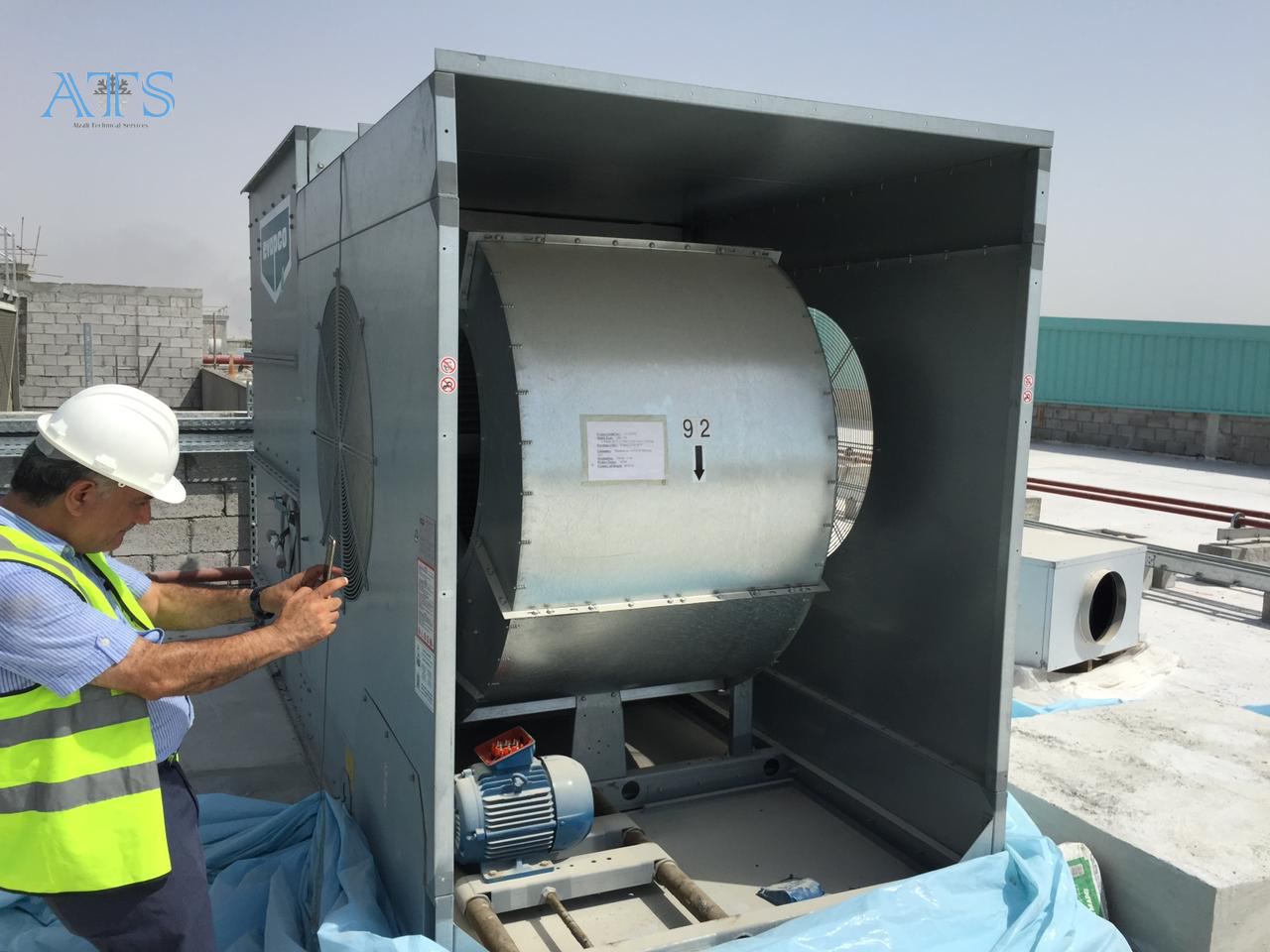
Cold Storage design and equipment selection are inseparable. The physical characteristics of the room determine the real cooling load, airflow requirements, and operating conditions. These factors directly dictate compressor capacity, evaporator type, condenser sizing, and control strategy. Ignoring design variables during consultation almost always results in mismatched equipment.
Key Design Factors That Shape Equipment Decisions
- Insulation thickness and panel type Determines heat gain through walls, ceiling, and floor. Thinner or lower-performance panels increase the required compressor and evaporator capacity.
- Door type, size, and opening frequency Controls infiltration load. High-traffic or poorly sealed doors demand larger evaporators and more aggressive defrost cycles.
- Room layout and product flow Influences evaporator placement and air distribution. Incorrect positioning creates temperature stratification even with correct total capacity.
- Floor construction and vapour barriers Affects condensation risk and structural load, which guides the choice between ceiling-mounted and floor-mounted evaporators.
- Location of plant room or outdoor units Impacts pipe lengths, refrigerant charge, and pressure drop. Longer runs increase compressor size and oil-return challenges.
- Future expansion plans Require modular capacity or spare connections so the system can grow without full replacement.
- Local ambient conditions and orientation In high-temperature climates, outdoor condenser performance and shading become critical selection criteria.
A competent equipment consultation quantifies these design parameters first, then matches equipment across multiple brands to the actual load. This integrated approach prevents both under-capacity and permanent energy waste.
Key Cold Room Equipment You Should Understand Before Buying
Before any procurement decision, it helps to know exactly what you are evaluating and why each component matters. Below is the core equipment checklist we walk clients through during every cold room equipment consultation:
- Compressors and Condensing Units
- Evaporators and Heat Exchangers
- Insulation Panels, Doors and Flooring
- Monitoring, Control and Alarm Systems
Each of these categories carries its own selection criteria, and a weakness in any single one can undermine the performance of the entire system.
Compressors and Condensing Units
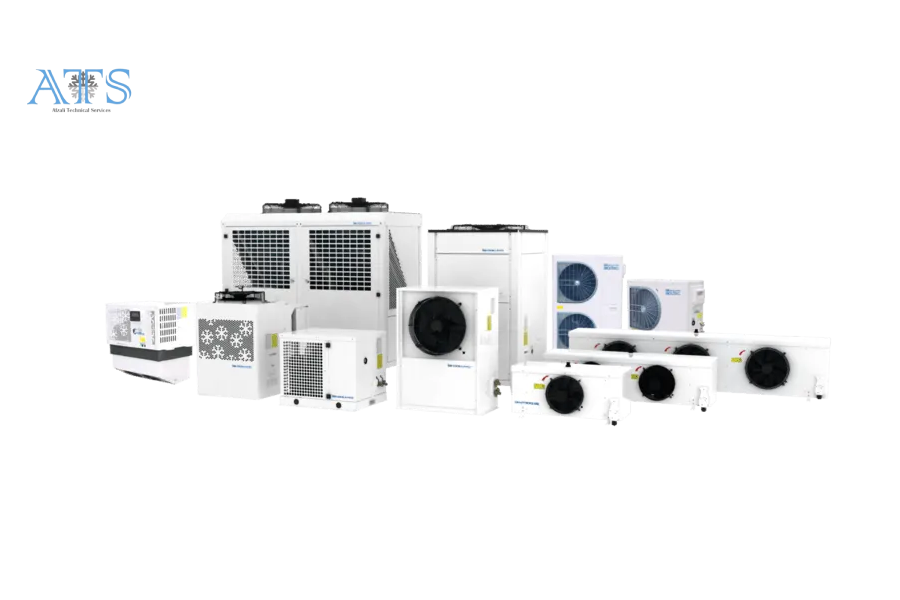
The compressor is the working heart of the refrigeration system, and its capacity must match your calculated cooling load rather than a rounded-up estimate. Reciprocating, scroll, and screw compressors each suit different capacity ranges and duty cycles, so the right type depends on room size and how continuously the system runs. Brand reliability matters here more than almost anywhere else in the system, since compressor failure is the most common cause of unplanned cold room downtime. In UAE conditions, condenser sizing also needs enough margin to handle high ambient temperatures without forcing the compressor to work outside its safe operating envelope.
Evaporators and Heat Exchangers
The evaporator determines how evenly cold air circulates through the room, which directly affects whether your product experiences consistent temperature or develops hot and cold spots. Coil spacing, fan configuration, and defrost method all need to be selected based on the humidity sensitivity of what you are storing, since fresh produce and frozen goods have very different airflow requirements. An undersized evaporator forces the compressor to run longer to compensate, which increases energy consumption and accelerates wear across the whole system. Getting evaporator selection right is one of the areas where generic online specifications fall short of what a site-specific consultation can identify.
Insulation Panels, Doors and Flooring
Insulation is often treated as a construction detail rather than equipment, but panel thickness and material directly determine how hard your refrigeration equipment has to work. PIR and PUF panels are the common choices for UAE cold rooms, with thickness selected according to target temperature and ambient heat load rather than a standard default. Door type and frequency of use matter just as much, since every door opening introduces warm, humid air that the system then has to remove. Floor insulation and vapor barriers are frequently overlooked, yet gaps here lead to condensation, ice buildup, and structural damage over time.
Monitoring, Control and Alarm Systems
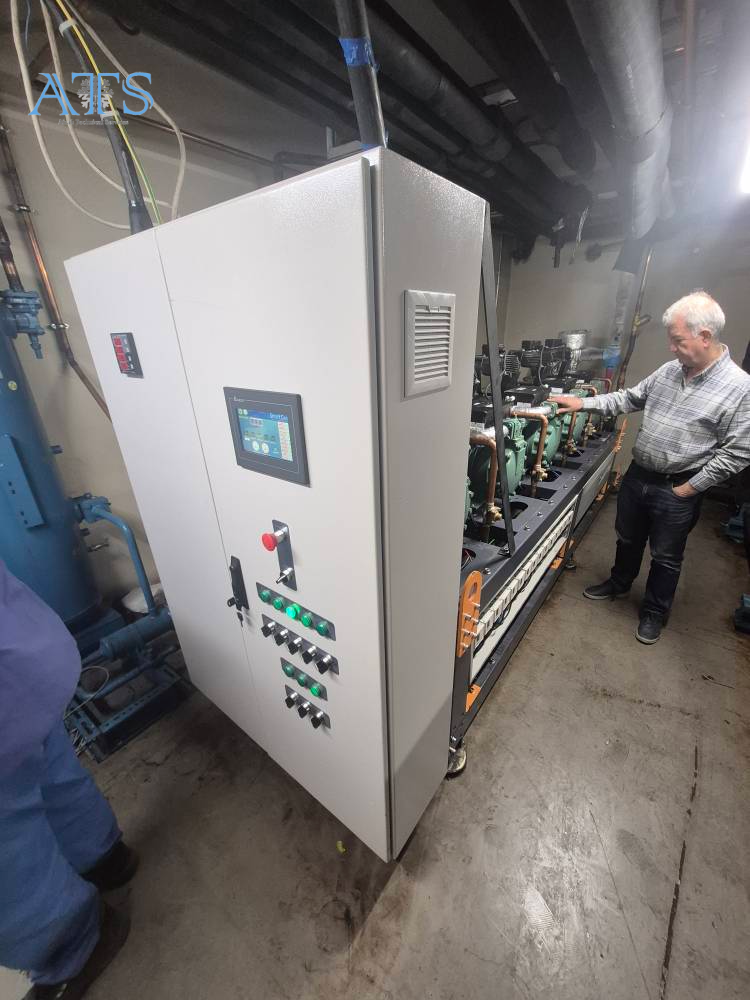
Modern cold rooms rely on monitoring systems to catch problems before they become product losses, not just to display a temperature reading. A proper system logs temperature and humidity continuously, sends real-time alerts for deviations or power failures, and creates the audit trail required for HACCP and pharmaceutical compliance. Integration matters as much as the sensors themselves, since a monitoring system that cannot be accessed remotely limits your ability to respond quickly to an after-hours issue. Businesses that treat monitoring as an optional add-on rather than a core equipment category tend to discover its importance only after a preventable loss occurs.
UAE Cold Storage Standards and Compliance Requirements for Equipment Buyers
In the UAE, cold storage equipment must meet specific regulatory and operational standards before it can be installed and commissioned. Non-compliant systems risk rejection during municipal inspections, product spoilage liability, and costly redesign. A professional consultation identifies these requirements early and ensures the selected equipment satisfies them.
Key Compliance Points Buyers Must Address
- Dubai Municipality and local authority approvals Equipment and installation drawings must support the inspection criteria of Dubai Municipality (or equivalent authorities in other emirates). Documentation gaps frequently delay handover.
- HACCP requirements for food storage Temperature mapping, continuous logging, and alarm systems are mandatory. Equipment must enable verifiable records for audit.
- GMP standards for pharmaceutical and healthcare storage Validated temperature control, calibrated sensors, and data integrity are required. Ordinary commercial units often fall short.
- Fire safety and panel ratings Insulated panels must carry the required fire classification. Incorrect panel selection leads to rejection during civil defence inspection.
- Refrigerant regulations and environmental compliance Chosen refrigerants must align with current UAE environmental rules and long-term availability. Future phase-down risks must be assessed at the selection stage.
- Energy efficiency and operating documentation Systems should demonstrate acceptable performance under high ambient conditions. Clear commissioning reports are needed for final approval.
- Monitoring, alarm, and remote access capability 24/7 temperature recording with escalation protocols is expected in most regulated facilities. Equipment without these features creates ongoing compliance exposure.
Addressing these points during the equipment consultation prevents late-stage redesign and ensures the installed system is both operationally reliable and inspection-ready.
Read More: UAE Cold Storage Standards
Vendor-Neutral Advice vs. Supplier-Driven Recommendations
Every equipment supplier has a catalog to sell from, and their sizing recommendations, whether they intend it or not, tend to favor what sits on their shelf rather than what your specific room actually needs. This is not a claim that suppliers act in bad faith. It is simply the structural reality of how a sales relationship works: the person recommending the equipment is also the one profiting from the sale, and that alignment shapes the advice, often without either side fully realizing it.
A cold room equipment consultation from an independent party removes that conflict of interest entirely. The consultant’s only obligation is to your operational outcome, not to moving a particular compressor brand or hitting a sales target. That distinction becomes especially important on larger projects, where equipment costs run into hundreds of thousands of dirhams and a sizing error compounds across the entire system’s lifetime.
How Supplier Recommendations Can Mislead Buyers
A supplier tends to size equipment based on the models they carry, which means you may be steered toward a larger unit than necessary simply because it is the next available size in their range, or a smaller one because the correctly sized model is out of stock or not part of their product line. Suppliers also rarely have visibility into your full project, including the insulation specification, door traffic, or future expansion plans, since their conversation with you usually starts and ends at the equipment order. This gap is where mismatches most often originate, not from bad intentions but from an incomplete picture.
The Advantage of an Independent Consulting Partner
An independent consultant evaluates your cooling load, room design, and operating conditions first, then compares equipment across multiple brands and suppliers to find the best technical and financial fit, rather than starting from a product and working backward to justify it. This approach also means the consultant can flag when a supplier’s proposal does not match your actual requirements, giving you a second opinion before you commit budget to an order. At Afzali, this vendor-neutral position is central to how we work: we are not tied to any single manufacturer, which means our recommendations reflect what performs best for your project, not what generates a commission for us.
Essential Questions to Ask During Your Equipment Consultation
A professional cold room equipment consultation is the point where assumptions end and measurable decisions begin. The quality of the outcome depends heavily on the questions you raise and the depth of the answers you receive. Below are the questions that separate a surface-level sales discussion from an engineering-led evaluation. Each one is framed from the perspective of an independent refrigeration consultant who has designed, sized, and commissioned cold rooms across food processing, pharmaceutical, logistics, and hospitality facilities in the UAE.
- What exact cooling load calculation method will you use, and will it account for UAE ambient conditions, product ingress, door openings, and future expansion?
Generic rules of thumb or catalogue tables fail in Dubai and Abu Dhabi summers. A correct calculation must include peak ambient temperatures above 45 °C, infiltration rates based on actual door traffic, product pull-down loads, and any planned capacity growth. At Afzali we perform a full heat-load analysis using site-specific data before any equipment is proposed. This prevents both chronic under-capacity and the energy waste of permanent oversizing.
- How will you match compressor, condenser, and evaporator capacity to my product temperature range and humidity requirements rather than to the nearest available model?
Suppliers often start from stock and work backwards. An independent consultant starts from the product and the room. We compare multiple brands and configurations against your required temperature band (chiller, freezer, or dual-temperature), humidity control needs, and defrost strategy, then select the combination that delivers the required capacity with the lowest lifecycle cost.
- What refrigerant options do you recommend for this application, and how do they align with current UAE environmental regulations and long-term availability?
Refrigerant choice affects efficiency, safety classification, future serviceability, and regulatory compliance. We evaluate options against Dubai Municipality requirements, global phase-down schedules, and the practical realities of service support in the region, so the system remains operable and compliant for its full design life.
- How will the proposed system perform under partial load and high ambient conditions typical of the UAE, and what efficiency metrics (COP, energy consumption per cubic metre) can you demonstrate?
A unit that looks adequate on paper can short-cycle or lose capacity when ambient temperatures rise. We insist on manufacturer performance data at elevated ambient conditions and, where relevant, model annual energy use under realistic operating profiles. This protects operating budgets after the capital purchase is complete.
- What level of redundancy, monitoring, and alarm capability is included, and how does it integrate with existing BMS or remote platforms?
Temperature excursions in cold storage create immediate product and compliance risk. We specify the appropriate combination of dual compressors, independent monitoring, data logging, and alarm escalation so that any deviation is visible and actionable before stock is compromised.
- Will the equipment specification and installation drawings support Dubai Municipality, HACCP, or GMP approvals without later redesign?
Regulatory rejection after equipment is ordered is expensive. Our documentation is prepared with the inspection criteria of local authorities in mind from the first draft, reducing the risk of costly late-stage changes.
- What is the projected total cost of ownership over ten years, including energy, maintenance, refrigerant top-ups, and expected component life?
Purchase price is only the first line item. We provide a transparent comparison of capital cost against long-term operating cost so the decision is based on economic reality rather than the lowest initial quote.
These questions force the conversation onto engineering substance. When answered with site-specific calculations, multi-brand comparison, and documented compliance pathways, they give the buyer a clear basis for decision and a measurable reduction in technical and financial risk. That is the standard we apply in every Afzali consultation.
Why Afzali Is Your Trusted Partner for Cold Room Equipment Consultation
Selecting cold room equipment is a high-stakes decision. The wrong specification creates ongoing energy waste, temperature instability, compliance risk, and premature component failure. Afzali exists to remove that uncertainty through independent engineering judgment rather than product-driven recommendations. We support clients across the UAE and on international projects where reliable cold storage performance is required.
Our Vendor-Neutral, Engineering-First Approach
We are not aligned with any single manufacturer. Every recommendation begins with a site-specific heat-load calculation, product requirements, local ambient conditions, and operational patterns. Only after the technical need is defined do we evaluate equipment across multiple brands and suppliers. This sequence eliminates the structural bias that occurs when the same party both advises and sells. Clients receive clear comparisons of capacity, efficiency, refrigerant suitability, redundancy options, and projected ten-year operating cost — data that allows an informed commercial decision instead of reliance on a single catalogue.
End-to-End Support — From Consultation to Installation and Commissioning
Consultation at Afzali is not a standalone report. The same engineering team that sizes the system also prepares the technical specifications, reviews supplier proposals for accuracy, supervises installation, and conducts commissioning against the original design criteria. This continuity closes the gap that commonly appears when design responsibility ends at the quotation stage and execution is handed to a separate contractor. Temperature mapping, control calibration, and documentation for local regulatory requirements (including Dubai Municipality, HACCP, or GMP where applicable) are completed under one accountable team.
The practical result is equipment that matches the actual cooling load, operates efficiently under local climate extremes, and remains compliant and serviceable for its design life. Businesses that have worked with us across food processing, pharmaceutical storage, logistics, and hospitality facilities consistently cite two outcomes: lower long-term energy and maintenance costs, and the confidence that comes from decisions based on verified engineering rather than sales targets.
When the priority is reliable performance and measurable return on investment rather than the fastest quote, independent technical partnership is the more durable choice. That is the role Afzali fills.
Contact Afzali’s Cold Room Equipment Consultation
 +971 4 288 6161 | +971 50 6348 577

 Office 804, MM Towers, Al Makthoum Street, Deira, Dubai

No Comments
Sorry, the comment form is closed at this time.