


Mon - Sat 8:00 - 17:30, Sunday - CLOSED
cold storage Design
Effective cold storage design starts with more than selecting refrigeration equipment. It requires accurate cooling load calculations, proper insulation, controlled airflow, temperature and humidity management, and a refrigeration system engineered around the actual operating conditions of the facility.
Afzali provides cold storage design and engineering support for commercial and industrial projects across the UAE, from initial site assessment and system sizing to equipment selection, controls, technical documentation, installation support, and commissioning. Every design is developed around the product, operating temperature, room dimensions, usage pattern, and UAE ambient conditions to create a reliable, efficient, and practical cold storage system.
Many of our clients have discovered how a well-thought-out design significantly reduces operational costs, minimizes product spoilage, and provides peace of mind in their cold chain operations. Ready to build or optimize your cold storage facility? Contact us today for an initial consultation. Our team will assess your specific requirements and outline a clear, practical path forward.
Contact our experts directly via email and we will get back to you shortly with the best solutions and competitive prices.
Free Technical PDF
Download the Cold Room and Cold Storage Design Guide
Get Afzali’s practical 18-page technical guide covering cold room design.
PDF Format
18 Pages
Free Download
Cold Storage Design Consultation in the UAE
A cold Storage should not be designed around equipment first. It should be designed around the product, operating temperature, room usage, site conditions, cooling demand, and long-term operating requirements of the project.
Afzali provides cold storage and cold room design consultation in the UAE to establish these engineering requirements before major design, equipment selection, or construction decisions are made. The objective is to create a clear technical basis for the project and determine what the cold room actually needs to operate reliably under its intended conditions.
During the consultation and initial engineering review, we assess key project factors such as:
- Product & Storage Requirements: product type, storage conditions, loading pattern, incoming product temperature, and operational requirements.
- Target Temperature & Humidity: defining the environmental conditions required for the intended application.
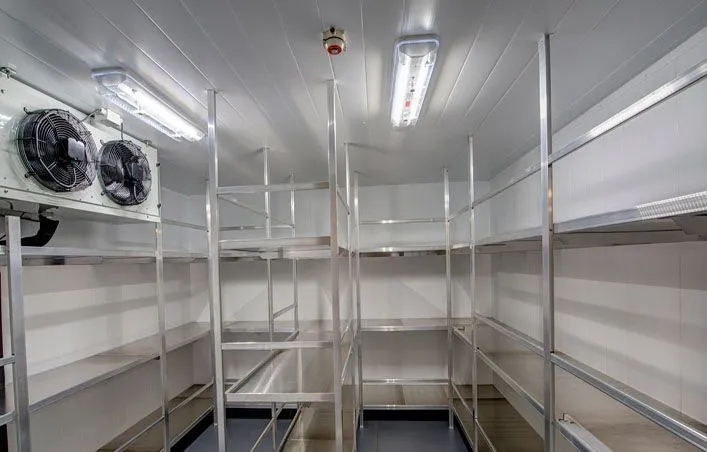
- Cold Storage Dimensions & Layout: reviewing usable space, room geometry, access, shelving or racking, product movement, and evaporator positioning.
- Cooling Load Requirements: identifying the main heat loads created by transmission, products, infiltration, doors, lighting, personnel, equipment, and ambient conditions.
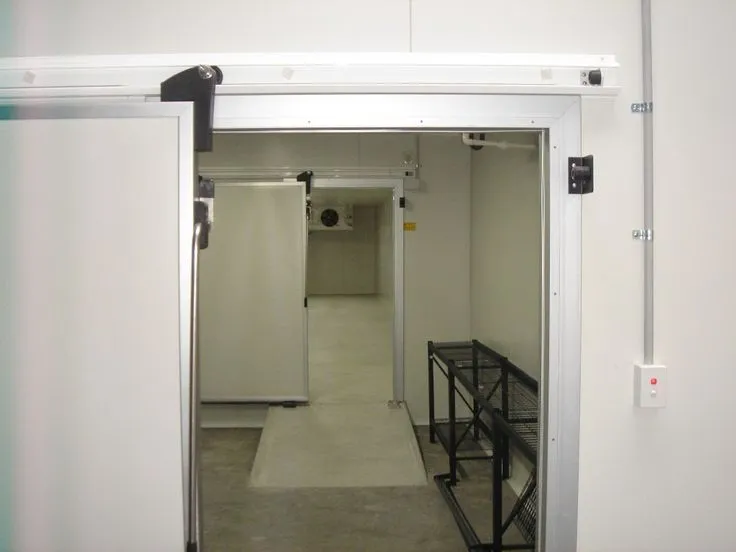
- Insulation & Thermal Performance: reviewing panel construction, floor insulation, vapor control, thermal bridges, doors, and heat gain through the cold room envelope.
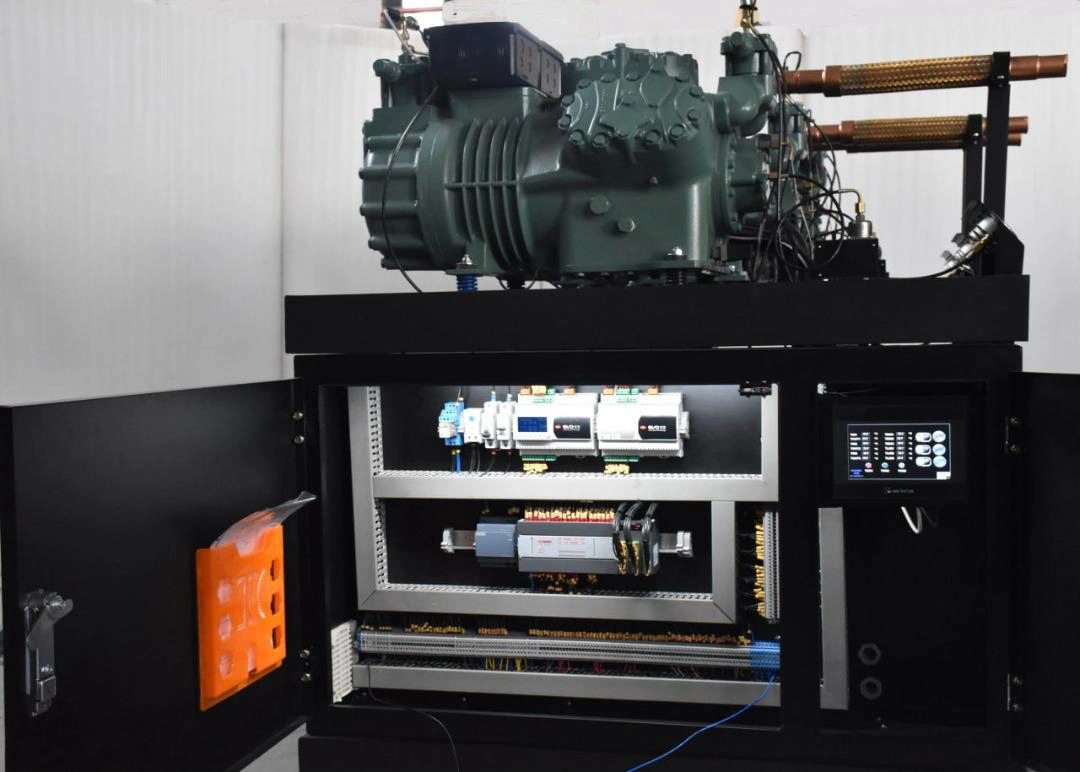
- Controls & Monitoring: defining requirements for temperature sensing, alarms, data logging, control panels, and integration with monitoring or automation systems.
- UAE Climate Conditions: evaluating high ambient temperatures, condenser operating conditions, infiltration, insulation performance, and other climate-related design considerations.
- Installation & Commissioning Requirements: identifying technical requirements that should be considered before installation, testing, and system commissioning.
Engineering Support Before Critical Project Decisions
Cold Storage consultation is especially valuable before committing to equipment capacities, panel specifications, refrigeration components, or installation layouts. Decisions made too early without a defined engineering basis can lead to oversized or undersized systems, poor temperature uniformity, unnecessary energy consumption, or operational limitations later in the project.
Afzali can support different project stages, including:
- New cold room projects
- Existing design reviews
- Cold Storage expansions
- Refrigeration system upgrades
- Retrofit projects
- Performance and capacity assessments
- Consultant or contractor technical support
The consultation stage can provide the foundation for the next steps of the project, including cooling load calculation, refrigeration design, equipment selection, technical drawings, installation coordination, and commissioning support.
Planning a project in the UAE? Discuss the technical requirements with Afzali before finalizing the system design or equipment selection.
Cold Storage Design and Construction Services at Afzali
Our industrial cold Storage design process starts with a comprehensive assessment of your facility, product requirements, and operational workflow. We perform accurate cooling load calculations, select the right insulation systems for UAE conditions, optimize airflow to prevent temperature variations, and integrate reliable refrigeration equipment that minimizes energy consumption while maintaining precise temperature and humidity levels.
As experienced consultants and contractors, we manage the full cold room construction cycle:
- Detailed engineering design and 3D modeling
- Equipment specification and vendor-neutral recommendations
- Project planning, scheduling, and budget control
- On-site technical supervision and quality assurance
- System commissioning, testing, and staff training
- Post-construction support and optimization
Every project we deliver is built for reliability, energy efficiency, and long-term scalability. We focus on practical details that matter such as easy-to-maintain layouts, durable flooring for heavy forklift traffic, rapid-response monitoring systems, and designs that allow seamless future expansion without major disruptions.
Cold Storage Facility Design vs Cold Room Design
Cold room design and cold storage facility design are related, but they address different levels of engineering.
Cold room design focuses on the engineering of an individual temperature-controlled room — including its cooling load, refrigeration system, insulation, airflow, temperature and humidity control, doors, flooring, controls, and monitoring requirements.
Cold storage facility design covers the wider facility around one or multiple cold rooms. It may include warehouse planning, loading and unloading areas, product movement, multiple temperature zones, central refrigeration systems, utilities, infrastructure, automation, and overall operational flow.
Engineering Scope | Cold Room Design | Cold Storage Facility Design |
Primary Focus | Individual refrigerated room | Complete cold storage facility |
Cooling Load | Room-specific cooling load calculation | Combined facility and refrigeration demand |
Refrigeration | Equipment and system for the cold room | Central or multi-system refrigeration strategy |
Insulation | Panels, floor, ceiling, doors and vapor control | Building envelope plus multiple refrigerated zones |
Airflow | Evaporator placement, air throw and temperature uniformity | Airflow coordination across multiple storage areas |
Layout | Room dimensions, racks, doors and product arrangement | Warehousing, loading areas, circulation and logistics flow |
Controls | Sensors, alarms and room-level controls | Integrated monitoring, automation, BMS or facility-level controls |
Infrastructure | Requirements directly related to the cold room | Utilities, plant areas, electrical systems and supporting infrastructure |
Why Afzali?
Trusted Cold Storage Design
Consultation

Project Strategy
End-to-end Cold Storage Design

Compliance
HACCP & regulations fully met

Vendor-Neutral
Unbiased recommendations

ROI-Focused
Maximize your investment

Reliability
System reliability and operational stability
Cold Storage Design for Different Industries
Every industry has its own rhythm, risk points, and temperature demands. A cold storage that works perfectly for a meat processing plant may not suit a pharmaceutical warehouse, and a design ideal for a hotel kitchen could fall short in a large logistics hub. That’s why at Afzali we never use one-size-fits-all templates. We shape every cold room design around the real daily life of your business.
Our goal is simple: create a space that protects your product, supports your team’s workflow, and quietly does its job without drawing attention, until you see the difference it makes on your monthly energy bill and audit reports.
1. Food Processing & Fresh Produce:
We know how quickly fresh produce and ready-to-eat meals lose quality. Our designs focus on rapid cooling capability, precise humidity control to prevent drying or mold, and easy-to-clean surfaces that meet strict hygiene standards. From layout that supports smooth production flow to systems that maintain temperature even during frequent door openings, we build cold rooms that protect both quality and speed of your operation.
2. Pharmaceutical and Healthcare:
Pharmaceutical products demand uncompromising consistency. In these projects, we pay special attention to temperature mapping, redundant systems for maximum reliability, 24/7 monitoring with instant alerts, and full documentation for GMP audits. Our designs help you maintain the strict chain of custody your regulators and patients expect.
3. Logistics & Cold Chain Warehousing:
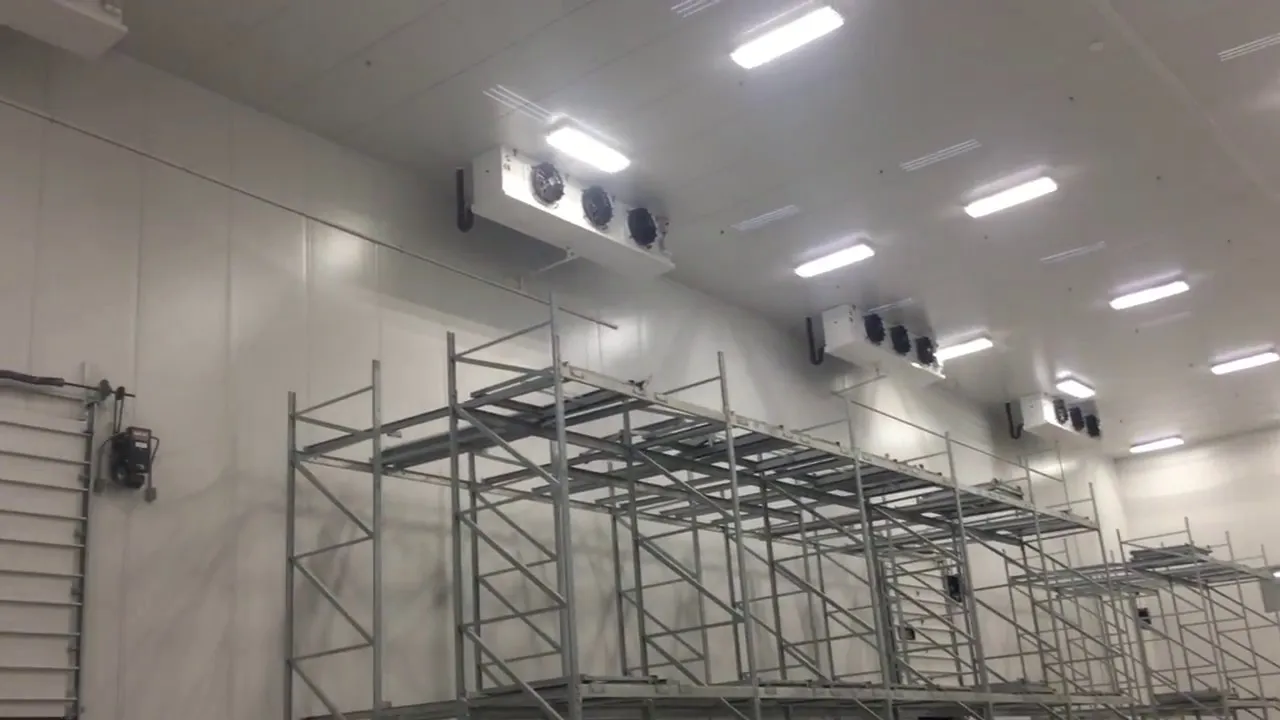
Large-scale distribution needs flexibility. We design cold rooms that support high-volume forklift traffic, quick product turnover, and multiple temperature zones within the same facility. Smart zoning and scalable layouts allow you to adjust storage areas as seasonal demand changes without expensive rebuilds.
4. Hospitality & Commercial Kitchens:
Space is often limited in hotels and restaurants. We create compact yet powerful cold rooms that fit tight footprints while delivering excellent performance. Quiet operation, energy efficiency, and designs that make staff work easier are the priorities here — because in hospitality, reliability must blend seamlessly with daily service.
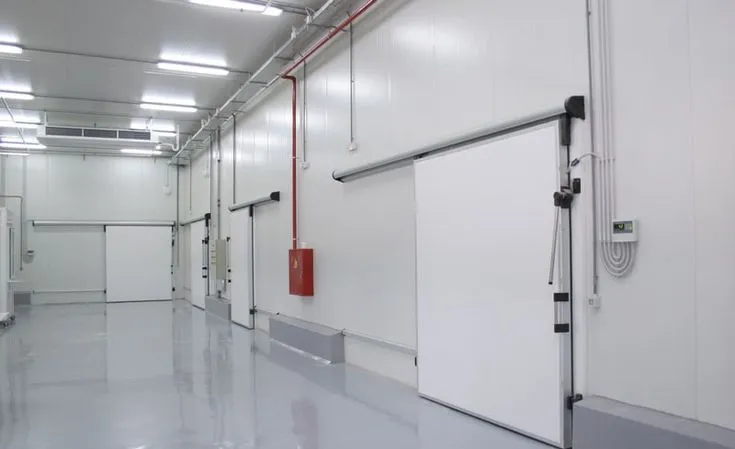
Across every industry we serve, one principle stays constant: sound engineering design is what separates a cold room that merely works from one that consistently protects your product, your team, and your bottom line. Material selection, insulation thickness, refrigerant load, and door placement all interact in ways that aren’t obvious until years of operation reveal the gaps. If you want to understand what actually drives long-term performance and reliability, our article on Engineering Design on Cold Storage Quality breaks down the technical factors worth knowing before you commit to a design.
Cost Considerations in Professional Cold Storage Design
At Afzali, we believe in transparent cost discussions from the very beginning. Here’s what you should consider:
Initial Investment vs Long-term Savings: Higher-quality insulation, efficient refrigeration systems, and smart controls may cost more upfront, but they usually pay for themselves within 2–4 years through much lower electricity bills.
Hidden Costs of Cheap Design: Poor insulation, wrong equipment sizing, or bad airflow can lead to high energy consumption, frequent breakdowns, product spoilage, and expensive repairs later.
Value-Driven Approach: We focus on giving you the best return on investment by balancing performance, durability, and budget. Our vendor-neutral advice helps you avoid overpaying for unnecessary features.
Flexible Solutions: Whether you need a basic reliable cold room or a high-spec pharmaceutical-grade facility, we offer options that match your current budget while keeping future expansion practical.
In our experience, clients who invest thoughtfully in proper cold room design end up with lower total ownership costs and far fewer headaches. For a detailed breakdown of pricing factors, see our guide on Cold Storage Facility Cost.
Advanced Technologies Used in Our Cold Storage Design
Some of the key solutions we regularly work with include:
- Real-time IoT monitoring systems that send instant alerts to your phone if temperature or humidity drifts
- Energy-efficient variable speed compressors and intelligent control systems that adjust automatically to load changes
- High-precision temperature mapping sensors and data logging for complete traceability
- Smart defrost cycles and heat recovery systems that reduce energy waste
- Cloud-based remote monitoring dashboards that let you check your cold rooms from anywhere
The result is a cold room that is not only more efficient but also easier to manage and more trustworthy during audits. We choose each technology based on your actual needs rather than adding unnecessary complexity.
How We Optimize Cold Storage/Room Design for Future Expansion?
A smart cold room design doesn’t just solve today’s needs, it anticipates tomorrow’s growth. At Afzali, we design every cold storage facility with flexibility in mind so that when your business expands, you won’t face expensive rebuilds or long operational disruptions.
Of course, achieving this kind of future-proof flexibility depends on avoiding the pitfalls that compromise a design from day one. We’ve outlined the most frequent ones in our article on Common Mistakes in Cold Room Design, so you can recognize red flags before they become costly problems.
We think ahead about capacity increases, new temperature zones, changing product types, and evolving regulations from the very first sketch. This forward-thinking approach protects your investment and gives you peace of mind as your operations scale.
Key Ways We Build Flexibility into Every Design:
Modular Design Approach:
We use modular wall and ceiling panels that allow easy extension without compromising the existing structure. This means you can add new sections to your cold room with minimal downtime. Our engineers also plan utility routes and electrical capacity in advance so future additions connect smoothly without major rework.
Scalable Refrigeration Systems:
Instead of installing a single large unit that may become inefficient as your needs change, we often design systems with multiple compressors or leave space and infrastructure ready for additional units. This phased approach keeps initial costs reasonable while making future capacity increases straightforward and cost-effective.
Flexible Internal Layout Planning:
We design racking systems, airflow paths, and door placements that can be reconfigured as your inventory mix or workflow evolves. This prevents you from being locked into one way of operating and allows your cold room to adapt to new products or higher throughput without a full redesign.
Future-Proof Technology Integration:
We install extra sensor points, pre-wire for advanced monitoring, and choose control systems that can easily integrate new features. This way, when you decide to upgrade to full automation or more sophisticated energy management later, the foundation is already in place.
Related Topic: Industrial Refrigeration Upgrade Projects in the United Arab Emirates:
Many businesses in the UAE are now choosing to upgrade rather than build new cold storage facilities. If you already have an existing system that feels outdated or inefficient, our Industrial Refrigeration Upgrade Projects across the United Arab Emirates can breathe new life into your current infrastructure. From energy optimization and modern control systems to capacity expansion and improved compliance, we help companies modernize without the cost and disruption of starting from scratch.
Monitoring Systems in Modern Cold Storage/Cold Room Design
When we design a cold room, one of the first questions we ask ourselves is: “How can we make sure this system stays reliable even when no one is watching?” That’s where modern monitoring systems come in. They’ve completely changed how we think about cold room design, moving from simply keeping things cold to creating smart, watchful environments that protect your valuable stock around the clock.
At Afzali, we don’t just add monitors as an afterthought. We integrate them thoughtfully so they become a natural, helpful part of your daily operations, quietly working in the background while giving you confidence and control.
Key Aspects of Monitoring Systems
Modern monitoring is much more than installing a few sensors. It’s about creating a complete safety net that works silently in the background. Here are the most important aspects we focus on when designing monitoring systems for cold rooms and cold storages.
Real-Time Temperature and Humidity Monitoring
We install precise sensors throughout the cold room to track conditions in different zones. This helps detect issues like uneven cooling or door left open quickly. The system sends immediate notifications to your team so small problems don’t turn into costly ones. In our experience, this real-time visibility dramatically reduces product loss.
Automated Alert Systems and Data Logging
Modern monitoring doesn’t just watch, it actively protects. We set up smart alerts for temperature deviations, power failures, or equipment issues. Every reading is automatically logged for compliance reports and audits. This removes the stress of manual checks and provides clear proof that your cold chain remained intact.
Remote Access and Cloud-Based Dashboards
You no longer need to be physically present to know everything is running smoothly. Our designs include secure cloud dashboards accessible from your phone or computer. Whether you’re in the office, traveling, or at home, you can check the status of your cold rooms anytime. This level of visibility is especially valuable for managers overseeing multiple facilities.
Predictive Maintenance Through Monitoring
The best systems don’t just react, they predict. By analyzing trends in temperature, energy use, and equipment behavior, we can spot signs of potential failure early. This allows planned maintenance instead of emergency repairs, reducing downtime and extending the life of your refrigeration equipment.
Why Choose Afzali for Cold Room and Cold storage Design Project?
When it comes to something as critical as your cold storage facility, you need a partner you can truly trust. Here’s why businesses in the UAE and across the region choose Afzali for their cold room design and construction projects.
Proven Expertise Across Borders
With years of hands-on experience delivering successful cold storage solutions in the UAE and several other countries, we deeply understand regional challenges, from extreme heat and humidity in the Gulf to diverse regulatory environments. Our designs are practical, tested, and refined through real projects in different climates and market conditions.
End-to-End Professional Service
We provide a complete, seamless experience from initial consultation and precise engineering design to full project execution, commissioning, and long-term support. You work with one dedicated team that takes full ownership of quality, timelines, and results.
Practical Innovation & Real Cost Savings
We combine advanced technologies with smart engineering to deliver cold rooms that perform exceptionally while keeping operating costs under control. Many of our clients in the UAE and beyond have achieved significant energy savings and reduced product waste within the first year of operation.
Client-Focused & Fully Transparent
We act as your strategic partner, offering vendor-neutral recommendations, clear pricing, and solutions tailored to your specific business goals. Our priority is always your long-term success and peace of mind.
Ready to Build Something Exceptional?
Your cold room is a vital part of your business infrastructure. Partner with Afzali and receive a facility that is reliable, efficient, fully compliant, and built to grow with your ambitions, whether in the UAE or other markets.
Contact us today for a no-obligation consultation and let’s turn your cold storage vision into a high-performance reality.
Contact our experts directly via email and we will get back to you shortly with the best solutions and competitive prices.
Contact Afzali for a System Consultation
Contact Afzali’s expert hvac consultants today and receive strategic guidance tailored to your business.
Frequently Asked Questions
What information is required to design a cold room?
Cold room design starts with a clear understanding of the product, required storage temperature, incoming product temperature, room dimensions, daily loading pattern, door usage, storage duration, humidity requirements, site conditions, and available utilities. These inputs allow the engineering team to calculate the cooling load, define the room configuration, and select the appropriate refrigeration, insulation, airflow, and control systems.
How is the cooling capacity of a cold room calculated?
Cold room cooling capacity is calculated by evaluating all significant heat loads affecting the space. These typically include heat transfer through walls, ceilings and floors, product load, warm air entering through doors, lighting, personnel, internal equipment, and ambient conditions. The final refrigeration capacity should be based on a project-specific cooling load calculation rather than room size alone.
What factors affect cold room design in the UAE?
Cold room design in the UAE must consider high outdoor temperatures, solar heat gain, humidity, air infiltration, condenser operating conditions, insulation performance, and door-opening frequency. These conditions can significantly increase the refrigeration load, so equipment sizing, thermal insulation, airflow, and control strategies should be selected specifically for the local operating environment.
Can Afzali provide cold room design consultation before construction begins?
Yes. Afzali can review the project requirements before construction or equipment procurement begins. The consultation may include site assessment, requirement analysis, cooling load review, room layout, refrigeration concept, insulation requirements, equipment selection, controls, and technical recommendations. Early consultation helps establish a clear engineering basis before major project decisions are finalized.