
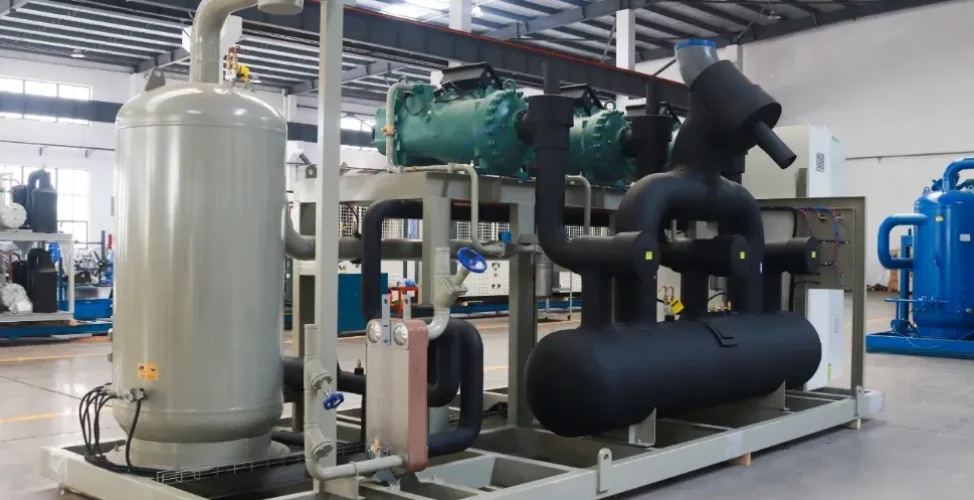
The United Arab Emirates has never been a forgiving environment for refrigeration infrastructure. Ambient temperatures that routinely exceed 45°C in summer, humidity levels that swing dramatically between coastal and inland zones, and an economy that has spent the last two decades scaling at a pace few regions can match, all of this places extraordinary pressure on cold chain systems that were, in many cases, designed for a different era. What was installed in a warehouse district outside Dubai in 2008 or 2010 was built to serve a market that looked nothing like today’s. The pharmaceutical sector was smaller. E-commerce had not yet reshaped warehousing expectations. The food and beverage industry had not yet expanded to the degree it has across Abu Dhabi, Sharjah, and the northern emirates. The systems that were adequate then are, in many facilities today, simply not adequate anymore, not in terms of capacity, not in terms of energy consumption, and not in terms of the reliability that modern operations demand.
Industrial refrigeration upgrade projects across the United Arab Emirates are therefore not a niche conversation happening in the background. They are, increasingly, a central operational and financial priority for facility managers, logistics directors, and business owners who understand that the cost of doing nothing is quietly compounding every month. Energy bills climb. Maintenance calls become more frequent. Temperature excursions carry regulatory risk in sectors where cold chain integrity is non-negotiable.
Challenges in Industrial Refrigeration Upgrade Projects UAE & How Afzali Engineers the Right Solution?
- We cannot shut down our facility for weeks. How do you upgrade a live cold storage operation without disrupting our business?
This is the question Afzali hears most often, and it is the right question to ask. Every upgrade project is planned in phases, with temporary bridging capacity where needed and installation windows scheduled around the facility’s lowest-demand periods. The goal is always to ensure that product integrity is maintained and operations continue throughout the process. A well-structured upgrade does not feel like a shutdown — it feels like a careful, coordinated transition.
- We have had contractors come in before who promised results and delivered problems. How is Afzali different?
The difference is in how a project begins. Before any equipment is specified or any proposal is submitted, Afzali’s engineers conduct a thorough site assessment — examining the existing system’s actual performance data, the facility’s load profile, the condition of insulation and pipework, and the specific environmental factors of the location. Proposals are built on what the facility actually needs, not on what happens to be in stock or what carries the highest margin. That discipline, applied consistently, is what separates a contractor from a long-term engineering partner.
- Energy costs are rising every year. Will an upgrade actually make a measurable difference to our electricity bills?
It does contribute to a point. Routine maintenance and incremental adjustments can improve efficiency and trim energy consumption to a degree. But if your real objective is to reduce your cold storage facility’s electricity costs as significantly as the operation allows, the conversation needs to go further. Afzali’s cold storage smartisation and optimisation services are designed specifically for facilities that are serious about this goal and the scope of what is achievable may be broader than you expect. Reach out to Afzali directly to explore what is possible for your operation.
- We are expanding our operation. Is it better to upgrade what we have or build new cold storage capacity?
The honest answer is that it depends, and any contractor who gives you a definitive answer without first understanding your load projections, your site constraints, and your five-year operational plan is not giving you engineering advice. They are giving you a sales pitch. Afzali’s approach begins with that operational picture. In some cases, a well-executed upgrade delivers the capacity and efficiency a growing business needs at a fraction of the cost of new construction. In others, the existing infrastructure is simply not the right foundation to build on. The analysis comes before the recommendation
- How do we make sure the upgrade delivers value beyond the initial installation?
The value of an upgrade should be measured through long-term performance, not only installation cost. A well-engineered project considers energy use, temperature stability, maintenance demand, equipment reliability, availability of spare parts, future expansion, and ease of system monitoring.
For more information about Afzali’s working process in industrial refrigeration and HVAC system monitoring projects, please contact us on: via:
When Does an Industrial Refrigeration System Need an Upgrade?
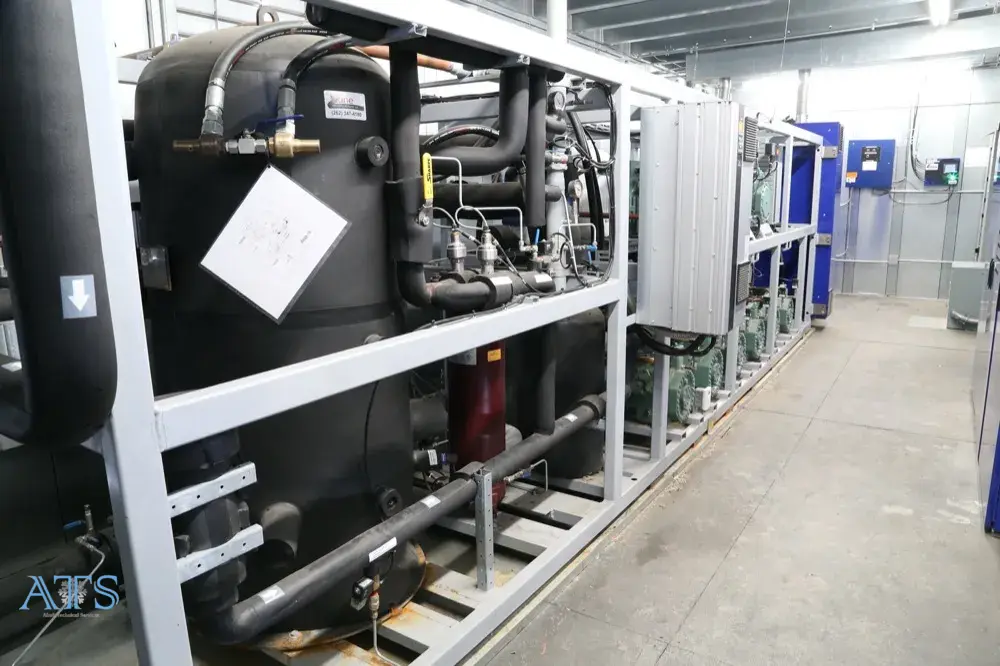
An industrial refrigeration system does not need to fail completely before an upgrade becomes necessary. The more reliable signal is a gradual erosion of performance, when temperature control becomes less consistent, when energy bills climb without a clear operational reason, or when the maintenance team is managing the same recurring faults month after month rather than preventing them.
Many facilities across the UAE reach this point while the plant is technically still running. But running is not the same as performing. A system that demands constant intervention to hold temperature, consumes significantly more electricity than its rated efficiency would suggest, or leaves engineers with increasingly narrow margins to work within is already costing the business more than a planned upgrade would. The question at that stage is not whether to upgrade, it is how to structure the transition so that operations are protected throughout.
Inconsistent Temperatures Across Cold Storage Areas
Temperature differences between cold storage areas are often treated as a minor operational issue, especially when the main room sensor still shows an acceptable reading. In reality, uneven temperatures can create a much larger risk. One section of the facility may remain within the required range while another experiences warmer air, slower cooling recovery, or repeated fluctuations during loading periods. For products with strict storage requirements, this can affect shelf life, product quality, traceability, and customer confidence.
The cause is not always a lack of refrigeration capacity. In many facilities, the issue is linked to uneven airflow, poor evaporator placement, blocked air paths, overloaded storage zones, incorrect fan operation, damaged door seals, or defrost cycles that are no longer aligned with the actual operating pattern. A cold room can therefore appear to be working properly as a whole while certain zones consistently receive less effective cooling than others.
When an Upgrade Is More Practical Than Repeated Repairs?
The decision should not be based only on the cost of the next repair. A more realistic comparison includes lost working hours, emergency call-out costs, higher electricity use, product risk, staff disruption, and the possibility of a failure during a critical storage or delivery period. A repair that appears inexpensive on its own can become costly when it is repeated several times throughout the year and continues to leave the facility exposed to unexpected downtime.
An upgrade becomes more practical when the existing equipment can no longer deliver stable temperatures under normal operating conditions, when repairs are addressing symptoms rather than the source of the problem, or when the system no longer reflects the facility’s present cooling demand. This may involve upgrading a specific part of the plant, such as controls, condensers, evaporators, compressors, or airflow equipment. In other cases, the better solution is to redesign the affected section of the refrigeration system as an integrated package rather than continue replacing individual components one by one.
Key Challenges of Aging Refrigeration Systems in the UAE
High outdoor temperatures place continuous demand on condensers, compressors, and heat-rejection equipment. A system that was originally designed for a lower operating load may struggle to reject heat effectively during peak summer conditions, particularly when condenser surfaces are dirty, airflow is restricted, or equipment capacity has been reduced over time. The result can be higher condensing pressures, increased electricity use, slower cooling recovery, and more frequent alarms.
- Reduced heat-rejection performance during high ambient temperatures
- Rising electricity consumption without a matching increase in storage capacity or output
- Frequent compressor alarms, shutdowns, or unstable operating pressures
- Uneven temperatures across cold rooms or different storage zones
- Longer pull-down and temperature-recovery times after loading or door openings
- Increasing dependence on emergency repairs and corrective maintenance
- Difficulty sourcing compatible spare parts for older equipment
- Outdated controls, inaccurate sensors, and poorly timed defrost cycles
- Refrigerant leaks and reduced system efficiency over time
- Higher wear on compressors, fans, and electrical components
- Cooling capacity that no longer matches current product volumes or operating hours
- Limited monitoring of daily performance, energy use, and fault trends
- Product-quality risk caused by unstable or poorly controlled temperatures
- A system layout that makes future expansion difficult or expensive
- For more information about Afzali’s working process in industrial refrigeration solutions and HVAC system projects, please contact us on: via:
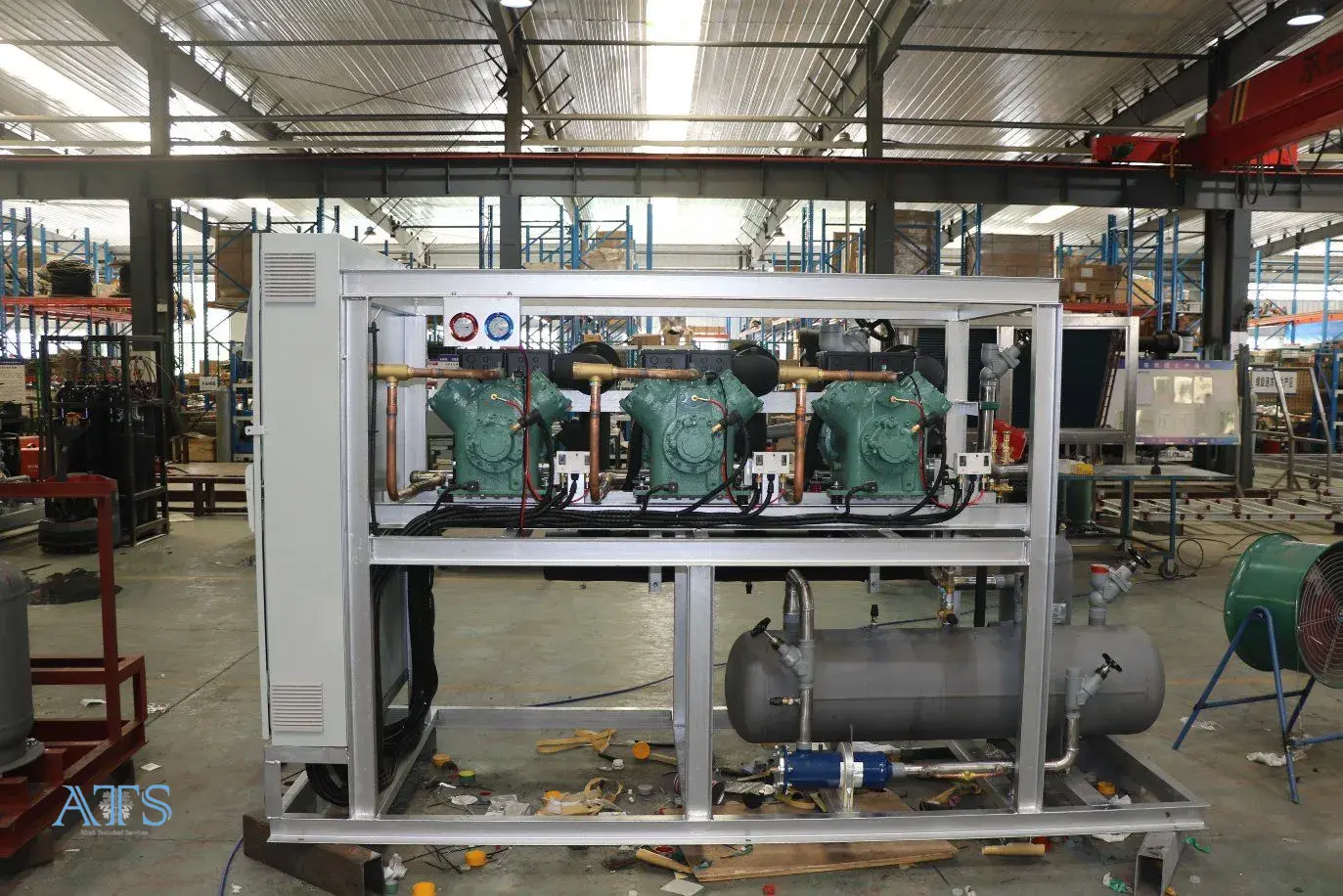
Afzali’s Engineering Approach to Refrigeration Upgrade Projects in the UAE
At Afzali, an industrial refrigeration upgrade does not begin with a product list or a predefined replacement package. It begins with understanding how the facility actually operates: what is being stored or processed, how often the cold rooms are loaded, where temperature deviations occur, how the equipment behaves during peak demand, and what the business expects from the site over the next several years. This first stage is essential because two facilities with similar room sizes can have completely different cooling requirements in real operation.
- Operational-first assessment, not off-the-shelf recommendations:
We begin by understanding your facility, product flow, operating hours, temperature requirements, and future growth plans before proposing any solution.
- Engineering decisions based on site data
Upgrade recommendations are shaped by cooling demand, equipment performance, energy behaviour, airflow, controls, and maintenance history.
- Solutions tailored to UAE operating conditions
We account for high ambient temperatures, demanding summer operation, frequent loading activity, and heat-rejection requirements.
- Targeted upgrades where they create real value
We do not recommend replacing an entire system when improvements to controls, airflow, condensers, evaporators, or key components can solve the actual problem.
- Phased execution for operational continuity
Where business continuity is critical, projects can be planned in practical stages to reduce disruption to storage, production, and distribution activities.
- Focus on temperature reliability and product protection
The purpose of every upgrade is not only stronger cooling, but more stable temperatures and lower risk for stored products.
- Energy-conscious design and lower operating pressure
We identify opportunities to reduce avoidable energy use and unnecessary stress on compressors, condensers, fans, and electrical components.
- Upgrade plans designed for future capacity
Each project is evaluated with future demand in mind, helping prevent short-term solutions from becoming new limitations after expansion.
- Clear priorities and commercially practical recommendations
We help clients distinguish between urgent improvements, performance upgrades, and investments that can be scheduled for a later phase.
- long-term partner, not a one-time installer
Afzali’s goal is to provide refrigeration systems that remain manageable, dependable, and aligned with the facility’s changing operational needs.
No Comments
Sorry, the comment form is closed at this time.