


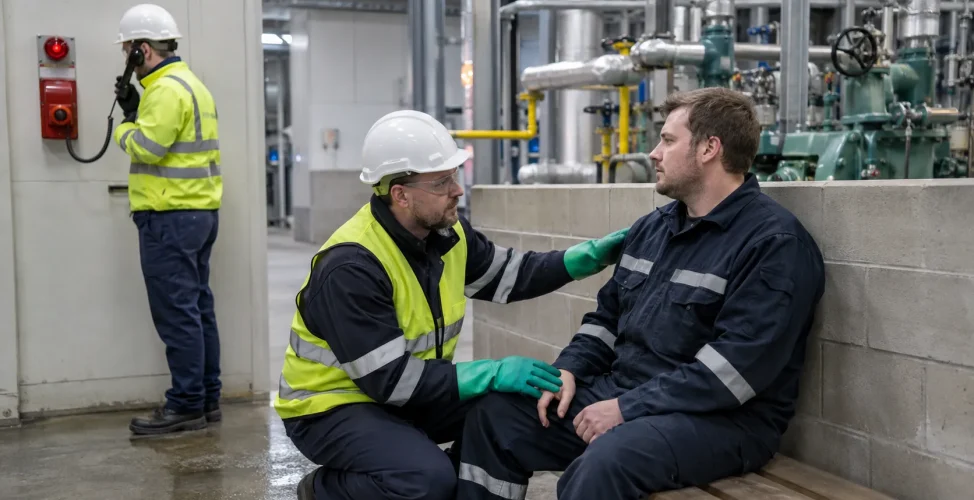
Understanding Ammonia First Aid Cold Storage is essential in industrial cold storage and refrigeration facilities, where an uncontrolled refrigerant release can create an immediate risk to workers. Anhydrous ammonia rapidly reacts with moisture in the eyes, skin and respiratory tract, forming a corrosive alkaline solution. Exposure may cause severe irritation, chemical burns, airway swelling and lung injury, while direct contact with liquid ammonia can also cause frostbite. The severity of injury depends primarily on the ammonia concentration, duration of exposure and route of contact.
Immediate Ammonia First Aid Steps After Exposure
The first priority after ammonia exposure is to protect the rescuer and prevent additional casualties. Do not enter a contaminated machinery room or leak zone unless you are trained, authorized and equipped with appropriate respiratory and chemical protection. OSHA requires emergency responders entering potentially hazardous ammonia atmospheres to use positive-pressure self-contained breathing apparatus.
Take the following actions immediately:
- Activate the facility alarm and evacuate the area: Follow the site’s Emergency Action Plan, use the designated escape route and move to the assigned assembly point. Notify the facility response team and local emergency services.
- Do not attempt an unprotected rescue: Ammonia can rapidly damage the eyes, skin and respiratory tract. Only trained responders wearing appropriate PPE should enter the contaminated zone to remove a person who cannot evacuate independently.
- Move the exposed person to fresh air when it is safe: Keep the person at rest and monitor breathing and consciousness. Oxygen, assisted ventilation or CPR should only be provided by personnel trained and authorized to perform these procedures.
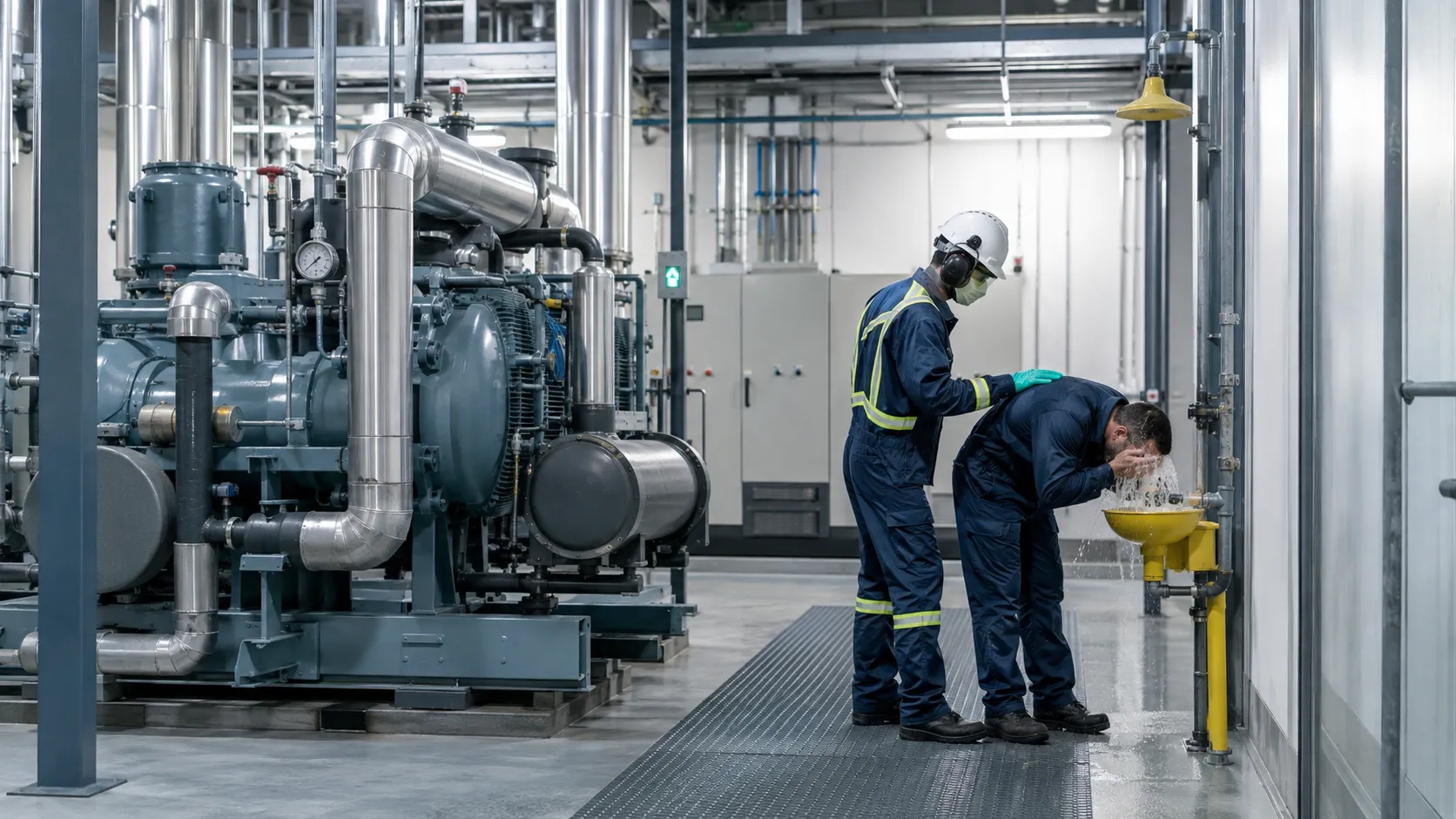
- Start eye irrigation immediately: Flush exposed or irritated eyes with plenty of clean water or saline for at least 15 minutes. Hold the eyelids open and remove contact lenses only if they can be removed easily without causing further injury. Continue irrigation during transfer whenever possible.
- Flush contaminated skin and hair: Use generous amounts of water and remove contaminated clothing while rinsing. If clothing has frozen to the skin, thaw it with water before attempting removal; pulling it away can damage the underlying tissue.
- Protect the person from hypothermia: Extensive water decontamination may lower body temperature, particularly in children, older adults or cold-storage environments. After decontamination, use clean blankets and move the person to a warm, uncontaminated area.
- Do not rub, heat or apply ointment to injured skin: Liquid ammonia may cause both chemical burns and frostbite. Do not rub the affected tissue, apply direct heat or use creams and neutralizing chemicals unless instructed by medical personnel.
- Do not induce vomiting after ingestion: Ingestion is uncommon in closed industrial refrigeration systems, but if it occurs, do not induce vomiting, administer activated charcoal or attempt chemical neutralization. Contact emergency medical services or a poison control center immediately.
- Arrange prompt medical evaluation: Breathing difficulty, persistent coughing, chest pain, wheezing, severe eye pain, blurred vision, chemical burns, frostbite or altered consciousness require urgent medical care. Respiratory injury can continue to develop after the person has left the exposure area, so symptoms that improve initially must not be ignored.
There is no specific antidote for ammonia poisoning. Effective first aid depends on rapid removal from exposure, immediate water decontamination, respiratory support by trained personnel and timely transfer to medical care.
Ammonia First Aid Procedures by Exposure Type In Cold Storage
Ammonia exposure in cold storage facilities using an Ammonia refrigeration system can occur through inhalation, eye or skin contact, or direct contact with liquid refrigerant. Each type of exposure can cause different injuries and requires a specific first-aid response. Before helping a victim, activate the facility’s emergency plan and ensure the area is safe. Rescue from a contaminated machinery room or leak zone should only be performed by trained personnel wearing appropriate respiratory and chemical protection.
First Aid for Ammonia Inhalation
Inhalation is a major exposure risk during a release from refrigeration piping, valves, compressors or other pressurized components. Ammonia can irritate and burn the nose, throat and lungs and may cause coughing, wheezing, chest pain, airway swelling or pulmonary edema.
- Move the exposed person to fresh air only when this can be done without endangering the rescuer.
- Keep the person at rest because physical activity may increase respiratory distress.
- Loosen restrictive clothing around the neck and chest.
- Monitor breathing, consciousness and signs of airway obstruction.
- Call emergency medical services after any significant inhalation exposure or if respiratory symptoms are present.
- Oxygen, assisted ventilation and CPR should only be administered by properly trained personnel.
- Do not allow a symptomatic person to return to work, even if the symptoms initially improve.
ATSDR reports that respiratory injury may continue to develop for 18 to 24 hours after exposure. Persistent coughing, difficulty breathing, wheezing, chest pain or altered consciousness requires urgent medical evaluation.
First Aid for Ammonia Eye Exposure
The eyes are particularly vulnerable because ammonia rapidly dissolves in moisture and forms a corrosive alkaline solution. Concentrated vapor or liquid ammonia may cause severe corneal injury and temporary or permanent loss of vision.
- Begin irrigation immediately with plenty of clean water or saline.
- Continue flushing for at least 15 minutes.
- Hold the eyelids open to rinse the entire eye surface and the tissue beneath the lids.
- Remove contact lenses only if they can be removed easily without delaying irrigation or causing further injury.
- Do not allow the person to rub the affected eyes.
- Continue irrigation during transfer whenever possible.
- Arrange urgent medical evaluation, especially if there is pain, blurred vision, swelling or persistent irritation.
A small eyewash bottle may be used only as an immediate temporary measure; it does not replace continuous flushing at a properly supplied eyewash station. OSHA emphasizes that fast and generous irrigation provides the best chance of preventing permanent eye damage.
First Aid for Ammonia Skin Exposure
Ammonia vapor can irritate moist skin, while concentrated ammonia solution or liquid refrigerant may cause deep chemical burns. Any symptomatic or direct liquid exposure requires immediate decontamination.
- Move the person away from the source of exposure.
- Flush the affected skin and hair with generous amounts of clean water.
- Remove contaminated clothing, footwear, watches and jewelry while rinsing.
- Double-bag or isolate contaminated personal items to prevent secondary exposure.
- Wash thoroughly with soap and water when feasible after the initial water flush.
- Do not apply ointments, creams or chemical neutralizers unless directed by medical personnel.
- Cover the person with a clean blanket after decontamination to reduce the risk of hypothermia.
- Obtain medical attention for persistent pain, redness, blistering or visible burns.
Water decontamination should begin immediately. Searching for a special solution must not delay flushing the affected skin.
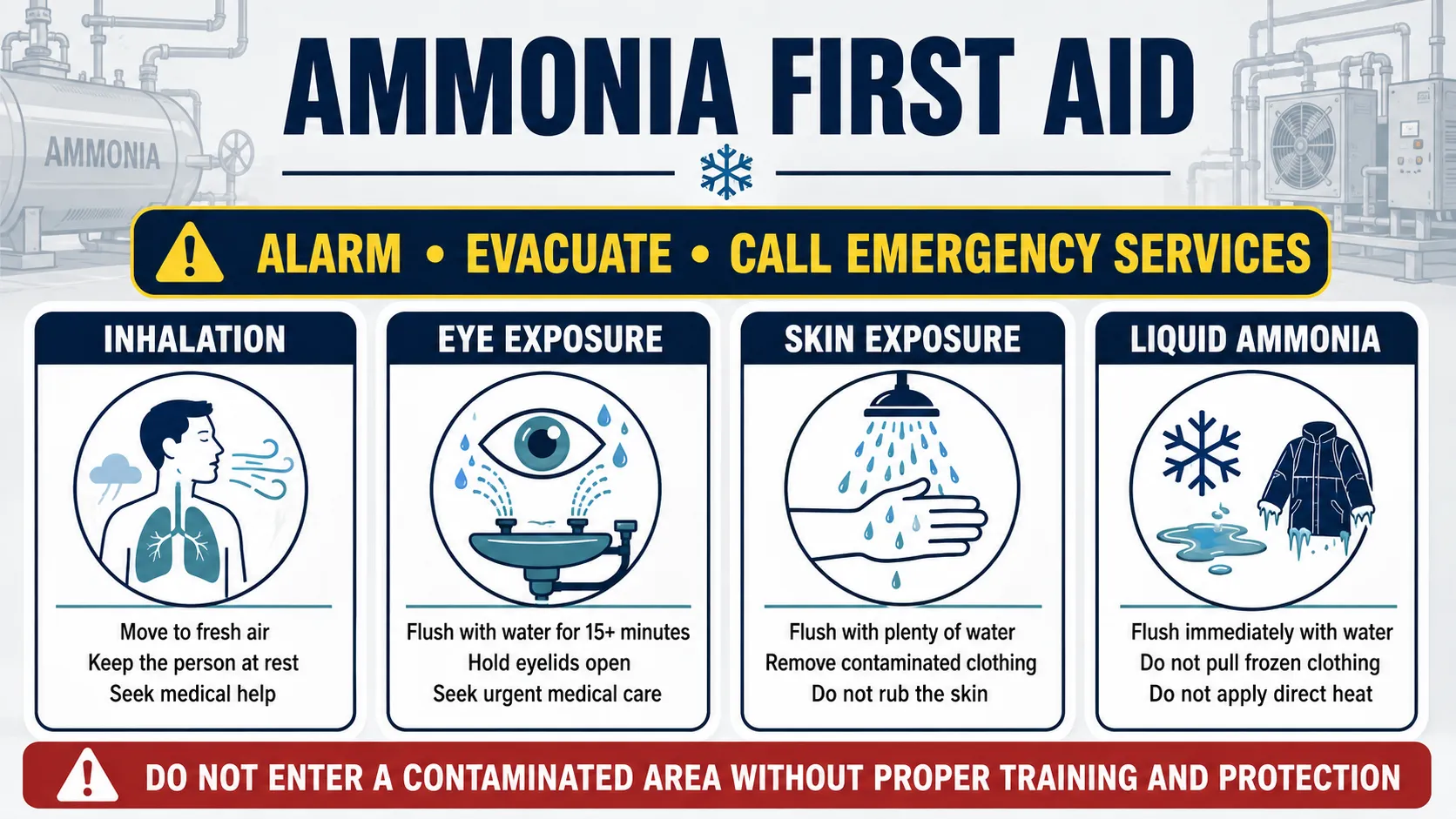
What Not to Do After Ammonia Exposure
Incorrect actions can worsen ammonia injuries or expose additional people. After an incident:
- Do not enter the contaminated area without proper training and respiratory protection.
- Do not delay eye or skin flushing while searching for saline; use clean water immediately.
- Do not rub injured eyes, burned skin or frostbitten tissue.
- Do not forcibly remove clothing frozen to the skin; thaw it with water first.
- Do not apply direct heat, ointments, creams or chemical neutralizers.
- Do not induce vomiting or administer activated charcoal after ingestion.
- Do not give liquids to an unconscious person or someone unable to swallow safely.
- Do not ignore breathing problems or return to work because symptoms initially improve; lung injury may develop later.
Follow the facility’s emergency plan and obtain professional medical assistance after any significant exposure.
Equipment Required for Ammonia Cold Storage Facilities: Afzali’s Recommendations
According to Afzali, exact equipment requirements depend on facility design, risk assessment and applicable UAE cold storage safety standards; however, every ammonia refrigeration plant should include the following core emergency equipment:
- Fixed ammonia detectors and audible/visual alarms for early leak detection and personnel warning.
- Emergency eyewash stations and safety showers with an immediate and adequate supply of clean water.
- Positive-pressure, full-face SCBA for trained emergency responders entering unknown or IDLH atmospheres. Ammonia reaches the NIOSH IDLH level at 300 ppm.
- Chemical-resistant PPE, including goggles, face shields, ammonia-resistant gloves, protective clothing and boots.
- Emergency ventilation and shutdown controls integrated with the facility’s cold storage HVAC system and located where they can be operated without entering the contaminated machinery room.
- First-aid supplies, emergency communication equipment and clearly posted contact numbers for internal responders and local emergency services.
All emergency equipment must remain accessible, clearly marked, regularly inspected and included in staff training and emergency drills.

No Comments
Sorry, the comment form is closed at this time.