


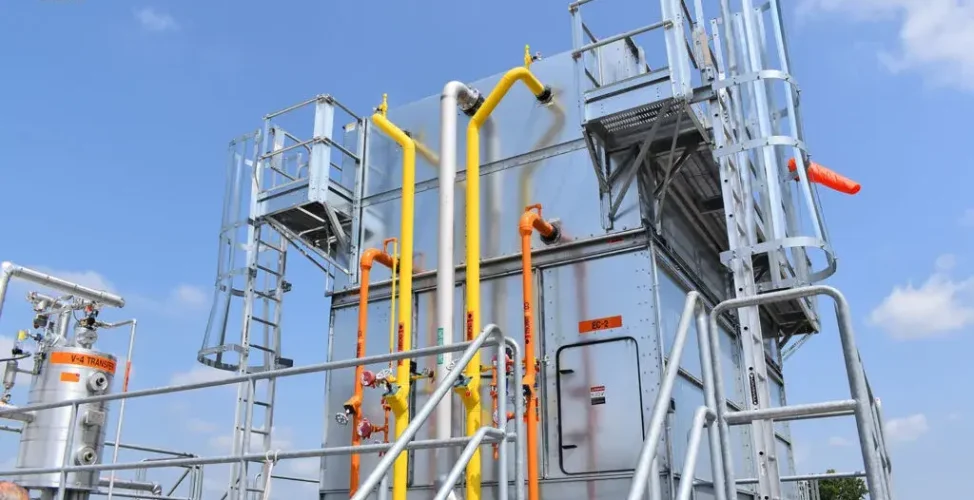
Ammonia Refrigeration System is one of the most widely used technologies in large‑scale industrial cooling and cold storage applications. In industries such as food processing, frozen food logistics, meat processing, and dairy production, maintaining stable low temperatures is critical for product safety, quality preservation, and regulatory compliance. Ammonia (NH₃) has long been recognized as an efficient natural refrigerant due to its excellent thermodynamic properties, high heat transfer efficiency, and low environmental impact. Because of these characteristics, ammonia refrigeration systems are commonly implemented in industrial cold storage warehouses, refrigerated distribution centers, and large food production facilities.
Industrial refrigeration engineers often prefer ammonia‑based systems for facilities that require high cooling capacity and continuous operation. Compared with many synthetic refrigerants, ammonia provides superior energy efficiency, allowing refrigeration plants to achieve lower operating costs and improved system performance over time. In addition, ammonia refrigeration systems are highly scalable, making them suitable for large refrigeration plants, blast freezers, and temperature‑controlled warehouses where precise temperature management is essential.
How Ammonia Refrigeration System Works in Industrial Cooling
Industrial cooling processes rely on highly efficient refrigeration technologies capable of maintaining stable low temperatures across large facilities. An ammonia refrigeration system is specifically designed to handle high cooling loads in industrial environments such as cold storage warehouses, food processing plants, and temperature‑controlled logistics centers. Because ammonia (NH₃) has excellent thermodynamic performance and high latent heat of vaporization, it allows refrigeration systems to remove large amounts of heat with relatively low energy consumption. This makes ammonia refrigeration one of the most efficient solutions for large‑scale industrial cooling.
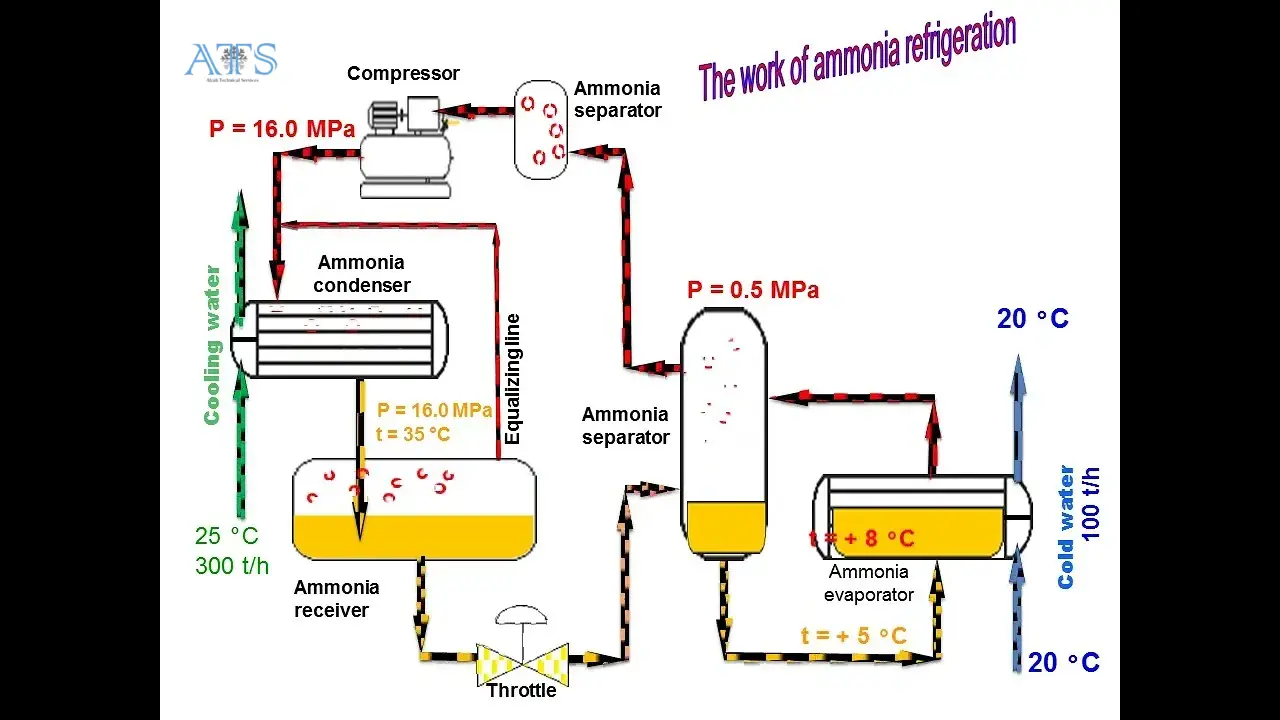
In industrial refrigeration plants, ammonia circulates through a closed loop refrigeration cycle where it repeatedly absorbs heat from the cooled space and releases it to the external environment. The process involves several key components including compressors, condensers, expansion valves, and evaporators. By carefully controlling pressure, temperature, and refrigerant flow, ammonia refrigeration systems maintain precise cooling conditions required for cold storage operations, blast freezing, and food preservation.
Compression Process in Ammonia Refrigeration Systems
The refrigeration cycle begins with the compression stage. In this phase, ammonia vapor leaving the evaporator enters an industrial compressor where its pressure and temperature are significantly increased. Compressors used in ammonia refrigeration plants are typically screw compressors or reciprocating compressors designed for continuous heavy‑duty operation in large industrial cooling systems.
By compressing the ammonia vapor, the system prepares the refrigerant for the heat rejection stage in the condenser. High‑pressure ammonia gas carries the heat absorbed from the refrigerated space and moves toward the condenser unit, where the next phase of the cooling process begins. Efficient compressor operation is critical for maintaining system performance and overall refrigeration plant efficiency.
Condensation and Heat Rejection
After compression, the high‑pressure ammonia vapor flows into the condenser. The primary function of the condenser is to remove heat from the refrigerant and release it to the surrounding environment, usually through air‑cooled or water‑cooled condenser systems. As heat is rejected, the ammonia vapor gradually condenses into a high‑pressure liquid.
This heat rejection stage is essential for maintaining the continuous operation of the refrigeration cycle. Industrial condensers are designed to handle large heat loads generated by cold storage facilities and food processing plants. Proper condenser design and cooling water management significantly improve the overall energy efficiency of ammonia refrigeration systems.
Expansion and Pressure Reduction
Once the ammonia refrigerant has condensed into a high‑pressure liquid, it passes through an expansion valve or pressure‑reducing device. During this stage, the pressure of the liquid ammonia drops rapidly, causing a significant decrease in temperature. This low‑pressure refrigerant mixture then enters the evaporator where the cooling process takes place.
The expansion process plays a crucial role in regulating refrigerant flow and maintaining the correct pressure levels within the refrigeration system. Accurate expansion valve control ensures that the system operates efficiently while delivering consistent cooling performance across industrial refrigeration applications.
Evaporation and Cooling Effect
The final stage of the refrigeration cycle occurs inside the evaporator. In this component, the low‑pressure ammonia absorbs heat from the surrounding environment such as cold storage rooms, freezer chambers, or refrigerated warehouses. As heat is absorbed, the liquid ammonia evaporates and transforms back into vapor.
This evaporation process is responsible for producing the cooling effect required in industrial cold storage facilities. Once the ammonia has fully evaporated, the vapor returns to the compressor, and the refrigeration cycle begins again. Through this continuous cycle of compression, condensation, expansion, and evaporation, ammonia refrigeration systems provide reliable and energy‑efficient cooling for large industrial operations.
Thermodynamic Properties of Ammonia as a Refrigerant
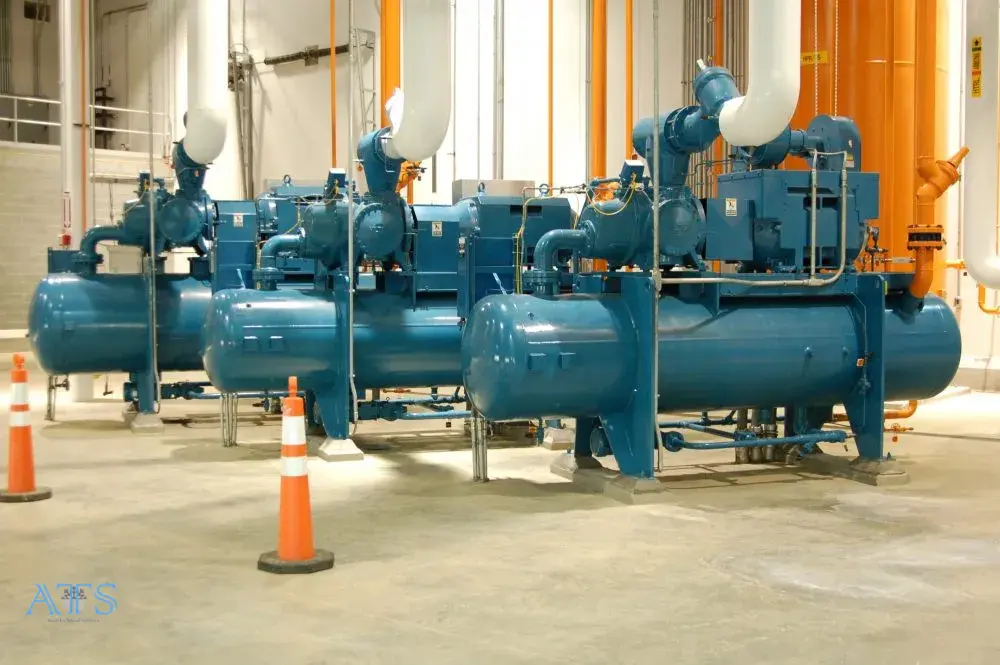
Ammonia (NH₃) is recognized as one of the most thermodynamically efficient refrigerants used in industrial refrigeration systems and large‑scale cold storage facilities. Its physical and thermodynamic properties make it exceptionally suitable for high‑capacity industrial cooling applications, including food cold storage warehouses, blast freezer systems, and refrigeration plants. Unlike many synthetic refrigerants, ammonia delivers high refrigeration performance with relatively low mass flow rates, enabling optimized system efficiency and reduced operational costs.
In industrial refrigeration engineering, the thermodynamic behavior of a refrigerant directly influences compressor power consumption, heat exchanger performance, and overall system COP (Coefficient of Performance). Ammonia’s favorable pressure‑temperature relationship, high latent heat of vaporization, strong thermal conductivity, and zero ozone depletion potential (ODP) make it a preferred natural refrigerant for energy‑efficient refrigeration plant design. These properties allow ammonia refrigeration systems to maintain stable low temperatures in demanding industrial environments while minimizing environmental impact.
High Latent Heat of Vaporization
One of the most critical thermodynamic characteristics of ammonia is its high latent heat of vaporization. This means that during the phase change from liquid to vapor in the evaporator, ammonia absorbs a substantial amount of heat without a significant rise in temperature. In practical industrial applications, this translates to higher cooling capacity per kilogram of refrigerant compared to many alternative refrigerants.
Because ammonia can absorb more heat per unit mass, refrigeration systems require a lower refrigerant circulation rate to achieve the same cooling output. This improves evaporator efficiency, reduces pumping and compression loads, and enhances the overall energy efficiency of industrial cold storage systems.
Favorable Pressure–Temperature Relationship
Ammonia exhibits a pressure–temperature curve that is well suited for industrial refrigeration applications. Its operating pressures at typical cold storage temperatures are manageable and compatible with robust industrial refrigeration components such as screw compressors, pressure vessels, and evaporative condensers. This balanced pressure range allows engineers to design refrigeration plants with optimized compressor sizing and stable operating conditions. Proper pressure characteristics reduce mechanical stress on system components and improve long‑term reliability in large industrial refrigeration systems.
High Thermal Conductivity and Heat Transfer Efficiency
Another key thermodynamic advantage of ammonia is its high thermal conductivity, which significantly enhances heat transfer in evaporators and condensers. Efficient heat exchange improves the performance of heat exchangers and allows refrigeration equipment to operate with higher effectiveness.
In industrial cooling systems, improved heat transfer efficiency reduces the required surface area of heat exchangers and contributes to a more compact and cost‑effective system design. This is particularly beneficial in large cold storage warehouses where system efficiency directly impacts operating expenses and energy consumption.
Low Molecular Weight and Efficient Compression
Ammonia has a low molecular weight, which positively influences its compression characteristics. During the compression process, ammonia requires relatively less volumetric flow compared to some other refrigerants, contributing to efficient compressor operation and improved system performance.
Efficient compression reduces the specific energy consumption of the refrigeration plant and supports higher COP values. As a result, ammonia refrigeration systems are widely used in industrial cooling applications where continuous operation, high reliability, and long‑term energy savings are critical.
Environmental Performance and Sustainability
From an environmental standpoint, ammonia is classified as a natural refrigerant with zero Ozone Depletion Potential (ODP = 0) and zero Global Warming Potential (GWP = 0). Unlike many fluorinated refrigerants, ammonia does not contribute to greenhouse gas accumulation when properly managed in industrial systems.
As global environmental regulations increasingly restrict high‑GWP refrigerants, ammonia continues to gain importance in sustainable refrigeration plant design. Its thermodynamic efficiency combined with minimal environmental impact makes it one of the most technically and economically viable refrigerants for modern industrial cold storage and refrigeration systems.
Why Ammonia Is Widely Used in Industrial Refrigeration
Ammonia (NH₃) has been a cornerstone of industrial refrigeration for over a century due to its exceptional thermodynamic properties, cost efficiency, and environmental sustainability. Its widespread adoption in food processing plants, cold storage warehouses, and large-scale refrigeration systems stems from its ability to deliver high cooling capacity with minimal energy consumption. Below are the key reasons why ammonia remains the refrigerant of choice in industrial applications.
High Energy Efficiency and Coefficient of Performance (COP)
Ammonia refrigeration systems are renowned for their superior energy efficiency, primarily due to their high Coefficient of Performance (COP). Compared to synthetic refrigerants like R-134a or R-404A, ammonia achieves higher COP values, meaning it produces more cooling per unit of energy consumed. This is critical in industrial settings where refrigeration systems operate continuously for 24/7 cooling demands. The high latent heat of vaporization and low specific volume of ammonia vapor allow compressors to handle less refrigerant mass flow while maintaining high cooling output. This reduces electrical energy consumption and operational costs, making ammonia systems economically advantageous for large-scale cold storage and food processing facilities.
Excellent Heat Transfer Characteristics
Ammonia’s superior thermal conductivity and heat transfer coefficients significantly enhance the performance of evaporators and condensers. This allows for faster heat absorption and rejection, ensuring rapid cooling in demanding environments like blast freezers and temperature-controlled warehouses. In practical terms, ammonia’s efficient heat transfer reduces the required surface area of heat exchangers, enabling more compact and cost-effective system designs. This is particularly beneficial in industrial refrigeration plants where space optimization and energy efficiency are critical.
Environmental Sustainability and Regulatory Compliance
Ammonia is classified as a natural refrigerant with zero Ozone Depletion Potential (ODP = 0) and zero Global Warming Potential (GWP = 0). Unlike synthetic refrigerants such as hydrofluorocarbons (HFCs) and hydrochlorofluorocarbons (HCFCs), ammonia does not contribute to ozone layer depletion or climate change when properly managed. With global environmental regulations like the Montreal Protocol and Kigali Amendment phasing out high-GWP refrigerants, industries are increasingly adopting ammonia-based systems to comply with sustainability standards. This regulatory alignment ensures ammonia’s long-term viability in industrial refrigeration.
Cost-Effectiveness and Long-Term Reliability
Ammonia is cost-effective compared to synthetic refrigerants. It is produced in large quantities for industrial applications, ensuring stable supply chains and lower refrigerant costs. Additionally, ammonia systems are designed for long service life and minimal maintenance, making them a durable solution for industrial cooling infrastructure. The combination of low refrigerant cost, high energy efficiency, and reduced maintenance requirements translates to lower lifecycle costs for industrial refrigeration plants. This economic advantage is a key driver for ammonia’s dominance in large-scale cooling systems.
Proven Industrial Performance and Safety Standards
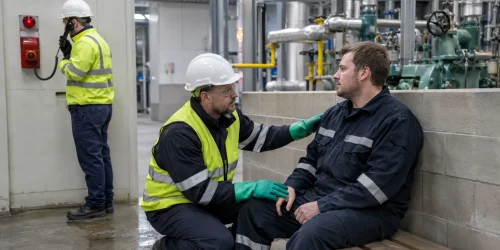
Ammonia refrigeration systems have a proven track record in industries such as food processing, dairy production, seafood storage, and chemical manufacturing. Despite its toxicity and flammability risks, ammonia’s hazards are well understood and mitigated through strict safety protocols, advanced leak detection systems, and trained personnel. Modern ammonia refrigeration plants incorporate robust engineering controls and automated monitoring systems to ensure safe and reliable operation. These advancements have solidified ammonia’s position as the preferred refrigerant for industrial applications requiring high cooling capacity and operational stability.
Key Components of an Industrial Ammonia Refrigeration System
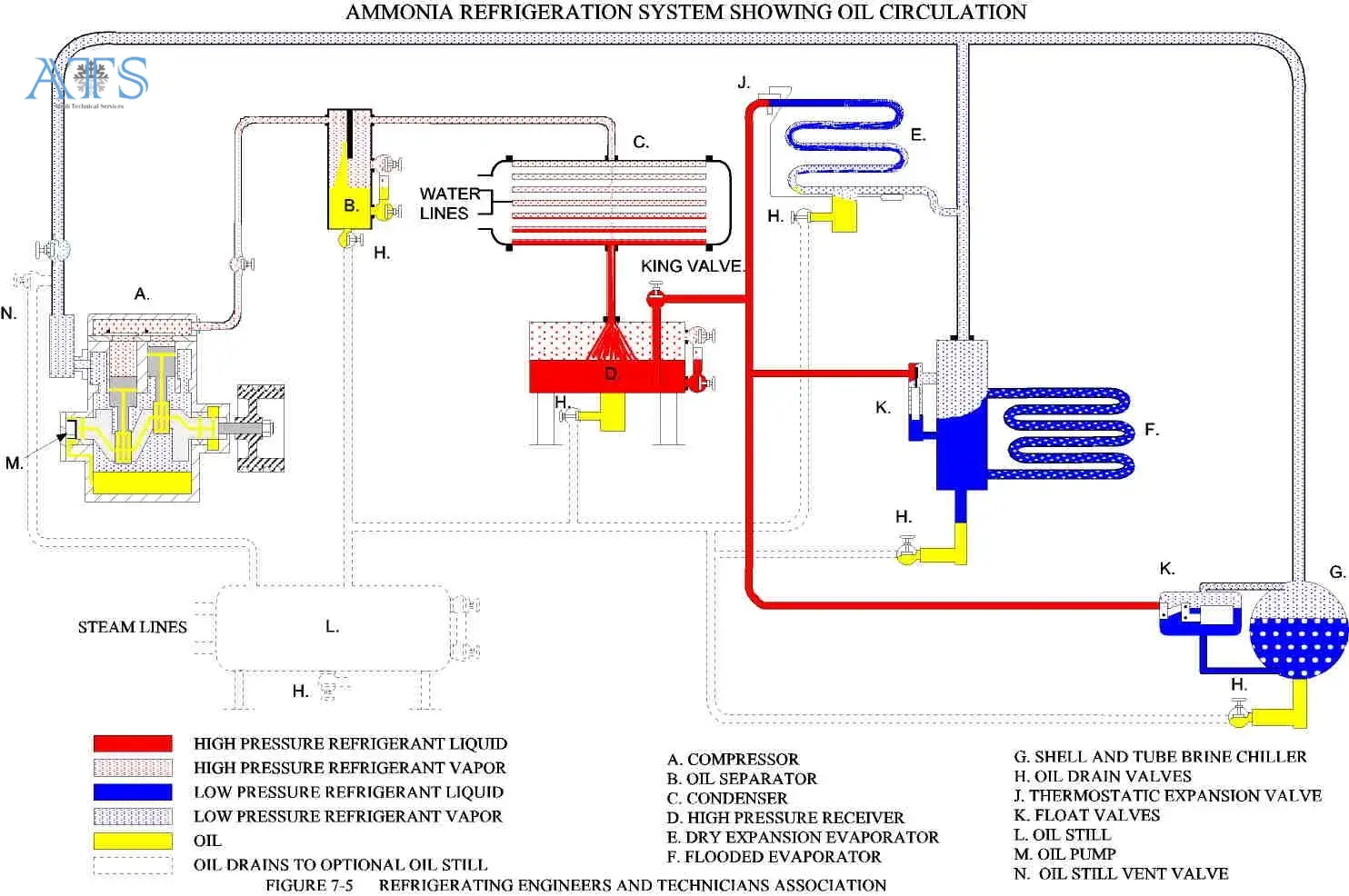
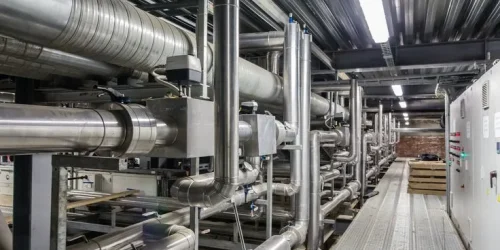
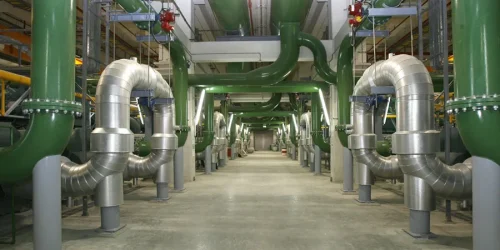
Industrial ammonia refrigeration systems are designed to deliver reliable and high‑capacity cooling for applications such as cold storage warehouses, food processing facilities, and industrial freezing plants. To achieve stable and efficient cooling performance, these systems rely on a series of interconnected mechanical and thermodynamic components that work together within the refrigeration cycle. Each component plays a critical role in controlling refrigerant flow, managing heat transfer, and maintaining system pressure.
In large‑scale refrigeration plants, the configuration and design of these components directly influence system efficiency, operational safety, and long‑term reliability. From compressors and condensers to evaporators and pressure vessels, every part of the ammonia refrigeration system must be engineered to withstand industrial operating conditions while ensuring optimal cooling capacity. Understanding these core components helps engineers, facility operators, and cold storage managers optimize system performance and maintenance strategies.
Compressor (Heart of the Refrigeration System)
The compressor is the primary driving force of the ammonia refrigeration cycle. Its function is to compress low‑pressure ammonia vapor returning from the evaporator and increase both its pressure and temperature. This process prepares the refrigerant for the heat rejection phase in the condenser. In industrial ammonia refrigeration plants, compressors are typically screw compressors or reciprocating compressors, designed to handle high refrigeration loads and continuous operation. Proper compressor selection, capacity control, and lubrication management are essential for maintaining system efficiency and preventing excessive energy consumption.
Condenser (Heat Rejection Unit)
The condenser is responsible for removing heat from the high‑pressure ammonia vapor produced by the compressor. As the vapor releases heat to the surrounding environment, it condenses into a high‑pressure liquid. Industrial ammonia systems commonly use evaporative condensers, air‑cooled condensers, or water‑cooled condensers depending on the facility design and environmental conditions. Efficient condenser operation is crucial because it directly affects refrigeration capacity, compressor workload, and overall system energy efficiency.
Evaporator (Cooling and Heat Absorption Unit)
The evaporator is the component where the actual cooling process occurs. Inside the evaporator coils, low‑pressure liquid ammonia absorbs heat from the surrounding air or product load and evaporates into vapor. In cold storage warehouses and industrial refrigeration applications, evaporators are often designed as air unit coolers or plate evaporators that distribute cold air evenly throughout the refrigerated space. Efficient evaporator performance ensures uniform temperature distribution and stable storage conditions for temperature‑sensitive products.
Expansion Valve (Refrigerant Flow Control)
The expansion valve regulates the flow of liquid ammonia entering the evaporator. By reducing the pressure of the refrigerant, the expansion valve causes a drop in temperature, allowing the ammonia to absorb heat efficiently during evaporation. Precise control of the expansion process is essential for maintaining the correct refrigerant balance in the system. Modern ammonia refrigeration systems often use automatic expansion valves or electronic control valves to improve system stability and energy efficiency.
Receiver and Pressure Vessels
Industrial ammonia refrigeration systems typically include several pressure vessels, such as high‑pressure receivers, low‑pressure receivers, and surge drums. These vessels store and regulate the flow of liquid ammonia within different sections of the refrigeration system. The receiver acts as a reservoir for liquid refrigerant, ensuring stable refrigerant supply to the expansion devices and evaporators. Proper design and monitoring of pressure vessels are critical for maintaining system safety and operational stability in large refrigeration plants.
Oil Separator and System Controls
In ammonia refrigeration systems, compressors circulate lubricating oil along with the refrigerant. The oil separator removes oil from the compressed ammonia vapor before it reaches the condenser. This prevents oil accumulation in heat exchangers, which could otherwise reduce heat transfer efficiency. In addition to mechanical components, modern ammonia refrigeration plants rely on advanced control systems, sensors, and safety instrumentation. These systems monitor pressure, temperature, refrigerant levels, and system performance to ensure safe, efficient, and automated operation of the refrigeration plant.
Read More: Engineering Design on Cold Storage Quality
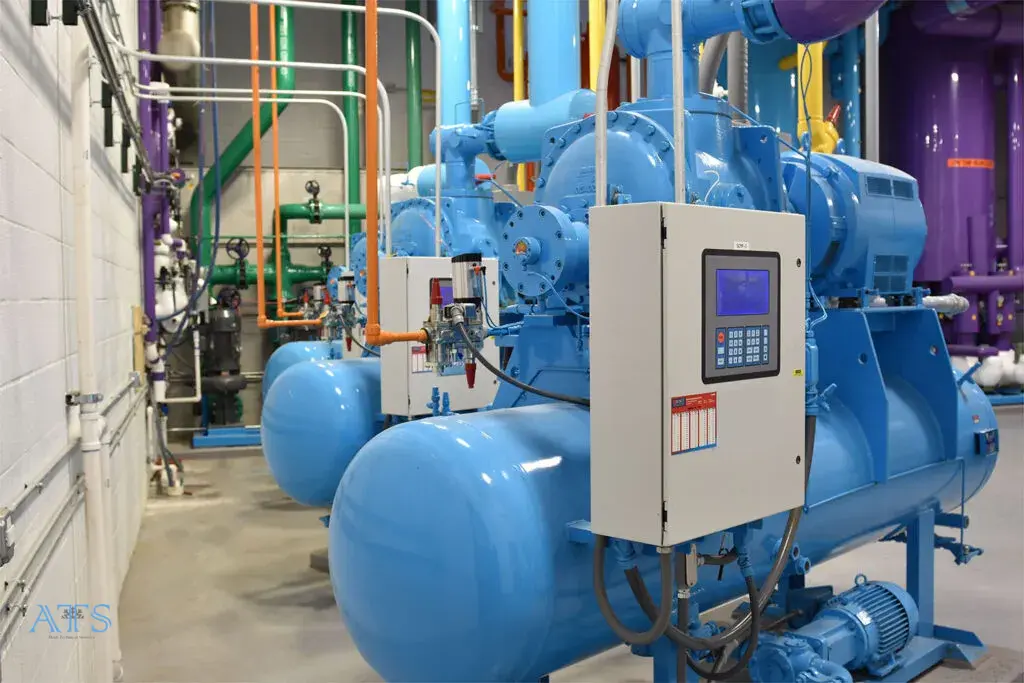
Ammonia Refrigeration in Industrial Cold Storage Facilities
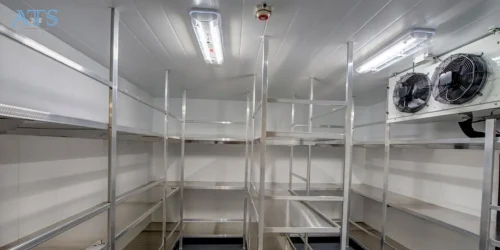
Industrial cold storage facilities require highly reliable refrigeration systems capable of maintaining precise temperature conditions for large volumes of perishable products. Ammonia refrigeration systems have become the preferred solution for these facilities due to their high cooling capacity, energy efficiency, and long‑term operational reliability. In large cold storage warehouses, ammonia systems are designed to operate continuously while maintaining stable temperature zones for chilled storage, frozen storage, and deep‑freeze environments.
Cold storage infrastructure often handles massive product loads such as meat, seafood, dairy products, fruits, vegetables, and frozen foods. Maintaining consistent temperatures across these storage environments is critical for preserving product quality, preventing spoilage, and ensuring compliance with food safety standards. Ammonia refrigeration systems provide the thermal performance and scalability required to support these demanding industrial cooling operations.
Temperature Control in Large Cold Storage Warehouses
Industrial cold storage warehouses typically operate across multiple temperature ranges depending on the stored products. Chilled storage areas may operate between 0°C and 4°C, while frozen storage zones can require temperatures between -18°C and -25°C, and blast freezing operations may reach -35°C or lower.
Ammonia refrigeration systems are capable of maintaining these temperature levels efficiently across large storage spaces. By using properly designed evaporators, air circulation systems, and precise refrigerant flow control, ammonia systems ensure uniform cooling throughout the facility. This consistent temperature distribution is essential for maintaining product integrity and preventing thermal fluctuations.
High Cooling Capacity for Large Product Loads
Cold storage facilities often manage thousands of tons of stored goods, which generate significant thermal loads due to product respiration, door openings, equipment operation, and ambient heat infiltration. Ammonia refrigeration systems are particularly well suited for handling these high refrigeration loads.
Because ammonia has a high latent heat of vaporization and excellent thermodynamic efficiency, it can remove large quantities of heat with relatively low refrigerant flow rates. This capability allows industrial refrigeration plants to maintain stable cooling performance even under heavy storage loads and high operational demand.
Integration with Blast Freezing and Processing Areas
Many industrial cold storage facilities are integrated with blast freezing tunnels, food processing lines, and product packaging areas. These processes require rapid heat removal to freeze products quickly and preserve their texture, moisture content, and nutritional quality.
Ammonia refrigeration systems provide the rapid cooling capacity needed for blast freezing operations. High‑performance evaporators combined with powerful compressors enable these systems to achieve extremely low temperatures while maintaining efficient energy consumption. This integration makes ammonia systems ideal for facilities involved in frozen food production and large‑scale cold chain logistics.
Energy Efficiency in Large‑Scale Cold Storage Operations
Energy consumption is one of the most significant operating costs in industrial cold storage facilities. Ammonia refrigeration systems offer superior energy efficiency compared to many alternative refrigerants, largely due to their high heat transfer efficiency and favorable thermodynamic properties.
Modern ammonia refrigeration plants often incorporate variable‑speed compressors, advanced control systems, and optimized heat exchangers to further improve energy performance. These technologies help facility operators reduce electricity consumption while maintaining stable cooling performance across large storage areas.
Operational Reliability and Long Service Life
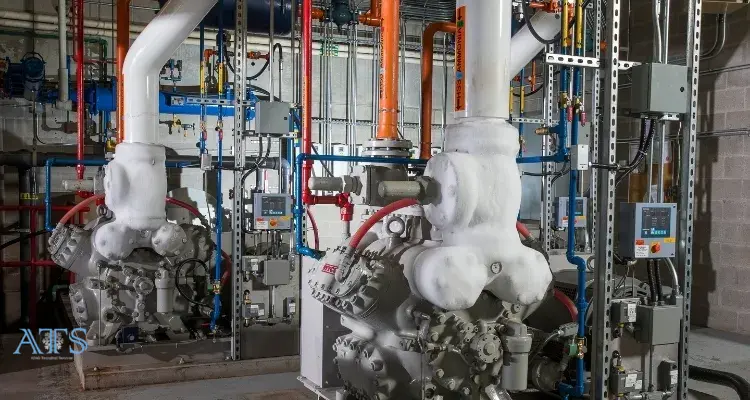
Industrial cold storage operations demand refrigeration systems that can operate continuously with minimal downtime. Ammonia refrigeration systems are known for their robust design and long operational lifespan, making them ideal for large industrial facilities that require uninterrupted cooling. With proper maintenance, ammonia refrigeration plants can operate efficiently for several decades. Their mechanical simplicity, durable components, and well‑established engineering standards contribute to their reliability in demanding cold storage environments.
Find Out More: HVAC monitoring challenges in 2026
Energy Efficiency of Ammonia Refrigeration Systems
Energy efficiency is one of the most critical performance factors in industrial refrigeration systems, particularly in large cold storage facilities where refrigeration operates continuously. Ammonia refrigeration systems are widely recognized for their superior energy performance compared to many synthetic refrigerants. Due to ammonia’s excellent thermodynamic properties and high latent heat of vaporization, these systems can achieve higher cooling capacity while consuming less electrical energy.
In industrial refrigeration plants, energy optimization directly impacts operational costs, system sustainability, and long‑term performance. Facilities that use ammonia refrigeration often experience lower electricity consumption and improved Coefficient of Performance (COP), making ammonia one of the most efficient refrigerants for large‑scale cooling applications.
High Thermodynamic Efficiency of Ammonia
Ammonia (NH₃) possesses highly favorable thermodynamic characteristics that contribute significantly to its energy efficiency. One of its most important properties is its high latent heat of vaporization, which allows it to absorb large amounts of heat during the evaporation process.
Because of this property, ammonia refrigeration systems require lower refrigerant mass flow rates to achieve the same cooling capacity compared with many other refrigerants. This leads to reduced compressor workload, improved heat transfer efficiency, and ultimately lower overall energy consumption in industrial refrigeration plants.
Improved Coefficient of Performance (COP)
The Coefficient of Performance (COP) is a key metric used to evaluate the energy efficiency of refrigeration systems. Ammonia refrigeration systems typically achieve higher COP values compared to systems using synthetic refrigerants such as HFCs.
Higher COP values indicate that the system produces more cooling output per unit of energy consumed. This advantage is particularly significant in large industrial refrigeration applications such as cold storage warehouses, food processing facilities, and frozen product distribution centers where refrigeration systems operate continuously throughout the year.
Energy Optimization in Large Industrial Refrigeration Plants
Modern ammonia refrigeration plants incorporate several engineering strategies to further improve energy performance. These include variable‑speed compressors, advanced capacity control systems, and optimized heat exchanger designs that reduce thermal losses.
In addition, the integration of energy management systems, smart sensors, and automated control platforms allows facility operators to monitor system performance in real time. These technologies help identify inefficiencies, optimize compressor loading, and reduce unnecessary energy consumption across the refrigeration cycle.
Reduced Operational Costs for Cold Storage Facilities
Energy costs account for a significant portion of operating expenses in industrial cold storage facilities. Because ammonia refrigeration systems require less energy to produce the same cooling capacity, they offer considerable long‑term economic advantages.
By reducing electricity consumption and improving system efficiency, ammonia refrigeration systems help facility owners lower operational costs while maintaining reliable temperature control. This makes ammonia one of the most cost‑effective refrigeration solutions for large‑scale industrial cooling infrastructure.
Sustainability and Environmental Efficiency
Beyond energy performance, ammonia refrigeration systems also contribute to environmental sustainability. Ammonia is a natural refrigerant with zero ozone depletion potential (ODP) and zero global warming potential (GWP).
When combined with its high energy efficiency, ammonia becomes an environmentally responsible solution for industrial refrigeration. Many modern cold storage facilities adopt ammonia‑based refrigeration systems not only for cost savings but also to meet sustainability targets and environmental regulations.

No Comments
Sorry, the comment form is closed at this time.