


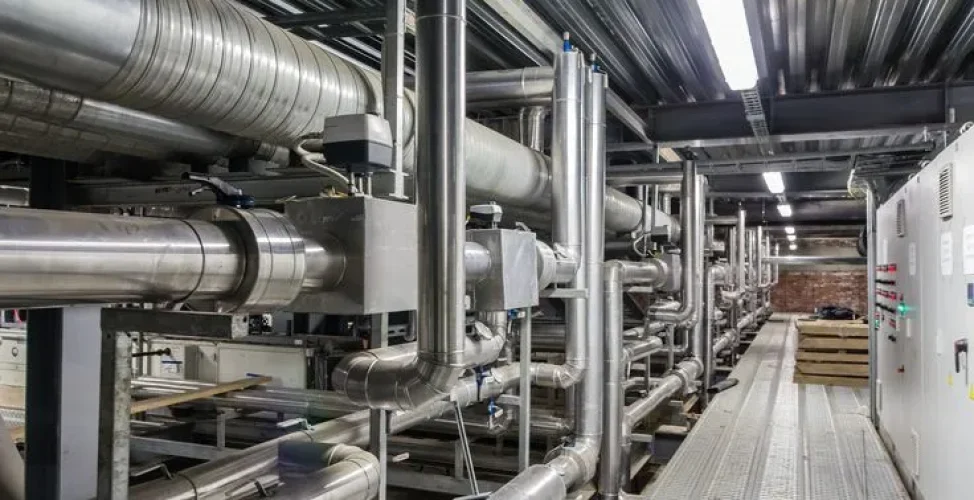
Choosing an Industrial HVAC Consultant in Dubai is not the same decision as hiring a residential AC technician or a general mechanical contractor. Industrial facilities, cold storage warehouses, food processing plants, pharmaceutical stores, and district cooling networks, operate under strict thermal tolerances, regulatory scrutiny, and continuous load demands that a standard contractor is rarely equipped to evaluate independently. An industrial HVAC consultant brings vendor-neutral engineering judgment to the table: precise load calculations, compliance with ASHRAE and UAE Fire & Safety codes, and a technical audit process that protects the client’s investment before a single piece of equipment is purchased. This guide breaks down exactly what separates a qualified industrial HVAC consultant from a general contractor, the specific criteria to check before signing a contract, and the warning signs that indicate a consultant isn’t equipped to handle a facility where a two-degree temperature swing can mean lost stock or a failed compliance audit.
Industrial HVAC Consultant in Dubai vs. General Contractor
An industrial HVAC consultant designs, calculates, and independently verifies a thermal system before and after installation, while a general contractor procures equipment and executes the physical build. The consultant’s value lies in objectivity — since they typically have no financial stake in which brand of chiller or compressor gets installed, their recommendations are driven by performance data, not manufacturer margins. A general contractor, by contrast, is measured on delivery speed and installation cost, which can create a natural incentive to default to familiar equipment rather than the most efficient option for a specific facility.
Contact Afzali’s Industrial HVAC Consultants:
📞 +971 4 288 6161 | +971 50 6348 577
Scope of Responsibility
A general contractor’s role begins once the design is finalized: sourcing materials, managing site labor, running ductwork and piping, and commissioning the physical installation. An industrial HVAC consultant works both before and alongside that process. Before construction, the consultant conducts site assessments, cooling and heating load calculations, and equipment selection studies. During construction, the consultant reviews shop drawings, verifies that installed components match specified performance metrics, and signs off on commissioning reports. Many industrial facilities in Dubai, particularly cold storage and pharmaceutical sites, engage a consultant specifically to catch discrepancies between what was designed and what a contractor actually builds on site.
Independence and Accountability
This is the sharpest line between the two roles. A contractor is contractually accountable for physical execution, if a duct is installed incorrectly, that’s a contractor liability. A consultant is accountable for the engineering logic behind the system: whether the load calculations were accurate, whether the equipment specified can actually meet the facility’s cooling demand under Dubai’s peak summer conditions, and whether the design complies with Dubai Municipality and UAE Fire & Safety Authority requirements. When a project fails, through underperformance, energy waste, or a failed compliance audit, an independent consultant’s paper trail is usually what determines whether the fault lies in the design or the execution.
When You Need One, the Other, or Both
For straightforward installations with a proven system design, a qualified contractor working from an existing specification may be sufficient. For anything involving custom load profiles, multi-zone temperature control, cold chain compliance, or a facility with regulatory audit exposure — food processing, pharmaceutical storage, or district cooling integration — an industrial HVAC consultant should be engaged before a contractor is selected. In practice, the strongest project outcomes in Dubai’s industrial sector come from consultants and contractors working as separate, accountable parties rather than a single firm performing both roles without independent oversight.

Benefits of Working with Professional Industrial HVAC Consultant in Dubai
Working with a professional HVAC consultant reduces the two biggest risks in any industrial cooling project: overspending on the wrong equipment and underperforming once the system is operational. Because a qualified consultant evaluates a facility’s actual load, climate exposure, and regulatory obligations before any purchasing decision is made, the return on that upfront engineering investment typically shows up within the first year of operation through lower energy bills, fewer breakdowns, and a smoother path through compliance inspections.
Key Benefits;
- Accurate load calculations from day one: Professional consultants size equipment based on precise cooling and heating load data, not rule-of-thumb estimates, which prevents both undersized systems that fail during peak summer demand and oversized systems that waste energy year-round.
- Vendor-neutral equipment recommendations: Since consultants aren’t tied to a specific manufacturer or distributor, their equipment selection is based on performance, lifecycle cost, and compatibility with the facility, not sales incentives.
- Regulatory compliance built into the design: A consultant who understands Dubai Municipality codes, the UAE Fire & Safety Code of Practice, and the Al Sa’fat Green Building System designs compliance in from the start, avoiding costly redesigns during authority approval.
- Lower long-term energy costs: Optimized system design, correct equipment staging, and smart control strategy implementation typically translate into measurable reductions in electricity consumption, which matters significantly given Dubai’s cooling-dominated energy profile.
- Early detection of design flaws: Technical audits and design reviews catch issues like thermal bridging, undersized ductwork, or incompatible refrigerant circuits before construction begins, when fixes are still inexpensive.
- Stronger negotiating position with contractors: A detailed, consultant-prepared specification gives facility owners a clear benchmark to hold contractors accountable to, reducing disputes over scope and performance during execution.
- Extended equipment lifespan: Systems designed around accurate load profiles and proper component sizing experience less mechanical stress, which reduces wear and extends the operational life of chillers, compressors, and air handling units.
- Documentation that protects future decisions: Consultants provide technical reports, as-built drawings, and performance benchmarks that remain valuable for future maintenance, expansion, or ownership transitions long after the original project is complete.
As monitoring technology evolves, facility owners should also stay informed about emerging HVAC monitoring challenges in 2026 that affect long-term system performance
Checklist: How to Choose the Right Industrial HVAC Consultant in Dubai
Choosing the right industrial HVAC consultant in Dubai comes down to verifying six specific capabilities: proven experience with similar industrial facilities, documented compliance expertise, vendor-neutral independence, accurate load calculation skills, a track record in technical audits and project recovery, and true end-to-end project support. A consultant who can demonstrate all six — with evidence, not just claims — is equipped to protect your investment from the design phase through years of operation.
“For ongoing system upkeep after the consultant’s initial design work is complete, refer to our HVAC Maintenance Checklist to ensure long-term performance.”
1. Proven Experience with Industrial & Cold Storage Projects
Ask for project references specific to your facility type, not general HVAC experience. A consultant who has designed office building comfort cooling has a fundamentally different skill set than one who has designed a multi-zone blast freezer or a pharmaceutical cold room with GDP/GMP compliance requirements. Request to see:
- Case studies or portfolio entries for facilities of comparable scale and industry (food & beverage, pharmaceutical, logistics, district cooling)
- Evidence of experience with your specific temperature range — standard chilled storage (2–8°C), deep-freeze (-18°C to -25°C), or ultra-low temperature environments each demand different design expertise. For a deeper look at how these systems are designed for local conditions, see our guide on HVAC Integration for UAE Cold Storage Facilities.
- References you can actually contact, not just testimonials published on the consultant’s own website
2. Compliance with ASHRAE, ISO, and UAE Fire & Safety Standards
Regulatory compliance in the UAE isn’t optional, and it isn’t uniform — it spans Dubai Municipality codes, the UAE Fire & Safety Code of Practice on refrigerant classification and fire-rated materials, ISO standards, ASHRAE design methodology, and the Al Sa’fat Green Building System’s energy efficiency requirements. A qualified consultant should be able to explain, without hesitation, how their design approach satisfies each of these simultaneously.
- Ask which specific codes and standards they design to, and request documentation showing past compliance sign-offs
- Confirm familiarity with Al Sa’fat EER/COP thresholds if your project needs green building certification
- Verify their process for producing the technical documentation authorities require for approval
3. Vendor-Neutral and Independent Recommendations
A consultant’s value collapses if their equipment recommendations are influenced by manufacturer partnerships or distribution agreements. Independence should be explicit and verifiable.
- Ask directly whether the firm holds distribution agreements, reseller partnerships, or commission arrangements with any equipment manufacturer
- Request that equipment comparisons be presented with performance data — EER/COP ratings under Dubai’s high-ambient (T3) conditions, lifecycle cost, and total cost of ownership — rather than brand preference
- Be cautious of any consultant who recommends only one manufacturer’s product line across every project type
4. Load Calculation and Energy Optimization Expertise
Accurate cooling and heating load calculations are the foundation of every design decision that follows — equipment sizing, ductwork layout, and energy consumption for the life of the system. This is also where the biggest and most expensive mistakes happen when a consultant lacks depth.
- Ask what methodology and software they use for load calculations, and whether it accounts for Dubai’s specific climate data and peak ambient conditions
- Request examples of energy optimization measures they’ve implemented — variable speed drive integration, floating head pressure control, adaptive defrost sequencing — and the measured savings achieved
- Confirm they provide a Measurement & Verification (M&V) report to quantify actual post-implementation energy performance against projections
5. Track Record in Technical Audits and Project Takeovers
A consultant’s ability to diagnose an existing failing system is often a better indicator of technical depth than their marketing materials for new design work. Facilities that have taken over stalled or underperforming projects show real forensic engineering capability.
- Ask about experience conducting technical due diligence audits on existing or failed installations
- Request an example of how they structured a remediation plan after identifying design or installation flaws
- Confirm they can produce a quantified performance report — System Coefficient of Performance (COP), EER benchmarking, and a prioritized remediation list with calculated ROI
6. End-to-End Support from Design to Commissioning
The strongest consultants stay engaged through the full project lifecycle rather than handing off a design document and disappearing. This continuity is what prevents the gap between what was designed and what actually gets built.
- Confirm involvement in shop drawing review during construction, not just the initial design phase
- Verify they participate in commissioning — Integrated System Tests (IST) and full-load performance verification — rather than leaving that entirely to the contractor
- Ask whether post-handover support, such as HVAC System Monitoring or warranty-period consultancy, is included
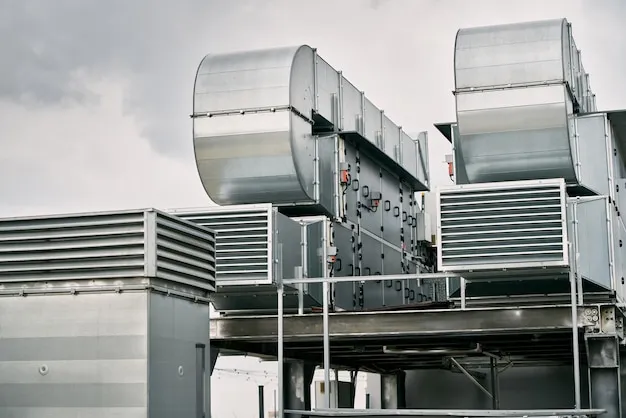
Why Contractors Also Need an Industrial HVAC Consultant in Dubai for Advisory Support
Contractors need an Industrial HVAC Consultant in Dubai for advisory support at moments where technical risk sits outside their core execution role, winning complex tenders, resolving disputes with clients, or extending into specialized engineering work their in-house team doesn’t cover. This isn’t about consultants auditing a contractor’s existing work; it’s about a consultant acting as a technical partner who strengthens a contractor’s position before, during, and after a project changes hands.
Where Advisory Support Strengthens a Contractor’s Position
- Building a stronger technical proposal for tenders: When bidding on a large industrial contract, contractors often bring in a consultant to help develop the technical narrative behind their proposal, value engineering options, energy performance projections, and equipment justifications that make the bid more competitive against firms offering only price.
- Protecting against liability in disputed scope: When a client disputes whether an issue stems from the original design or the contractor’s execution, an independent consultant can provide a neutral technical assessment that clarifies where responsibility actually lies, protecting the contractor from being held accountable for a design flaw they didn’t create.
- Extending capability into specialized segments: Contractors strong in standard commercial HVAC but less experienced in niche areas, cleanroom-grade HEPA filtration, ultra-low temperature freezer rooms, or district cooling tie-ins, can partner with a consultant on a project basis rather than turning down work outside their usual scope.
- Custom component engineering support: When a project requires non-standard ductwork, custom control panels, or bespoke fittings that can’t be sourced off-the-shelf, a consultant with fabrication engineering experience can help the contractor design components that meet pressure ratings and material tolerances without delaying the build.
- Second opinion during client negotiations: When a client questions a contractor’s equipment selection or design approach mid-project, having an independent consultant validate the reasoning, rather than the contractor defending it alone, often resolves the disagreement faster and preserves the client relationship.
- Value engineering without cutting corners: A consultant can identify where a contractor can reduce material or equipment costs without compromising performance or compliance, giving the contractor a way to sharpen margins on fixed-price contracts without exposing the client to hidden risk.
For contractors, the relationship is transactional and project-specific, a consultant isn’t a permanent fixture, but a specialist brought in exactly where technical depth, an outside perspective, or specialized engineering capability changes the outcome of a bid, a build, or a client conversation.

Afzali: Your Trusted Industrial HVAC Consultant in Dubai
Afzali operates as an integrated industrial HVAC consultancy and contracting entity, combining independent engineering assessment with direct execution authority across the project lifecycle, from initial load calculation and equipment specification through installation, commissioning, and post-handover performance monitoring. This structure eliminates the accountability gap that typically arises when design consultancy and physical execution are handled by separate, uncoordinated firms.
Design output is governed by ASHRAE methodology, UAE Fire & Safety Code of Practice requirements for refrigerant classification and fire-rated materials, and Al Sa’fat Green Building System EER/COP thresholds. Equipment selection is conducted on a vendor-neutral basis, with comparative analysis based on validated performance data under Dubai’s T3 high-ambient design conditions, lifecycle cost, and total cost of ownership — independent of manufacturer or distribution agreements.
For facility owners in food & beverage, pharmaceutical, logistics, and district cooling sectors, Afzali’s scope includes cooling and heating load calculation, system evaluation and technical audits, energy optimization through control strategy implementation and M&V reporting, and full EPC delivery for new-build and retrofit projects.
For contracting firms, Afzali provides technical due diligence audits on stalled or non-compliant installations, custom component engineering for non-standard system integration, and independent technical assessment during scope disputes — structured as project-specific engagements rather than ongoing subcontracting arrangements.
Afzali’s project record spans cold storage construction, industrial refrigeration system design, and district cooling integration across the UAE and GCC region, including both new-build consultancy and technical recovery of installations that failed under previous contractors.
For a technical consultation covering load calculation, equipment specification, or system audit requirements, contact Afzali’s engineering team.
Every industrial HVAC and refrigeration project carries a different load profile, compliance scope, and operational risk. Afzali’s engineering team evaluates your facility’s specific requirements, new design, system audit, or project recovery — and provides a technical proposal built on validated data, not estimates.
Contact Afzali’s Industrial HVAC Consultants:
📞 +971 4 288 6161 | +971 50 6348 577
📧 info@afzali.ae
📍 Office 804, MM Towers, Al Makthoum Street, Deira, Dubai



No Comments
Sorry, the comment form is closed at this time.