


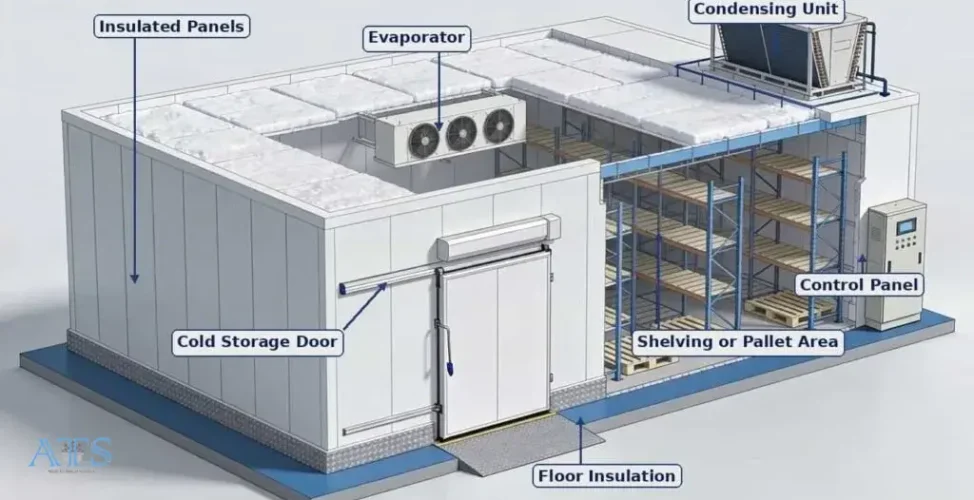
Engineering design plays a critical role in modern refrigeration facilities, particularly when discussing Engineering Design on Cold Room Quality. From the earliest feasibility assessments to detailed mechanical layouts, every engineering decision directly influences energy consumption, temperature stability, operational reliability, and long‑term operating costs. A well‑engineered cold storage facility does not simply meet temperature requirements, it optimizes thermal performance, minimizes energy loss, and ensures consistent environmental control under varying load conditions.
Efficiency in cold storage is not achieved by refrigeration equipment alone. It is the result of integrated engineering across multiple disciplines, including structural design, insulation strategy, refrigeration system configuration, airflow dynamics, electrical infrastructure, and automation systems. When these elements are designed cohesively, the facility operates as a unified system—reducing energy waste, extending equipment lifespan, and lowering the total cost of ownership (TCO).
The Role of Engineering Design in Cold Room Efficiency
Engineering design is the backbone of cold room efficiency, shaping how the facility performs thermally, mechanically, and operationally. True efficiency is not created by equipment alone, it is engineered through precise calculations, interdisciplinary coordination, and systems integration. Below are the three core engineering elements that directly determine how efficiently a cold storage facility will operate, the same principles we apply in every cold room design project we undertake at Afzali.
Why Engineering Decisions Shape Energy and Performance Outcomes
Every engineering choice, from insulation thickness to refrigeration architecture, directly affects how much energy a cold storage facility will consume daily. Poorly calculated loads, incorrect material specifications, or mismatched system capacities can increase energy consumption by 20–40% and create persistent temperature fluctuations.
Accurate engineering decisions ensure that heat infiltration, product load, and ambient temperature conditions are properly calculated. This prevents oversizing or undersizing compressors, reduces defrost frequency, stabilizes temperature zones, and keeps evaporators and condensers operating at their optimal performance range. In regions like the UAE, where external temperatures can exceed 45°C, these decisions become even more critical. When engineering design is optimized, energy loss decreases, compressor cycling becomes stable, and the overall refrigeration system consumes significantly less electricity.
Thus, engineering decisions are not merely technical selections; they are cost‑determinants that define the facility’s long‑term operational performance, reliability, and sustainability.
The Interconnection Between Architecture, MEP, and Refrigeration Engineering
Cold storage efficiency depends on seamless coordination between architectural, mechanical, electrical, and refrigeration engineering disciplines. If these systems are designed independently, the facility often suffers from thermal bridging, moisture accumulation, pressure imbalance, and inconsistent temperature distribution.
The architectural design determines the structural behavior, insulation layout, vapor barriers, and thermal integrity of the building envelope. MEP engineering ensures that air distribution, electrical capacity, drainage systems, and mechanical infrastructure support refrigeration operations without causing unintended heat loads. Refrigeration engineering then defines the cooling capacity, system configuration, refrigerant selection, and performance optimization.
When these components are engineered cohesively, the facility functions as a unified thermal system. Airflow moves correctly, equipment operates within design limits, and the building envelope supports rather than conflicts with refrigeration objectives. This integration dramatically enhances energy efficiency while reducing maintenance frequency and operational risks.
How Integrated Engineering Prevents Thermal Loss and System Inefficiencies
Integrated engineering design plays a crucial role in preventing the most common causes of inefficiency in cold storage facilities. Without coordinated design, issues such as condensation, icing, temperature stratification, and unnecessary compressor cycling become unavoidable.
Integrated engineering ensures that:
- insulation and vapor barriers align perfectly with refrigeration pipelines,
- doors, docks, and floor heating systems are designed to prevent humidity ingress,
- evaporator placement matches rack layout to create uniform airflow,
- electrical systems meet peak load demands without voltage drop,
- control systems (BMS/SCADA) monitor temperature, pressure, and humidity in real time.
By synchronizing these elements, the cold storage facility maintains stable operational conditions even under heavy load, frequent door openings, and extreme ambient temperatures. This integration reduces energy waste, increases system lifespan, and ensures reliable temperature preservation for sensitive products such as pharmaceuticals, meat, dairy, and fresh produce.
Thermal Load Analysis and Accurate Engineering Calculations
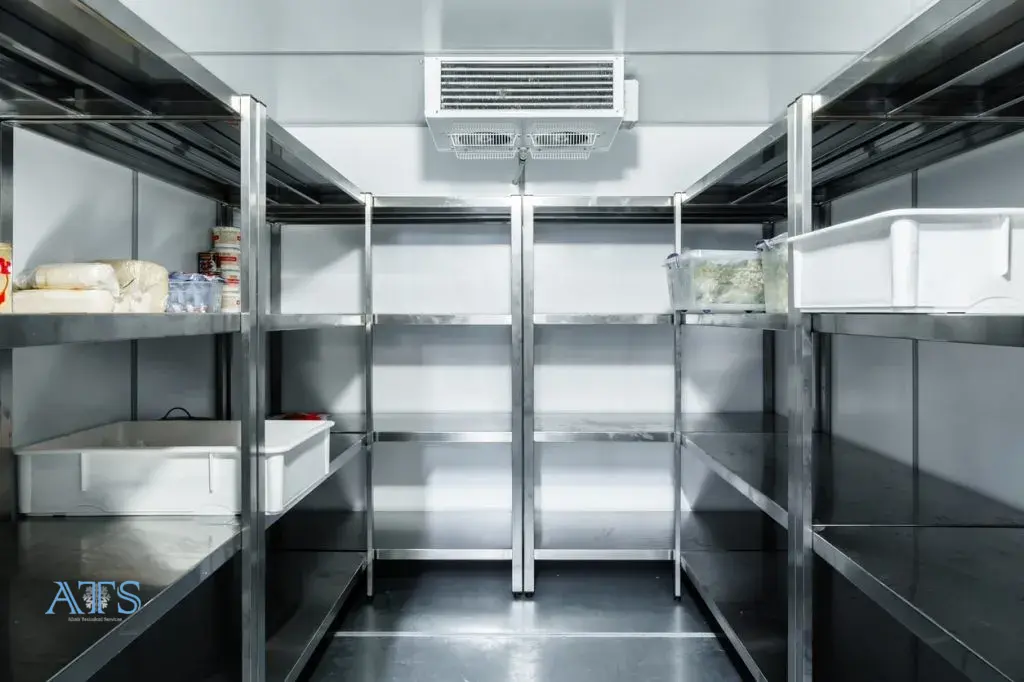
Thermal load analysis is the foundation of designing an efficient cold storage facility. Accurate engineering calculations determine the actual cooling capacity required, prevent oversizing or undersizing, protect product integrity, and ensure long-term operational efficiency. In high-temperature regions like the UAE, where ambient conditions significantly influence refrigeration performance, precise load analysis becomes even more critical. Below are the key engineering components that define accurate thermal load assessment.
Identifying All Sources of Heat Infiltration in the Facility
Thermal load analysis begins with identifying every source of heat that enters the cold storage space. These heat sources are not limited to external conditions; they include product load, lighting, personnel activity, equipment heat, door openings, and infiltration caused by air leakage.
External heat gains are often the most substantial load, especially in hot climates. Solar radiation, roof exposure, uninsulated joints, and thermal bridges can significantly increase the refrigeration demand. Internal heat gains, including forklifts, evaporator fans, and pallet movement, also contribute to the thermal load. Each of these factors must be quantified using accurate engineering formulas to avoid miscalculations.
In high-traffic facilities, door openings can contribute up to 50% of the total heat infiltration. Engineers must use precise models for air infiltration, pressure differential, and humidity migration, especially in multi-temperature facilities. When these sources are properly identified and mathematically defined, the resulting thermal load calculation becomes accurate and reliable for long-term operational planning.
Conducting Precise Product Load and Pull‑Down Load Calculations
Product load is one of the most complex components of thermal load analysis. It includes factors such as initial product temperature, freezing load, respiration heat (for fruits and vegetables), packaging material, and stacking density. Accurate calculations ensure the system can cool incoming products without overloading the refrigeration equipment.
Pull‑down load, or the energy required to cool a warm product to its storage temperature, must be calculated using precise thermodynamic equations. Incorrect assumptions regarding thermal mass, product moisture content, or latent heat can lead to significant underestimation of the required refrigeration capacity.
In facilities with continuous product turnover, the pull‑down load must be calculated dynamically based on hourly or daily fluctuations. This prevents oversized systems that waste energy or undersized systems that struggle during peak operation. Correct calculations allow compressors, evaporators, and condensers to be selected with optimal capacity, improving energy performance and system reliability.
Engineering Calculations for Transmission, Equipment, and Operational Loads
Accurate engineering calculations integrate transmission load, internal equipment load, and operational load to produce a complete thermal profile of the facility.
Transmission load is determined by insulation thickness, material conductivity, surface area, panel joints, vapor barriers, and temperature differential across the building envelope. Even minor insulation gaps or thermal bridges can dramatically increase heat gain.
Equipment loads include evaporator fans, lighting systems, material-handling machinery, control panels, and any electronic devices operating inside the refrigerated zone. Engineers must convert electrical consumption into heat gain to determine its effect on refrigeration performance.
Operational loads refer to human activity, traffic flow, defrost cycles, door access frequency, and ventilation interactions. High-activity cold storage operations require more precise calculations because airflow disturbances and humidity infiltration significantly affect system performance.
When these loads are correctly calculated using engineering standards such as ASHRAE, IIAR, and ISO refrigeration design codes, the final load model becomes accurate enough to ensure reliable, efficient, and cost‑effective system sizing.
Read More: industrial refrigeration and district cooling systems
Building Envelope Engineering and Thermal Integrity
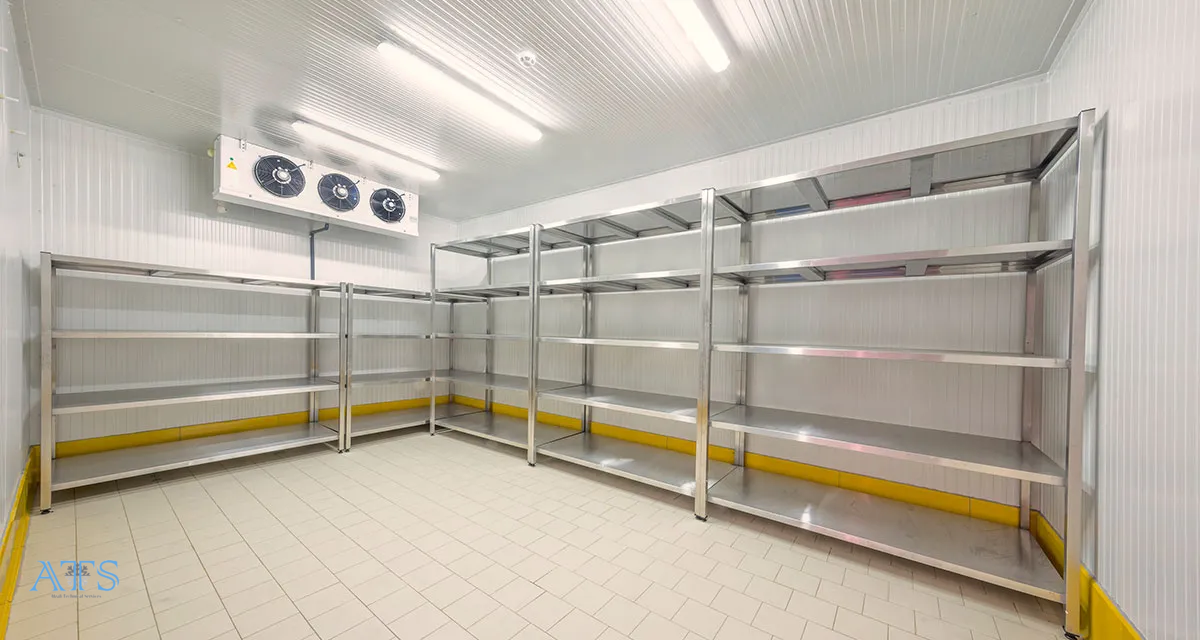
The building envelope is the thermal shield of a cold storage facility. Its engineering design determines the degree of heat transfer, moisture migration, structural durability, and long‑term operational efficiency. A properly engineered envelope prevents thermal bridging, minimizes infiltration, and ensures that the refrigeration system operates under stable and predictable conditions. In climates with extreme heat like the UAE, achieving high thermal integrity is not a recommendation—it is a fundamental engineering requirement.
Engineering the Building Envelope for Maximum Thermal Resistance
A high‑performance building envelope begins with maximizing thermal resistance (R‑value) through proper insulation design, material selection, and precise installation. Every component—wall panels, roof panels, floor insulation, joints, and corner transitions—must work together to minimize conductive, convective, and radiant heat transfer.
The most critical engineering task is selecting insulation panels with stable thermal conductivity under varying temperature gradients. In cold storage facilities, polyurethane (PU) and polyisocyanurate (PIR) panels are widely used due to their high R‑values. However, their real effectiveness depends on panel density, closed‑cell ratio, moisture resistance, and correct thickness based on the storage temperature requirements.
Thermal resistance can drop significantly if insulation is compressed, poorly aligned, or penetrated by structural elements. Engineers must carefully detail connections, hanging points, and embedded fixtures to avoid creating unseen thermal bridges. Advanced modeling tools, such as thermal simulation software, help engineers identify weak points and ensure the envelope can support long‑term energy efficiency.
When thermal resistance is maximized through correct engineering, the refrigeration system experiences reduced load stress, lower compressor cycling frequency, and improved overall system stability.
Preventing Thermal Bridging Through Structural and Mechanical Detailing
Thermal bridging is one of the most damaging engineering flaws in cold storage construction. Even small structural penetrations—bolts, steel columns, brackets, or improperly sealed joints—can create direct heat pathways that significantly increase energy loss and lead to condensation or ice formation.
To prevent this, engineers must ensure that structural support systems are thermally isolated from refrigerated zones. This often requires specialized thermal breaks, insulated mounting brackets, non‑conductive materials, and multi‑stage vapor barrier detailing to eliminate conductive pathways.
Mechanical penetrations such as piping, electrical conduits, drainage lines, and fire protection systems also introduce thermal weaknesses. Each penetration must be precisely sealed and wrapped with insulation materials that match the surrounding envelope’s thermal performance. Even a small gap or improperly sealed joint can disrupt the pressure balance and introduce moisture, leading to mold growth or degradation of insulation materials.
By engineering every mechanical and structural detail with thermal isolation in mind, cold storage facilities maintain consistent internal temperatures, reduce ice build‑up, and minimize hidden energy losses that accumulate over years of operation.
Designing Vapor Barriers, Air Sealing, and Moisture Control for Long‑Term Integrity
The vapor barrier is the most overlooked yet critical component of the cold storage envelope. Without a properly engineered vapor barrier system, moisture migrates into the insulation, reduces thermal resistance, increases energy load, and causes structural deterioration.
Engineers must design a vapor barrier that is continuous, durable, and fully sealed across all walls, floors, and ceilings. This includes:
- sealing every panel joint with compatible vapor‑tight sealants,
- reinforcing corners, penetrations, docks, and door frames,
- ensuring the vapor barrier is always placed on the warm side of the wall assembly,
- preventing air leakage that can carry moisture into the insulation core.
Moisture infiltration leads to severe problems such as panel swelling, corrosion of metal facings, microbial growth, and loss of insulation performance. In the high‑humidity coastal regions of the UAE, vapor barrier failure can destroy a cold room’s thermal efficiency within months.
Proper engineering also integrates air sealing measures such as airtight doors, dock shelters, pressure‑relief ports, and controlled ventilation paths to maintain a stable internal environment. When vapor barrier and air sealing systems are engineered correctly, the building envelope remains durable, dry, and thermally stable throughout its lifecycle.
Find Out More: HVAC consultants and industrial refrigeration and contractors
Refrigeration System Engineering for Maximum Efficiency
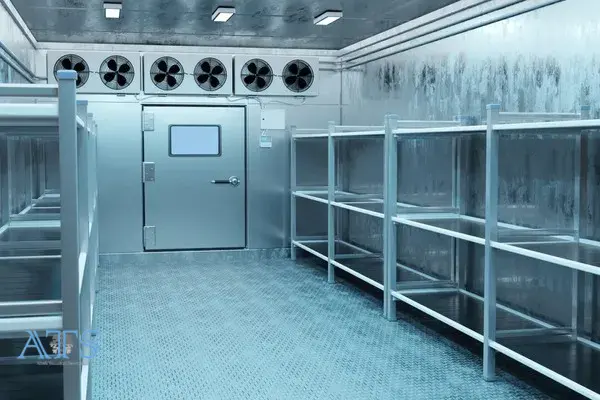
Engineering a high‑efficiency refrigeration system is the core of reliable cold storage performance. Every technical decision—from compressor selection to refrigerant choice, from evaporator sizing to control automation—directly affects long‑term energy consumption, product safety, operating costs, and equipment lifespan.
In high-temperature regions such as the UAE, where the ambient climate places extreme stress on refrigeration systems, engineering precision becomes essential. Maximum efficiency is achieved not by using the most powerful equipment, but by designing a harmonized system where components work in thermal, mechanical, and operational balance. The following engineering principles outline the foundation of an ultra‑efficient refrigeration system suitable for modern industrial cold storage facilities.
Optimizing Compressor Selection, Capacity Control, and System Configuration
The compressor is the heart of the refrigeration system, responsible for maintaining pressure levels and delivering the cooling load efficiently. Proper compressor engineering involves matching the compressor type, size, and control method with the actual thermal load profile of the facility.
Scroll, screw, and reciprocating compressors all have unique performance characteristics. Engineers must consider variables such as part‑load efficiency, operating pressure, refrigerant compatibility, maintenance intervals, and expected runtime cycles.
Advanced capacity control methods—such as variable‑speed drives (VSD), digital modulation, and multi‑compressor rack systems—allow the system to adapt dynamically to fluctuating load conditions. In facilities with peak and off‑peak product movement, these controls significantly reduce energy consumption by minimizing unnecessary compressor cycling.
Selecting the correct compressor configuration (single‑stage, two‑stage, or cascade) is especially important in low‑temperature applications such as ice cream storage, blast freezers, and deep‑freeze warehouses. When engineered correctly, the compressor system delivers stable temperature performance with minimal energy waste.
Engineering Evaporator and Condenser Systems for Optimal Heat Exchange
Heat exchange capacity determines the overall efficiency of a refrigeration plant. Evaporators and condensers must be engineered precisely to maximize heat transfer while minimizing energy losses, frost formation, and airflow resistance.
Evaporators must be sized based on the desired temperature differential, air circulation requirements, product type, and humidity control needs. Oversized evaporators lead to unnecessary defrost cycles, while undersized units struggle to maintain uniform temperatures and cause product quality issues.
Condenser engineering is equally critical, especially in extreme climates. Air‑cooled and evaporative condensers must be selected based on ambient temperature profiles, heat rejection demands, refrigerant type, and maintenance considerations. In the UAE, where summer temperatures exceed 45°C, condenser oversizing and efficient fan control systems are mandatory for stable operation.
Using enhanced fin geometry, high-efficiency fans, floating head‑pressure controls, and optimized refrigerant distribution systems can improve the heat exchange efficiency by up to 20%.
When evaporators and condensers are engineered as a coordinated pair, the entire system benefits from reduced compressor workload and improved energy efficiency.
Advanced Refrigerant Selection and Future‑Ready System Engineering
The choice of refrigerant has a significant impact on energy efficiency, environmental performance, system pressure levels, and long‑term operational costs. Engineers must evaluate refrigerants based on thermodynamic properties, GWP (Global Warming Potential), availability, and suitability for the climate and application.
Modern cold storage engineering increasingly uses:
- R744 (CO₂) for transcritical and subcritical cascade systems
- Ammonia (NH₃) for large industrial facilities
- R448A, R449A, and R452A as low‑GWP synthetic alternatives
CO₂ offers high efficiency but requires specialized engineering due to high operating pressures. Ammonia systems are extremely efficient but need strict safety and ventilation design. Hybrid ammonia‑CO₂ systems combine the advantages of both and are becoming a preferred choice for large UAE cold stores.
Engineers must design systems that can accommodate future refrigerant regulations, ensuring long-term compliance and operational resilience.
HVAC System Monitoring, Control & Maintenance
Effective hvac system monitoring is essential for maintaining optimal environmental conditions, energy efficiency, and system reliability in industrial cold storage facilities. HVAC performance directly influences temperature stability, humidity levels, air exchange rates, and overall system load. Without continuous monitoring, even small fluctuations can lead to product spoilage, increased energy consumption, or unexpected equipment failure. Modern cold storage engineering requires advanced HVAC oversight that integrates real‑time data analytics, automated control systems, and performance diagnostics.
A well‑engineered HVAC monitoring strategy begins with precise sensing and continuous data collection. High‑accuracy temperature, humidity, pressure, and airflow sensors must be strategically installed to capture detailed environmental metrics across all zones. These sensors allow operators to track even the smallest variations that may impact thermal performance. When combined with centralized monitoring platforms, the system provides operators and managers with real‑time insights, alerts, and actionable data to maintain environmental consistency across all storage areas.
Automation plays a critical role in HVAC management. Modern industrial facilities rely on PLC‑based control systems, IoT-enabled devices, and AI‑driven algorithms to automatically adjust airflow, temperature, compressor cycles, and ventilation based on load demand. These smart systems can identify inefficiencies, optimize fan speed, coordinate with refrigeration equipment, and prevent unnecessary runtime. Automated controls not only reduce energy consumption but also extend the lifespan of HVAC components by eliminating excessive operational stress.
Preventive and predictive maintenance are essential elements of HVAC system management. Continuous monitoring enables early detection of pressure drops, airflow imbalances, refrigerant leaks, or component degradation. Data‑driven maintenance schedules ensure that filters, coils, fans, and dampers remain in optimal condition. Predictive analytics can anticipate failures before they occur, reducing downtime and maintaining uninterrupted cold chain operations. In regions like the UAE—where extreme temperatures place constant stress on HVAC systems—this proactive approach is crucial for system reliability.
Finally, integrated HVAC management ensures seamless coordination between the HVAC system, refrigeration units, and building automation platforms. By synchronizing all mechanical systems, facilities achieve balanced thermal performance, optimized energy consumption, and enhanced environmental stability. Unified dashboards, cloud‑based monitoring, and remote access capabilities allow operators to make informed decisions and respond quickly to operational changes. This holistic management approach ensures that the HVAC system operates at maximum efficiency while protecting both equipment and stored products.
No Comments
Sorry, the comment form is closed at this time.