


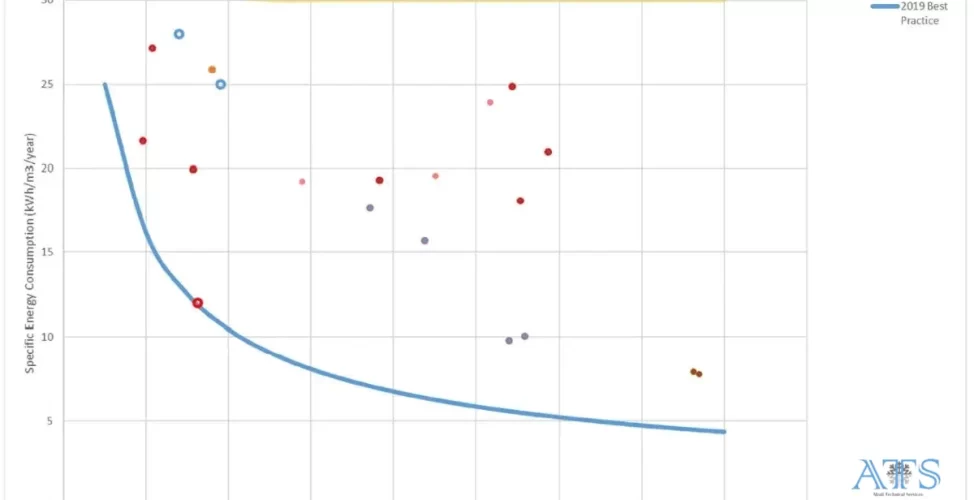
Improve Energy Efficiency Industrial Cold Storage in industrial cold rooms is no longer a secondary design consideration it has become a strategic engineering priority that directly defines operational cost, system reliability, and long-term asset performance. In modern refrigeration projects, electricity consumption typically represents the largest portion of total lifecycle cost, often exceeding the initial capital investment within only a few years of operation.
Despite the availability of high-efficiency compressors, advanced control platforms, and modern insulation technologies, many cold storage facilities continue to operate far below their achievable performance envelope. The root cause is rarely a single component failure; it is most often the cumulative effect of design assumptions, equipment selection strategies, control philosophy, airflow distribution, installation quality, and long-term operational behavior.
Understanding Where Energy Is Truly Lost in Industrial Cold Rooms
Before meaningful energy improvements can be achieved, it is essential to understand where energy is actually being lost inside an operating cold room. In most industrial facilities, energy losses are not concentrated in a single component but distributed across multiple interacting mechanisms that gradually degrade overall system performance.
thermal envelope
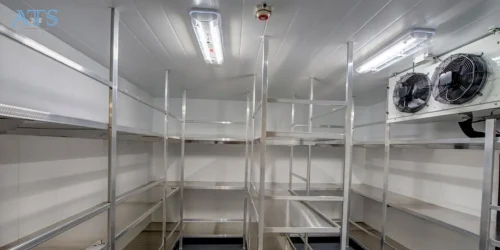
One of the primary and often underestimated sources of energy loss originates from the thermal envelope. Imperfect insulation joints, aging polyurethane panels, thermal bridges at structural connections, and moisture penetration gradually increase conductive and latent heat gains. Over time, these hidden heat loads force the refrigeration system to operate at higher compression ratios and longer duty cycles, silently inflating electrical consumption without any visible mechanical failure.
airflow mismanagement
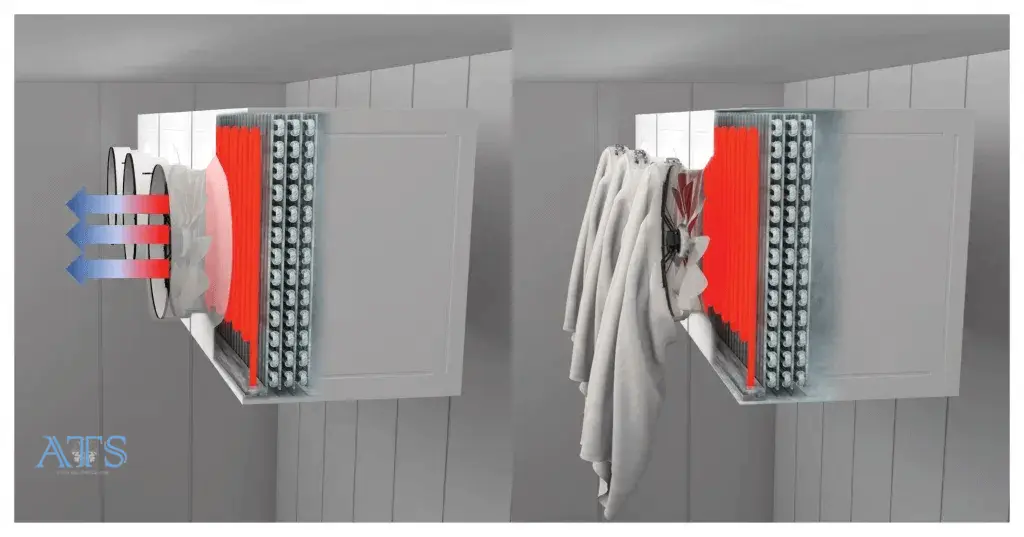
A second major loss pathway develops through airflow mismanagement. Poor evaporator placement, unbalanced fan distribution, blocked air returns, and uncontrolled stratification create zones of uneven temperature and localized overcooling. In response, control systems typically compensate by lowering suction temperatures or extending compressor runtime, further increasing specific energy consumption while failing to improve product temperature uniformity.
Equipment-level inefficiencies
Equipment-level inefficiencies also play a decisive role. Oversized compressors operating at partial load, fixed-speed drives cycling excessively, improperly selected expansion devices, and fouled heat exchanger surfaces all introduce irreversible thermodynamic penalties. These inefficiencies are often masked by stable room temperatures, making them difficult to detect without performance-based diagnostics.
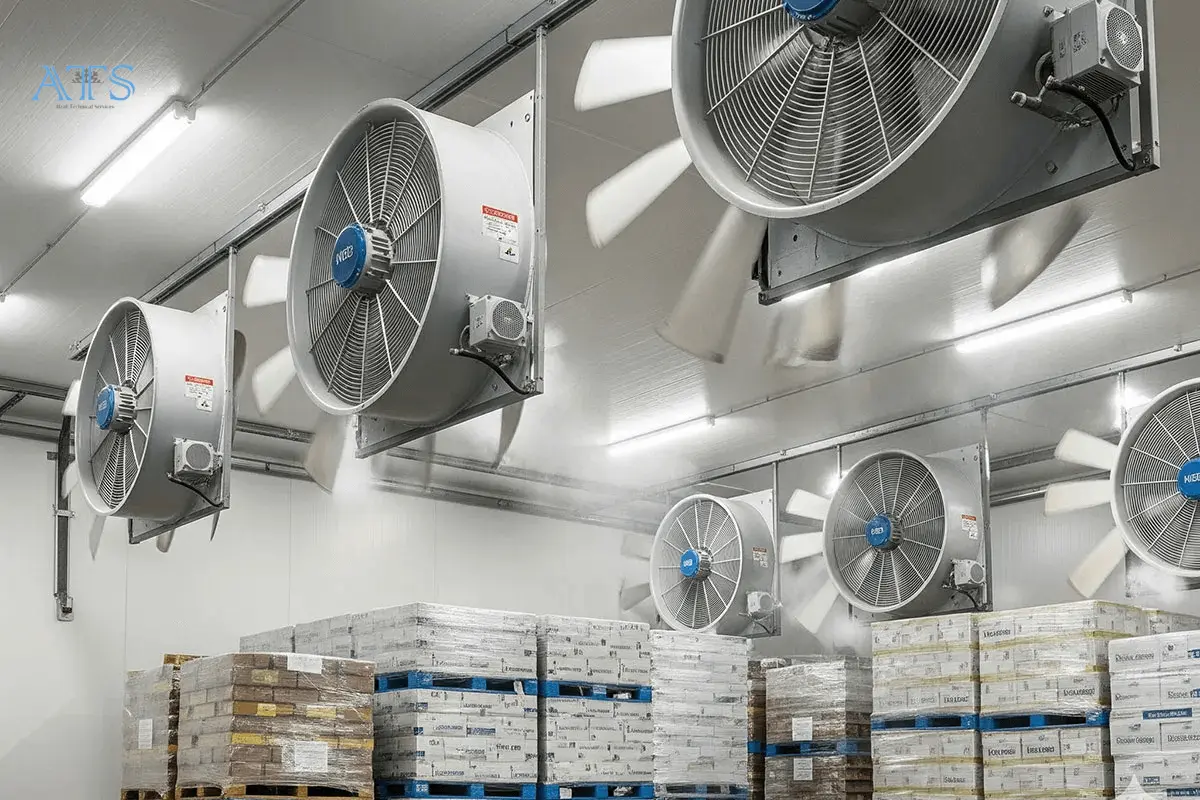
Control and operational practices represent
Control and operational practices represent another critical layer of loss. Conflicting setpoints between evaporators and rack controllers, aggressive safety margins, poorly tuned defrost schedules, and lack of floating pressure strategies systematically elevate condensing pressures and suppress system efficiency. In many existing cold rooms, these control-induced losses exceed the losses caused by hardware limitations.
Finally, long-term performance drift must be recognized as a dominant factor. Sensor calibration errors, gradual refrigerant charge deviation, valve wear, insulation aging, and control parameter decay slowly erode efficiency over months and years. Without structured monitoring and periodic recommissioning, even well-designed systems inevitably migrate toward high energy intensity.
Understanding these multi-layered loss mechanisms is the foundation of any serious energy optimization program. Only by quantifying where energy is truly dissipated can engineers design corrective strategies that deliver sustained reductions in power consumption without compromising temperature stability, product integrity, or system reliability.
System Architecture as a Core Driver of Cold Room Improve Energy Efficiency
In industrial refrigeration, system architecture is not merely a matter of layout or equipment grouping — it fundamentally defines how efficiently energy can be converted into useful cooling throughout the entire lifecycle of a cold room. Long before control algorithms, compressor technologies, or insulation details influence performance, the structural design of the refrigeration system establishes the thermodynamic boundaries within which all subsequent efficiency improvements must operate.
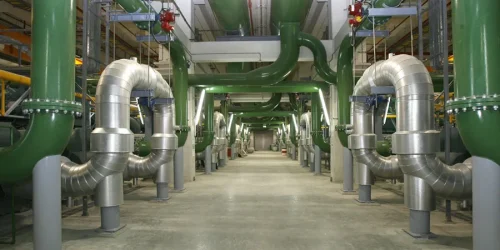
The choice between centralized rack systems, distributed condensing units, or secondary fluid architectures determines compression ratios, suction stability, part-load behavior, and redundancy strategy. Poor architectural decisions at this stage often lock the facility into permanently elevated energy consumption, regardless of later equipment upgrades or control optimizations. In contrast, well-conceived system architectures create natural efficiency advantages that persist for decades.
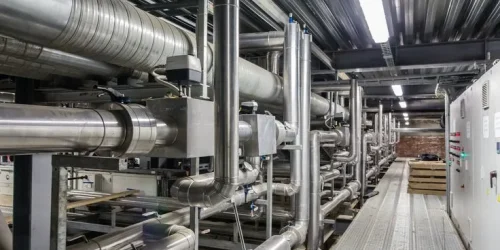
Refrigerant circuit topology plays a decisive role. Excessive piping lengths, unnecessary pressure drops, poorly segmented suction groups, and improper staging logic all introduce irreversible compression penalties. Each additional kilopascal of avoidable pressure loss directly translates into higher motor power and reduced volumetric efficiency. In large cold storage installations, architectural pressure losses alone can account for several percentage points of total electrical demand.
Load distribution strategy further shapes energy performance. Assigning heterogeneous temperature rooms to common suction groups, neglecting diversity factors, or oversimplifying redundancy concepts forces compressors to operate far from their optimal efficiency zones. Modern high-efficiency facilities instead adopt multi-suction architectures, temperature-class segregation, and flexible compressor staging to maintain favorable operating envelopes across seasonal and daily load variations.
Equally critical is the integration between refrigeration architecture and auxiliary systems. The positioning of condensers, selection of heat rejection method, arrangement of liquid receivers, and interaction with defrost systems directly influence condensing pressure stability and heat recovery potential. Architectures that allow floating head pressure, natural subcooling, and coordinated heat reclaim consistently achieve lower specific energy consumption without increasing system complexity.
Optimizing Compressor Selection and Capacity Control Strategies
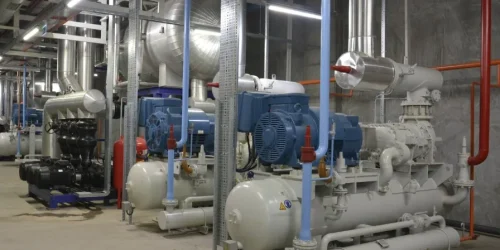
In industrial cold Storage, compressors are not only the primary consumers of electrical power — they are the central regulators of thermodynamic stability, part-load behavior, and long-term system efficiency. No control algorithm, heat exchanger upgrade, or insulation improvement can compensate for a fundamentally mismatched compressor selection or poorly conceived capacity control strategy.
The foundation of high-efficiency operation begins with accurate load profiling. Cold room refrigeration loads are rarely constant; they fluctuate with product throughput, door activity, ambient conditions, defrost cycles, and seasonal demand. Selecting compressors solely on peak design load often results in oversized machines that operate predominantly in low-efficiency regions, suffering from excessive cycling losses, poor volumetric efficiency, and elevated mechanical stress.
Compressor Sizing Philosophy and Load Matching
Accurate compressor sizing is the cornerstone of energy-efficient refrigeration system design. Contrary to traditional practice, cold room compressors should not be selected solely on the basis of peak design load. In real operating conditions, industrial cold rooms spend the majority of their lifetime operating at partial load, often between 30% and 70% of nominal capacity. Designing exclusively for extreme worst-case scenarios inevitably produces oversized compressors that operate far from their optimal efficiency range.
Oversizing introduces several structural penalties. At low load ratios, volumetric efficiency deteriorates, compression ratios rise, and motor power per unit of refrigeration capacity increases sharply. Frequent cycling, unstable oil return, elevated discharge temperatures, and accelerated mechanical wear further degrade both efficiency and reliability. Over the long term, these effects translate into excessive energy consumption and shortened compressor service life.
Fixed-Speed versus Variable-Speed Compression
Fixed-speed compressors offer structural simplicity, high mechanical robustness, and predictable thermodynamic behavior. When properly staged within multi-compressor racks, they deliver excellent efficiency across medium to high load ranges with minimal inverter losses and reduced harmonic distortion. In facilities with relatively stable thermal demand, fixed-speed architectures often outperform more complex variable-speed configurations in both reliability and lifecycle cost.
Variable-speed compressors, by contrast, provide superior capacity modulation under highly dynamic load conditions. By continuously adjusting rotational speed, they maintain tighter suction pressure control, reduce cycling frequency, and significantly improve part-load efficiency. In cold rooms with large daily fluctuations, intermittent product intake, or aggressive pull-down requirements, variable-speed lead compressors can substantially lower specific energy consumption.
Staging Logic and Part-Load Performance Optimization
In multi-compressor refrigeration systems, staging logic is the primary mechanism that governs how effectively installed capacity is converted into useful cooling across varying load conditions. While compressor efficiency curves define theoretical performance, it is the staging strategy that determines how closely the system operates to those optimal regions during real-world operation.
Poor staging design is one of the most common and least visible causes of excessive energy consumption in industrial cold rooms. Simultaneous operation of too many compressors, frequent overlap between stages, and unstable cut-in and cut-out thresholds force machines to operate in inefficient micro-loading regimes. The result is elevated motor power, excessive cycling losses, degraded oil management, and persistent suction pressure instability.
Advanced Capacity Control and Floating Pressure Strategies
In high-efficiency refrigeration plants, advanced capacity control and floating pressure strategies represent the most powerful levers for reducing compression energy without compromising thermal stability. Unlike hardware-based upgrades, these strategies extract efficiency directly from thermodynamic operating margins that are already available but rarely exploited.
Traditional systems operate with fixed suction and condensing pressure setpoints selected for worst-case ambient and peak load conditions. While this approach ensures safety, it permanently locks the system into unnecessarily high compression ratios during the vast majority of operating hours. Floating pressure control fundamentally breaks this limitation by allowing operating pressures to continuously adapt to real-time thermal demand and ambient conditions.
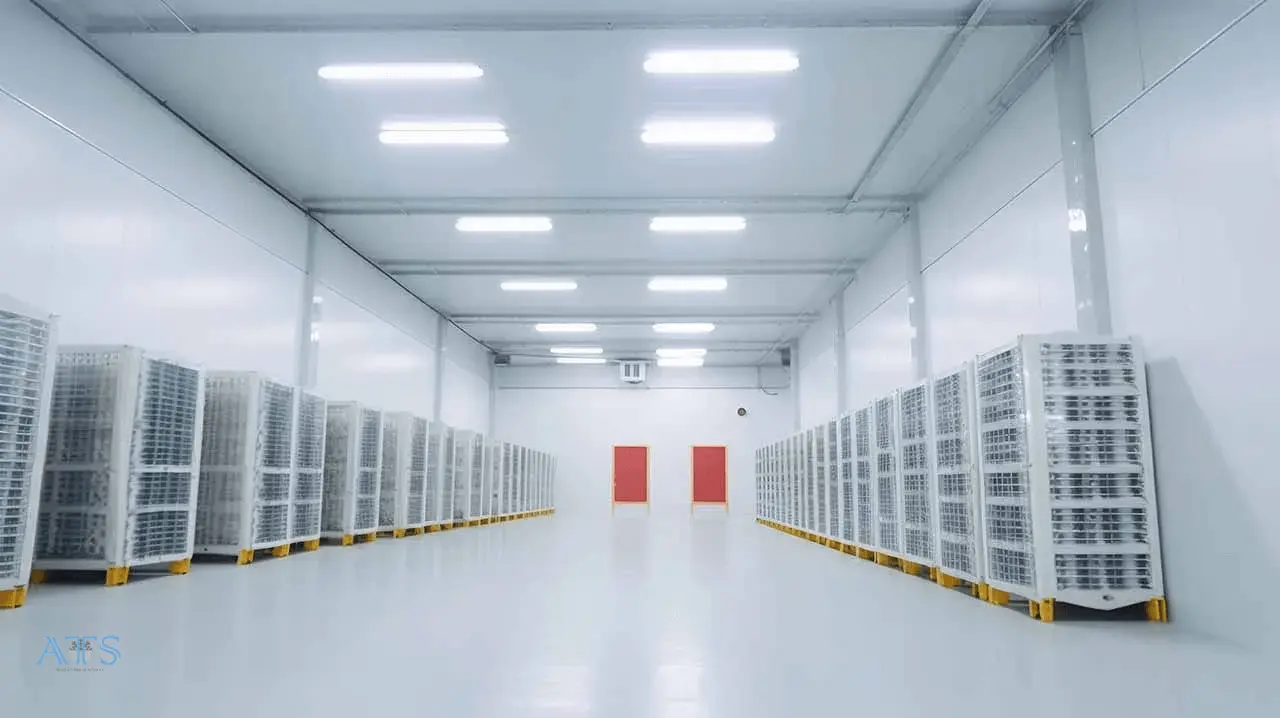
Monitoring and Management of HVAC for Improve Energy Efficiency
In modern cold storage and industrial facilities, Improve Energy Efficiency is no longer determined solely by equipment selection or design intent — it is defined by how effectively HVAC and refrigeration systems are monitored, interpreted, and actively managed throughout their operational lifetime. Even the most efficient system architecture inevitably drifts away from its design performance without structured supervision and data-driven intervention.
learn more:
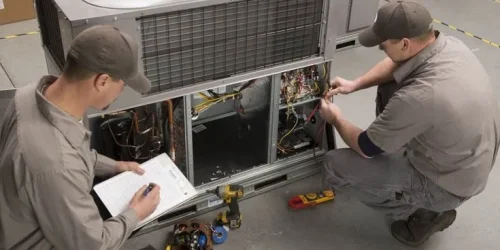
Continuous monitoring provides visibility into the real thermodynamic behavior of the plant. Suction and discharge pressures, compressor loading, evaporator approach temperatures, condenser performance, defrost activity, and power consumption patterns reveal inefficiencies that remain completely invisible through conventional alarms or temperature-based supervision. In many installations, energy losses accumulate not from sudden failures, but from slow performance degradation that persists for months before being detected.
Intelligent Control Supervision and Fault Detection
In high-performance refrigeration and HVAC systems, intelligent supervision and fault detection have become essential components of sustainable energy management. Traditional alarm-based monitoring reacts only to threshold violations, often long after efficiency has already deteriorated. Modern facilities instead rely on continuous analytical supervision capable of detecting subtle deviations in thermodynamic behavior before they escalate into major performance losses.
Faults in industrial refrigeration rarely appear as sudden failures. They typically manifest as gradual drifts: expansion valves begin hunting, condenser approach temperatures rise, suction pressure oscillations intensify, refrigerant charge slowly deviates, or sensor calibration shifts. Each of these phenomena may preserve acceptable product temperature while silently imposing significant energy penalties that accumulate over thousands of operating hours.
Continuous Commissioning and Performance Governance
Traditional commissioning validates functionality only at startup. Once the project is handed over, performance governance often disappears, leaving systems to operate unmanaged for years while efficiency silently erodes. Continuous commissioning fundamentally redefines this paradigm by treating system performance as a living asset that must be periodically measured, verified, corrected, and optimized.
The process begins with systematic performance baselining. Design intent, expected operating envelopes, and reference efficiency curves are formalized into measurable benchmarks. Actual plant behavior is then continuously compared against these baselines using trend analysis, statistical deviation detection, and long-term KPI tracking. Any divergence beyond acceptable tolerances triggers targeted diagnostic investigation.
Real-Time Performance Monitoring and KPI Tracking
Real-time performance monitoring forms the operational backbone of energy-efficient refrigeration and HVAC management. Without continuous visibility into system behavior, even the most sophisticated control strategies remain blind to gradual efficiency erosion, hidden faults, and emerging performance bottlenecks.
Unlike traditional monitoring focused on alarms and temperature compliance, performance-based supervision captures the dynamic relationship between thermal demand, mechanical response, and electrical input. Suction and discharge pressures, compressor loading ratios, evaporator temperature approaches, condenser effectiveness, fan power, and defrost energy profiles together reveal how efficiently refrigeration capacity is being produced at every moment.
The transformation of raw sensor data into meaningful performance indicators is the central challenge. Key Performance Indicators (KPIs) translate complex thermodynamic behavior into actionable metrics that reflect true energy effectiveness rather than superficial compliance. Among the most powerful KPIs are specific energy consumption (kWh per ton of refrigeration), instantaneous and seasonal coefficient of performance, compression ratio indices, and heat rejection efficiency factors.
Conclusion and Final Remarks
Energy efficiency in industrial cold rooms is not the outcome of a single technology, component, or control upgrade. It is the cumulative result of thousands of engineering decisions — from system architecture and compressor selection to airflow design, pressure control, monitoring discipline, and long-term performance governance.
As demonstrated throughout this article, the largest energy savings rarely come from replacing equipment. They originate from understanding how thermodynamic margins are created, preserved, and exploited over time. Architectural coherence, disciplined capacity control, intelligent staging, floating pressure strategies, and data-driven supervision together define whether a cold room becomes an energy liability or a long-term competitive asset.
Equally important is the recognition that efficiency is not static. Every refrigeration system drifts. Sensors age, loads evolve, control parameters shift, and mechanical performance gradually degrades. Without continuous monitoring, intelligent diagnostics, and structured recommissioning, even the most advanced installations inevitably lose a significant portion of their original efficiency.
The future of industrial refrigeration lies in integrated performance engineering — where design, controls, monitoring, and governance operate as a unified system. Facilities that adopt this philosophy achieve not only lower energy costs, but also higher temperature stability, extended equipment lifetime, regulatory readiness, and operational resilience in increasingly volatile energy markets.
No Comments
Sorry, the comment form is closed at this time.