


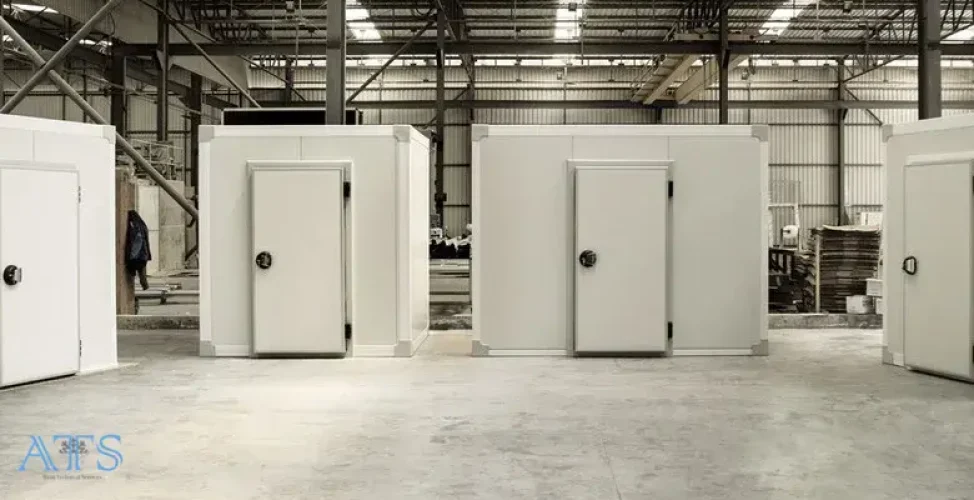
Sub‑zero and above‑zero cold storage facilities play distinct roles in temperature‑controlled logistics, and understanding the differences between them is essential for proper system design and product preservation. In this introduction to “Comparison of Sub‑Zero and Above‑Zero Cold Storage,” we explore how each type of cold storage is engineered to meet specific thermal requirements, operational demands, and product categories. These variations influence not only the refrigeration system design but also energy consumption, humidity control, and long‑term product quality.
Each temperature category serves a different purpose: sub‑zero cold rooms are typically used for frozen goods requiring long‑term preservation, while above‑zero cold rooms are designed for fresh products that must be kept at controlled temperatures without freezing. The structural elements, insulation thickness, defrost cycles, and humidity management strategies also differ significantly between the two. Understanding these distinctions helps engineers, facility operators, and stakeholders choose the right cold storage solution based on product type, industry standards, and operational efficiency.
Structural Design Variations in Sub‑Zero vs Above‑Zero Facilities
The structural design of cold storage facilities varies significantly depending on whether the storage environment is sub‑zero or above‑zero. These differences are primarily driven by the temperature requirements, moisture control needs, and the thermal loads associated with each type of storage. Sub‑zero cold storage is designed to maintain freezing conditions for frozen products, while above‑zero facilities operate at higher temperatures to preserve fresh goods without freezing them. As a result, construction materials, insulation thickness, vapor barriers, and flooring systems must be carefully selected to ensure stable operation and energy efficiency.
In addition, the design of walls, ceilings, and doors must address the challenges associated with temperature gradients and condensation. Sub‑zero facilities face greater risks of frost formation, ice buildup, and structural stress caused by extremely low temperatures. Therefore, engineers must implement specialized design strategies to prevent heat infiltration, minimize thermal bridges, and maintain consistent temperature distribution throughout the storage space.
Insulation Thickness and Thermal Protection
One of the most important structural differences between sub‑zero and above‑zero cold storage facilities is the insulation system. Sub‑zero cold rooms typically require thicker insulation panels to prevent heat transfer from the external environment into the storage area. High‑density polyurethane or polyisocyanurate insulation materials are commonly used because of their low thermal conductivity and strong resistance to moisture penetration.
Above‑zero cold storage facilities also require insulation, but the required thickness is generally lower compared to sub‑zero installations. Since the temperature difference between the internal environment and the outside air is smaller, the thermal load on the building envelope is reduced. However, proper insulation is still critical to maintain temperature stability and to prevent condensation that could damage stored products or structural components.
Floor Design and Vapor Barrier Requirements
Floor construction is another critical aspect of cold storage design, particularly in sub‑zero facilities. When storage temperatures drop below freezing, there is a significant risk of ground frost heave caused by freezing soil beneath the floor slab. To prevent this issue, sub‑zero cold storage often includes specialized floor insulation layers, heating systems beneath the slab, or ventilated foundations that keep the soil temperature above freezing.
In above‑zero cold storage facilities, floor design is generally less complex because the risk of frost heave is minimal. However, vapor barriers are still necessary to prevent moisture migration from the ground into the insulated structure. Proper vapor barrier installation helps protect insulation materials, maintain structural durability, and reduce the risk of condensation inside the facility.
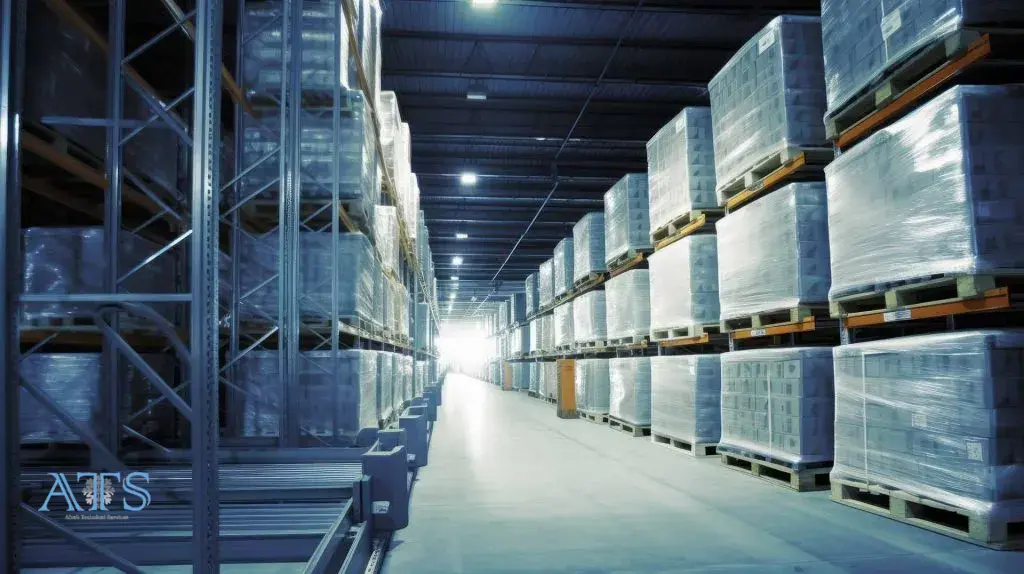
Refrigeration System Requirements for Sub‑Zero and Above‑Zero Applications
Refrigeration systems used in sub‑zero and above‑zero cold storage applications differ significantly in their performance requirements, design considerations, and operational characteristics. Sub‑zero facilities typically operate at temperatures ranging from −18°C to −40°C, demanding refrigeration units capable of deep cooling, high compression ratios, and reliable defrosting cycles. These systems must be engineered to remove large quantities of heat while maintaining stability under extreme temperature conditions. In contrast, above‑zero systems operate in milder temperature ranges such as 0°C to +15°C, requiring less intensive cooling capacity but more precise humidity and temperature control to preserve fresh and sensitive products.
These differences in temperature requirements also affect the choice of refrigerants, evaporator types, and compressor configurations. Sub‑zero systems often require low‑temperature refrigerants with high latent heat capacity, as well as evaporators designed to minimize frost formation. Above‑zero systems, however, may use refrigerants with lower pressure drops and incorporate evaporators optimized for uniform airflow and moisture retention. Understanding the specific refrigeration needs of each temperature category is essential for selecting suitable equipment and achieving energy‑efficient operation.
Compressor Capacity and Refrigeration Cycle Characteristics
In sub‑zero applications, compressors must operate across a much wider temperature differential, resulting in higher compression ratios and increased mechanical load. To handle these demanding conditions, low‑temperature compressors with reinforced components, enhanced lubrication, and multi‑stage compression systems are commonly used. These designs ensure continuous performance even when the suction temperature drops significantly. Additionally, sub‑zero systems often incorporate economizers or liquid injection techniques to maintain compressor stability and prevent overheating.
Above‑zero applications, on the other hand, require compressors that deliver stable and precise cooling rather than extreme low‑temperature performance. The compression ratios are lower, reducing mechanical stress and improving energy efficiency. Scroll and hermetic compressors are frequently suitable for above‑zero cold rooms because they provide consistent operation, lower noise levels, and smooth modulation of cooling capacity. These systems prioritize maintaining narrow temperature fluctuations to protect product quality, especially in food, pharmaceutical, and floral storage environments.
Evaporator Operation and Defrosting Requirements
Evaporators in sub‑zero cold storage units must manage continuous frost formation due to the extremely low coil temperatures required for operation. Frost accumulation reduces heat exchange efficiency and airflow, making defrosting cycles essential. Sub‑zero systems typically use electric defrost, hot gas defrost, or reverse‑cycle defrosting to maintain evaporator performance. Engineers must carefully design defrost schedules to avoid temperature swings that could compromise product integrity.
Above‑zero applications experience far less frost formation because coil temperatures remain above freezing or only slightly below it. As a result, evaporators in above‑zero cold rooms often operate without intensive defrosting requirements, relying instead on off‑cycle defrost methods or minimal supplemental heating. This reduces energy consumption and simplifies system design. Additionally, evaporators used in above‑zero storage focus more on humidity control to prevent product dehydration and maintain optimal air quality within the storage space.
Humidity Control and Airflow Differences in Both Temperature Categories
Humidity and airflow are critical parameters that directly influence product quality and system efficiency in cold storage facilities. In sub‑zero cold storage, humidity control focuses on preventing frost buildup and ice formation caused by moisture condensation at extremely low temperatures. The airflow design must ensure uniform temperature distribution while minimizing the risk of localized freezing. Air circulation patterns, fan placement, and coil temperature play vital roles in maintaining optimal conditions. Proper management of humidity prevents the accumulation of ice on evaporator coils and surfaces, which otherwise reduces heat transfer efficiency and increases energy consumption.
In above‑zero cold storage, humidity control has a different purpose — preserving moisture within fresh products without allowing microbial growth or condensation. The airflow system must maintain even cooling with gentle circulation to avoid drying out fruits, vegetables, dairy, or pharmaceuticals. Excessively dry air can lead to product weight loss and quality degradation, while overly humid conditions foster mold and spoilage. Therefore, the balance between temperature, humidity, and air velocity is critical to achieving stable product storage and minimizing waste.
Humidity Regulation Techniques for Sub‑Zero and Above‑Zero Conditions
In sub‑zero applications, humidity control largely relies on dehumidification through refrigeration, where moisture in the air freezes and is removed during defrost cycles. To manage this process effectively, engineers often integrate air dryers, heat recovery systems, or controlled defrost intervals that maintain the relative humidity below 60%. Maintaining low humidity prevents frost on coils and ensures efficient heat exchange. Additionally, cold‑room doors and vapor barriers must be carefully sealed to minimize moisture infiltration from ambient areas.
Above‑zero cold storage, in contrast, typically employs humidification or moisture retention systems to prevent product dehydration. This can include high‑pressure humidification sprays, ultrasonic humidifiers, or indirect water vapor injection systems controlled by sensors. These technologies help stabilize the relative humidity within the 80–95% range, depending on the products stored. The objective is to maintain freshness while reducing shrinkage, flavor loss, and surface drying, especially for produce and meat.
Airflow Design and Distribution Strategy
Airflow design differs greatly between low‑temperature and medium‑temperature cold rooms. In sub‑zero facilities, high‑velocity airflow is often required to maintain uniform temperatures across the storage area. However, excessive air speed can increase frost formation, so engineers must calibrate fan speed and duct placement carefully. Directional ducts and multi‑fan systems are commonly used to balance airflow and avoid dead zones where freezing may occur unevenly.
In above‑zero facilities, gentler and more diffused airflow is preferred to avoid direct cold drafts on products. Air diffusers and adjustable louvers help spread air evenly and maintain consistent temperatures throughout the room. The airflow system should be designed to reduce condensation on ceilings or packaging materials. Proper ventilation also helps in preserving the optimal gas mixture and humidity levels, which are essential for keeping fresh goods in prime condition over extended storage periods.
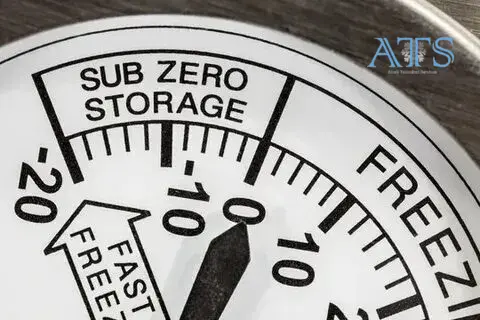
Energy Consumption Comparison in Sub‑Zero and Above‑Zero Cold Rooms
Energy consumption is one of the most significant operational differences between sub‑zero and above‑zero cold rooms. The primary reason lies in the temperature differential () between the internal setpoint and the ambient environment. Since heat transfer into a cold room is proportional to this temperature difference: where is the overall heat transfer coefficient and is the surface area, sub‑zero facilities experience substantially higher heat gain due to their much lower operating temperatures.
As a result, refrigeration systems in sub‑zero rooms must remove more heat continuously, leading to increased compressor runtime and electrical consumption. Above‑zero cold rooms operate at milder temperatures (typically 0°C to +15°C), which reduces the thermal load on the refrigeration system. Lower compression ratios and reduced heat infiltration translate into improved energy efficiency and lower operating costs compared to sub‑zero storage.
Compressor Workload and Efficiency
In sub‑zero applications, compressors operate under high compression ratios because of the low evaporating temperature and relatively high condensing temperature. This increases mechanical stress and reduces the Coefficient of Performance (COP):
As the evaporating temperature decreases, the COP drops, meaning more electrical energy is required per unit of cooling produced. Consequently, sub‑zero systems often consume significantly more power per cubic meter of storage space. In contrast, above‑zero systems operate at higher evaporating temperatures, which improves the COP and reduces compressor energy consumption. The lower pressure difference between suction and discharge sides results in better efficiency and longer equipment lifespan.
Defrost Energy Requirements
Defrost cycles represent a major energy component in sub‑zero cold rooms. Due to continuous frost accumulation on evaporator coils, systems must frequently activate electric heaters or hot gas defrost mechanisms, both of which consume additional energy beyond normal refrigeration demand. Moreover, during defrost periods, the system may require extra cooling afterward to restore the desired temperature, adding further energy usage. Above‑zero cold rooms experience significantly less frost formation because coil temperatures are closer to or above 0°C. Many systems use off‑cycle defrost, which consumes minimal additional energy. Therefore, defrost‑related energy costs are considerably lower in above‑zero applications.
Insulation and Heat Infiltration Impact
Sub‑zero cold rooms require thicker and higher‑performance insulation to limit heat gain. Despite this, the extreme internal temperature difference means that any thermal bridge, door opening, or air leakage results in substantial energy loss. Frequent product loading and unloading further increase infiltration loads, requiring rapid temperature recovery and higher energy input. Above‑zero rooms are less sensitive to minor heat infiltration due to the smaller temperature gap. Although proper insulation and airtight construction remain important, the overall refrigeration demand remains lower compared to sub‑zero facilities.
Overall Energy Demand Comparison
In practical terms, sub‑zero cold rooms may consume 30–60% more energy than above‑zero rooms of similar size, depending on:
- Ambient climate conditions
- Frequency of door openings
- Product load characteristics
- Type of defrost system
- Insulation quality
While both systems are energy‑intensive, sub‑zero storage inherently requires greater electrical input due to lower evaporating temperatures, higher compressor workload, and more frequent defrost cycles.
Product Compatibility and Storage Requirements for Frozen vs. Fresh Goods
Frozen products require extremely low and stable temperatures to maintain their quality throughout storage and transportation. Items such as meat, poultry, seafood, and processed vegetables must remain below −18°C to ensure that microbial activity and enzymatic reactions are slowed to near-zero levels. Maintaining this constant temperature prevents thawing, preserves texture, and maintains product safety. Even a slight increase in temperature can lead to ice crystal formation or partial thawing, which may deteriorate the structure and taste of frozen goods.
Fresh products, on the other hand, require higher but precisely controlled temperatures due to their sensitivity to environmental changes. Items like fruits, vegetables, dairy products, and pharmaceuticals continue to respire after harvest or production. Therefore, temperatures between 0°C and +10°C are essential to slow biological processes without causing chilling injury or freezing damage. Any fluctuation outside the recommended range can accelerate spoilage, discoloration, nutrient loss, and microbial growth.
2. Humidity and Airflow Control
Humidity plays a crucial role in preserving fresh products. Fresh fruits and vegetables lose moisture rapidly when exposed to low humidity levels, leading to wilting, shrinkage, and texture degradation. Therefore, fresh storage facilities often require humidity levels between 85% and 95% to maintain product hydration and visual appearance. Proper airflow is also essential, as excessive air circulation can cause dehydration, while insufficient airflow may result in uneven temperature distribution and localized spoilage.
Frozen products have entirely different humidity requirements. Since frozen items do not lose moisture at the same rate as fresh goods, humidity levels are less critical. However, airflow distribution must remain strong and uniform to maintain temperature stability across the room. Poor airflow can lead to warm spots that cause partial thawing or freezing delays. Additionally, frost formation on evaporators is more common in frozen storage, requiring airflow patterns that minimize moisture transfer toward cooling coils.
3. Packaging Differences and Material Compatibility
Packaging for frozen goods is typically designed to prevent freezer burn, dehydration, and contamination. Materials must be moisture-resistant and able to withstand extremely low temperatures without cracking or becoming brittle. Vacuum-sealed packaging is commonly used to remove air and protect products from oxidation and ice crystal formation. Since frozen products do not require ventilation, airtight packaging is preferred and can be stacked tightly without compromising safety.
Fresh products require breathable or semi-permeable packaging to allow gas exchange. Fruits and vegetables release carbon dioxide and absorb oxygen, so packaging must prevent the buildup of gases that accelerate overripening or spoilage. In addition, delicate fresh items such as berries or leafy greens need cushioning to prevent bruising. Packaging materials must also support appropriate humidity retention to avoid dehydration while preventing excessive moisture that could cause mold growth.
4. Stacking, Shelving, and Airflow Distribution
Stacking density differs significantly between frozen and fresh storage facilities. Frozen goods can be stacked in close arrangements because they are solid, stable, and not prone to crushing. High stacking density maximizes space usage and improves operational efficiency. However, airflow gaps must still be maintained to avoid temperature variations within pallets, especially in large industrial freezers.
Fresh goods require more careful spacing to prevent bruising and ensure proper airflow. Soft fruits, leafy vegetables, and dairy products can be damaged if stacked too tightly. In addition, insufficient spacing may interfere with uniform cooling, leading to hot spots that accelerate spoilage. Shelving systems in fresh storage rooms are often adjustable to accommodate different packaging sizes and maintain proper circulation of air around the products.
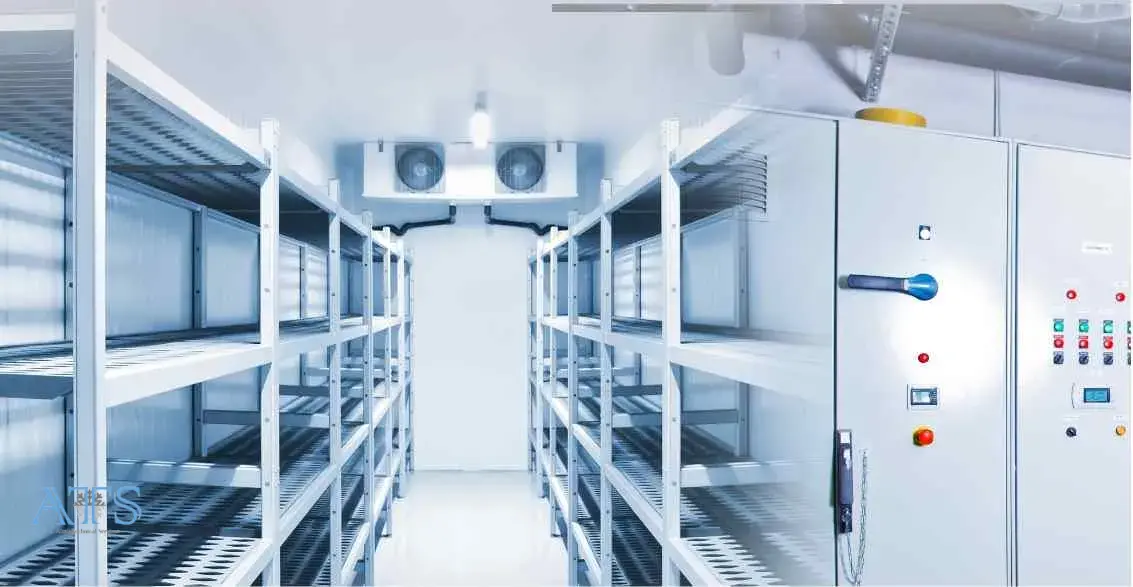
Defrosting Needs and Evaporator Behavior in Sub‑Zero vs. Above‑Zero Storage
In sub-zero cold storage systems, frost formation on evaporator coils is one of the most significant operational challenges. Because the evaporator surface temperature is well below the freezing point of water, moisture present in the air immediately freezes upon contact with the coil surface. Over time, this frost layer grows thicker and acts as an insulating barrier that reduces heat transfer efficiency. As a result, the evaporator must work harder to absorb heat from the surrounding air, which increases compressor workload and energy consumption.
In contrast, above-zero cold rooms experience far less frost accumulation because the evaporator temperature typically remains above the freezing point or only slightly below it. Moisture in the air may condense on the evaporator surface, but it usually drains away as liquid water rather than forming solid frost layers. This difference significantly reduces airflow blockage and heat transfer resistance, allowing above-zero evaporators to operate more consistently with minimal interruptions for defrosting.
Defrosting Methods Used in Industrial Cold Storage
Sub-zero storage facilities require regular defrosting cycles to remove accumulated frost from evaporator coils. Several defrost methods are commonly used, including electric defrost, hot gas defrost, and water defrost systems. Electric defrost systems use heating elements to melt the frost, while hot gas defrost systems redirect high-temperature refrigerant gas from the compressor discharge line into the evaporator coil to melt the ice. These systems are carefully controlled to ensure that frost is removed efficiently without significantly raising the room temperature.
Above-zero cold storage facilities generally require less frequent defrost cycles because frost buildup is limited. In many cases, natural off-cycle defrosting is sufficient. During this process, the refrigeration system temporarily stops, allowing the evaporator temperature to rise slightly so that accumulated condensation can melt and drain away. Because frost accumulation is minimal, the defrosting process is simpler and consumes far less energy compared to sub-zero storage systems.
Impact of Frost Accumulation on Evaporator Efficiency
Frost accumulation has a direct negative impact on evaporator performance in sub-zero cold storage. As the frost layer grows thicker, it reduces the effective surface area available for heat exchange and restricts airflow through the evaporator fins. This results in higher air temperature in the storage room and forces the refrigeration system to run longer cycles to maintain the required temperature. If defrosting is not performed regularly, the system may experience severe efficiency losses and increased mechanical stress on components.
In above-zero systems, evaporator efficiency remains relatively stable because frost formation is minimal. The absence of thick frost layers allows air to circulate freely across the evaporator coils, maintaining consistent heat transfer performance. This stability not only improves system efficiency but also reduces maintenance requirements and operational interruptions.
Operational Strategies to Optimize Defrost Cycles
Efficient defrost management is essential for maintaining optimal performance in sub-zero refrigeration systems. Modern cold storage facilities often use smart controllers and sensors to monitor frost buildup and initiate defrost cycles only when necessary. This demand-based defrost strategy reduces unnecessary energy consumption and prevents excessive temperature fluctuations inside the cold room. Proper evaporator design, including fin spacing and airflow configuration, can also help minimize frost accumulation.
For above-zero cold storage systems, operational strategies focus more on maintaining proper drainage and humidity control rather than intensive defrost cycles. Ensuring that condensate drains properly and that airflow remains balanced can prevent water accumulation and microbial growth on evaporator surfaces. Regular inspection and cleaning of evaporator coils further help maintain system efficiency and ensure hygienic storage conditions.
No Comments
Sorry, the comment form is closed at this time.