


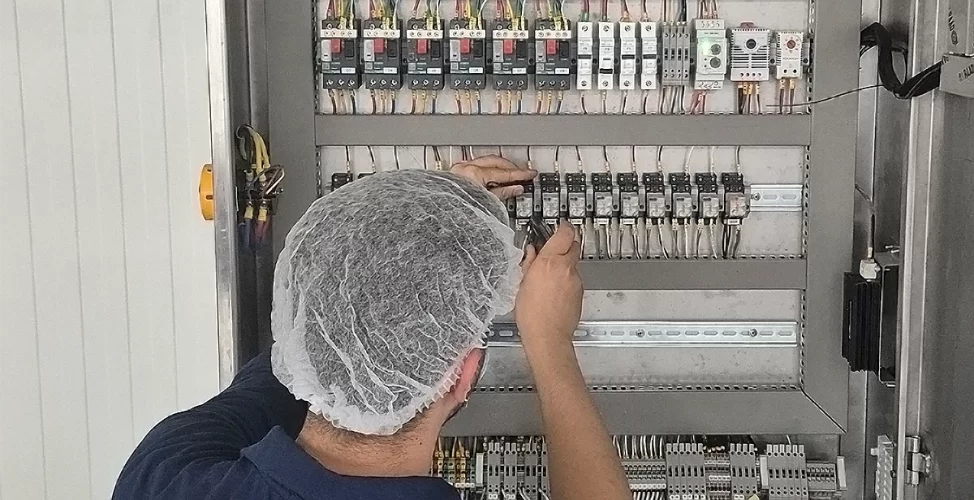
Industrial refrigeration systems play a critical role in keeping large-scale facilities operational, efficient, and compliant—especially in sectors such as food processing, cold storage, pharmaceuticals, logistics, and manufacturing. Unlike domestic or light commercial cooling systems, industrial refrigeration is engineered to manage continuous loads, large volumes, and demanding environmental conditions, often operating 24/7 in high-temperature regions like the Middle East.
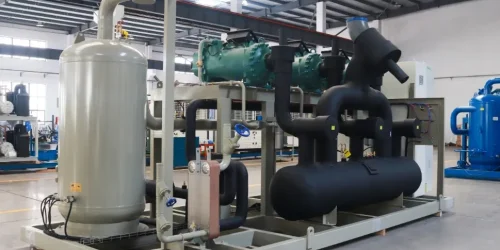
At its core, an industrial refrigeration system works by removing heat from a controlled space and rejecting it to the outside environment through a closed thermodynamic cycle. This process relies on key components such as the compressor, condenser, expansion device, and evaporator, all working together to maintain precise temperature levels. What makes industrial systems distinct is not just their size, but the level of control, redundancy, efficiency, and safety built into their design.
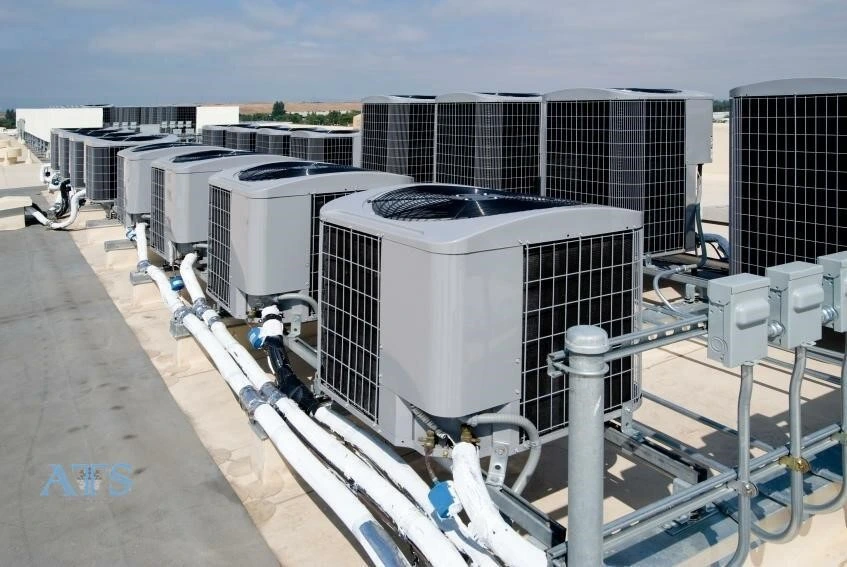
Key Components of an Industrial Refrigeration System
An industrial refrigeration and district cooling systems is built around several core components that work together to maintain stable temperatures, ensure continuous operation, and deliver high efficiency under heavy loads. Each component has a specific function within the refrigeration cycle, and the overall system performance depends heavily on how well these parts are selected, sized, and integrated.
-
Compressor
The compressor is the core component of an industrial refrigeration system and is often described as the heart of the entire cooling cycle. Its primary function is to circulate the refrigerant throughout the system while increasing its pressure and temperature, enabling effective heat transfer in the condenser. Without a properly selected and sized compressor, even the most advanced refrigeration system cannot operate efficiently.
In industrial applications, compressors are designed to handle continuous operation, high cooling loads, and demanding working conditions. They draw low-pressure refrigerant vapor from the evaporator and compress it into a high-pressure, high-temperature gas. This process not only keeps the refrigerant moving through the system but also makes it possible to reject absorbed heat to the external environment.
-
Condenser
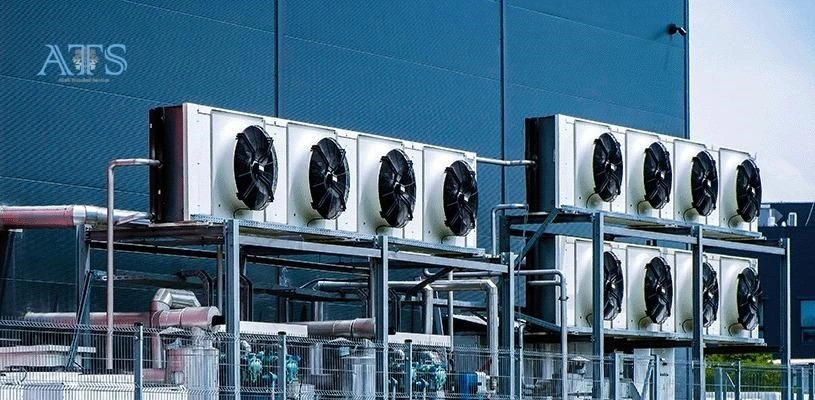
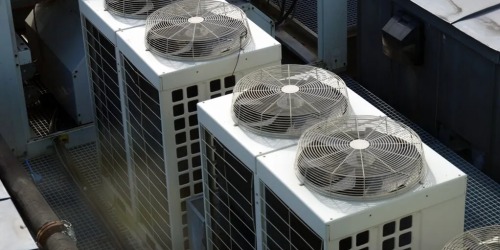
The condenser is a vital component of an industrial refrigeration system, responsible for rejecting heat absorbed from the refrigerated space and releasing it to the surrounding environment. After the refrigerant is compressed into a high-pressure, high-temperature vapor, it enters the condenser, where heat transfer takes place and the refrigerant changes from a vapor into a liquid state.
In industrial applications, condensers are designed to operate efficiently under high thermal loads and challenging ambient conditions, particularly in hot climates such as the Middle East. Effective heat rejection at this stage is essential, as condenser performance directly affects system stability, energy efficiency, and compressor workload.
-
Expansion device
The expansion device plays a critical control role in an industrial refrigeration system by regulating the flow of refrigerant between the high-pressure and low-pressure sides of the cycle. After leaving the condenser as a high-pressure liquid, the refrigerant passes through the expansion device, where its pressure and temperature are deliberately reduced before entering the evaporator.
This pressure drop is essential because it allows the refrigerant to absorb heat efficiently in the evaporator. By precisely controlling the amount of refrigerant entering the evaporator, the expansion device ensures stable system operation, accurate temperature control, and optimal heat transfer performance.
-
Evaporator
The evaporator is the component where the actual cooling effect takes place in an industrial refrigeration system. After the refrigerant passes through the expansion device and enters the evaporator at low pressure and low temperature, it absorbs heat from the surrounding space or process. As the refrigerant absorbs this heat, it evaporates from a liquid into a vapor, effectively removing unwanted heat from the environment.
In industrial applications, evaporators are designed to deliver consistent and controlled heat absorption under continuous operating conditions. They play a crucial role in maintaining precise temperature levels required for cold storage, food processing, pharmaceutical production, and other temperature-sensitive operations. The efficiency of the evaporator directly impacts overall system performance and product quality.
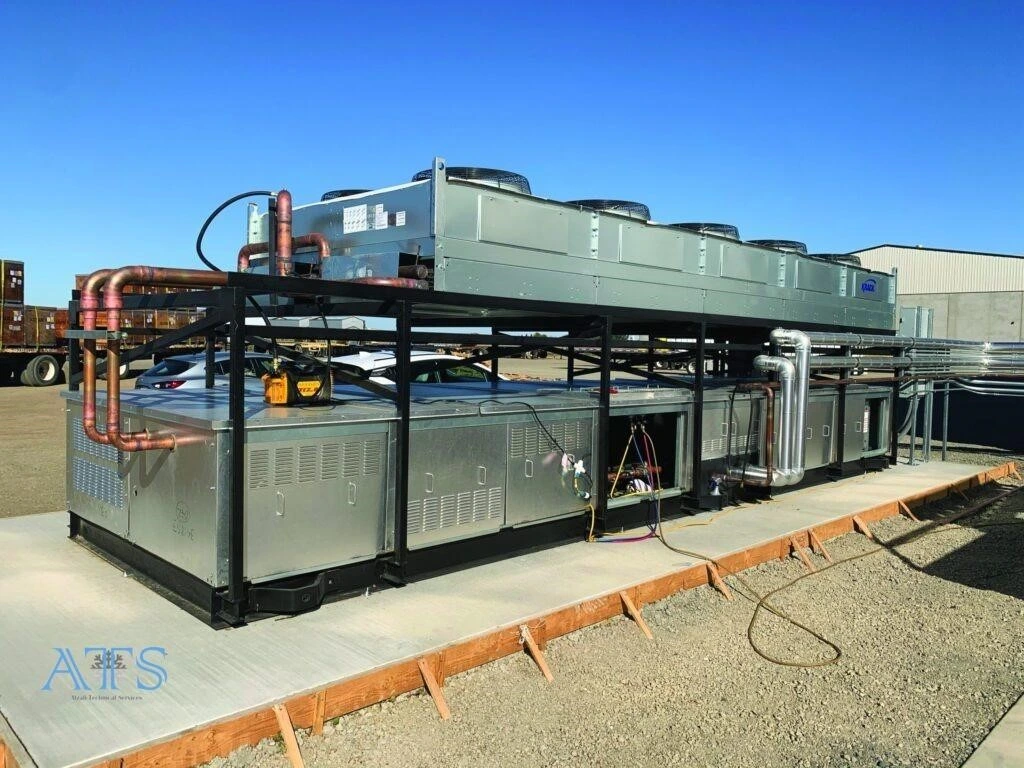
The Industrial Refrigeration Cycle
The industrial refrigeration cycle is the fundamental process that enables large-scale cooling systems to remove heat from a controlled environment and maintain stable temperatures over extended periods of operation. This cycle operates continuously and is designed to handle heavy thermal loads with high reliability, making it essential for industrial facilities such as cold storage warehouses, food processing plants, and manufacturing operations.
Ambient heat uptake in the evaporator
Ambient heat uptake in the evaporator is the first and most critical stage of the industrial refrigeration cycle. At this point, the system begins removing unwanted heat from the surrounding environment, storage area, or industrial process. This heat absorption is what actually produces the cooling effect required to maintain controlled temperatures.
As low-pressure, low-temperature refrigerant enters the evaporator, it comes into contact with warmer air or fluid from the conditioned space. Because heat naturally flows from warmer areas to cooler ones, thermal energy transfers from the ambient environment into the refrigerant. During this process, the refrigerant absorbs heat and gradually evaporates from a liquid into a vapor.
High-pressure vapor entering the condenser
When the refrigerant leaves the compressor, it enters the condenser as a high-pressure, high-temperature vapor. At this stage of the industrial refrigeration cycle, the refrigerant has absorbed heat from the evaporator and additional energy from the compression process itself. The condenser’s role is to remove this accumulated heat and transfer it to the external environment.
As the high-pressure vapor flows through the condenser, it comes into contact with a cooling medium—typically ambient air or cooling water. Heat naturally moves from the hotter refrigerant to the cooler medium, causing the refrigerant to lose thermal energy. As heat is rejected, the vapor begins to condense and gradually changes into a high-pressure liquid.
Liquid refrigerant passing through the expansion device
After leaving the condenser, the refrigerant enters the expansion device as a high-pressure liquid. At this stage of the industrial refrigeration cycle, the expansion device plays a crucial role by controlling the flow of refrigerant and creating a sharp reduction in pressure before it reaches the evaporator.
As the liquid refrigerant passes through the expansion device, its pressure drops suddenly, causing a corresponding decrease in temperature. This controlled pressure reduction prepares the refrigerant to absorb heat efficiently in the evaporator. The refrigerant typically becomes a low-pressure liquid or a liquid–vapor mixture, depending on system design and operating conditions.
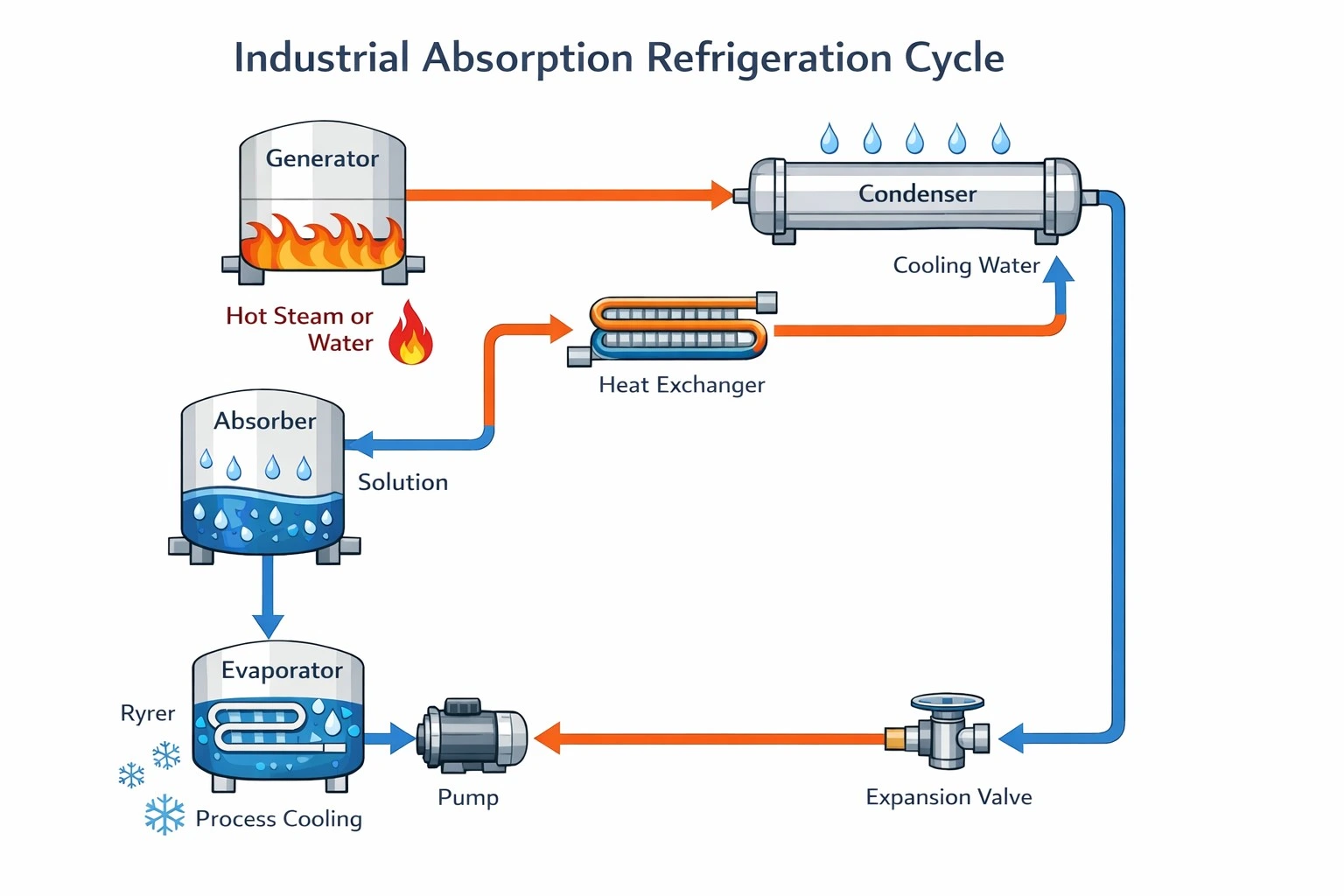
Interaction Between HVAC and Industrial Refrigeration Systems
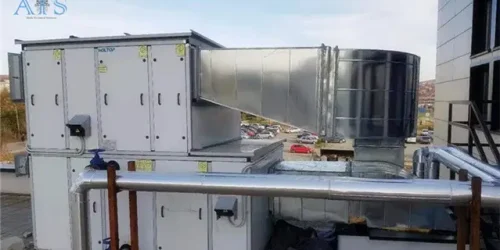
The interaction between HVAC systems and industrial refrigeration systems plays a critical role in maintaining thermal stability, energy efficiency, and operational reliability within industrial facilities. While industrial refrigeration systems are primarily responsible for process cooling and temperature-controlled environments, HVAC systems support overall indoor conditions, heat balance, and system performance at a facility-wide level.
In industrial environments, refrigeration systems continuously remove heat from cold rooms, processing areas, or storage zones. This extracted heat does not disappear; instead, it must be managed effectively. HVAC systems contribute by controlling ambient temperature, airflow, humidity, and ventilation in surrounding spaces, ensuring that rejected heat does not negatively impact system efficiency or working conditions.
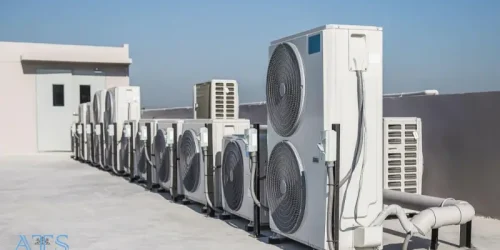
One of the key points of interaction occurs at the condenser heat rejection stage. HVAC design directly influences condenser performance, especially in air-cooled systems where ambient air temperature and airflow determine heat rejection efficiency. Poor ventilation or inadequate air circulation can increase condensing pressure, leading to higher energy consumption and reduced compressor lifespan.
HVAC systems also play a vital role in humidity control and air distribution, particularly in facilities where moisture-sensitive products or processes are involved. Proper coordination between HVAC airflow patterns and refrigeration zones prevents condensation, frost formation, and uneven temperature distribution—common issues in large-scale cold storage and food processing facilities.
The Critical Importance of HVAC Systems Monitoring and Management;
The monitoring and management of HVAC systems is a critical factor in ensuring stable operation, energy efficiency, and long-term reliability in industrial and commercial facilities. HVAC systems operate continuously under varying loads and environmental conditions, making real-time visibility and control essential for maintaining optimal performance.
Effective monitoring and management of hvac systems allows operators and facility managers to track key parameters such as temperature, humidity, airflow, pressure, and energy consumption. By continuously analyzing this data, potential issues—such as performance degradation, component malfunction, or inefficient operation—can be detected early before they lead to system failures or costly downtime.
From an engineering perspective, proper HVAC system monitoring supports predictive maintenance strategies rather than reactive repairs. This approach reduces unexpected breakdowns, extends equipment lifespan, and ensures that systems operate within designed performance limits. In industrial environments, where HVAC systems often interact with refrigeration, production processes, and safety requirements, this level of control is especially critical.
Expert Industrial Refrigeration Services by Afzali!
At Afzali, our approach to industrial refrigeration and district cooling systems in 2026 is defined by a shift from traditional system operation toward data-driven, adaptive, and resilience-focused refrigeration infrastructure. Industrial facilities today no longer evaluate refrigeration systems based solely on cooling capacity; instead, performance is measured through energy intelligence, operational continuity, safety integration, and long-term sustainability.
AI-assisted system Optimization
One of the most transformative developments we implement is AI-assisted system Optimization . By combining real-time operational data with predictive analytics, refrigeration systems can dynamically adjust compressor sequencing, condensing pressure, and evaporator performance based on actual load conditions rather than fixed design assumptions. This approach significantly reduces energy consumption while maintaining strict temperature stability, even in extreme ambient conditions such as those experienced across the UAE and similar regions.
resilience-first architecture
In parallel, Afzali designs refrigeration systems with resilience-first architecture. Instead of relying on basic redundancy, modern systems are engineered with distributed load management, modular compressor configurations, and fault-tolerant control logic. This ensures that partial system failures do not escalate into full operational shutdowns, protecting production continuity and minimizing financial risk.
integration of HVAC and industrial refrigeration systems
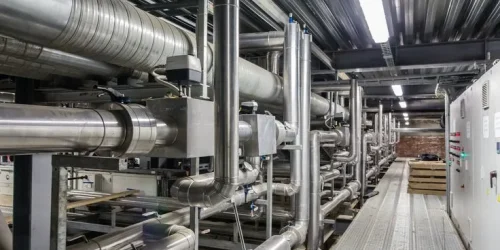
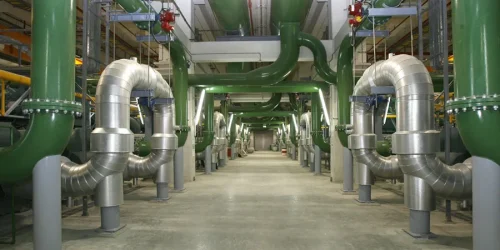
Another key focus for 2026 is the deep integration of HVAC and industrial refrigeration systems. Rather than treating HVAC as a supporting utility, Afzali engineers both systems as a unified thermal ecosystem. By coordinating airflow management, humidity control, and condenser heat rejection strategies, overall system efficiency is improved while thermal stress on critical refrigeration components is reduced.
multi-layered digital safety frameworks
From a safety standpoint, particularly in ammonia-based systems, Afzali implements multi-layered digital safety frameworks. These include continuous gas monitoring, automated emergency response protocols, and remote system visibility for technical teams. Such systems move safety management from reactive procedures to proactive risk prevention, aligning with the most advanced international safety standards.
refrigeration monitoring solutions
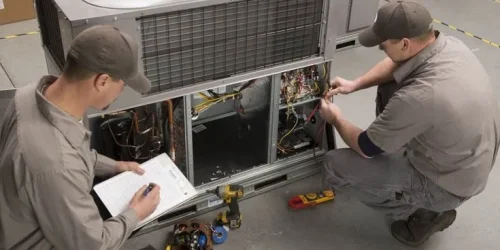
Monitoring and management also evolve beyond conventional BMS platforms. Afzali deploys next-generation refrigeration monitoring solutions that combine edge devices, cloud-based analytics, and condition-based maintenance models. This enables early detection of inefficiencies, refrigerant leakage trends, and component degradation—long before these issues impact system performance or compliance.
Ultimately, Afzali’s industrial refrigeration solutions for 2026 are built on a single principle: engineering systems that think, adapt, and protect value over time. By merging advanced control intelligence, integrated system design, and forward-looking operational strategies, we deliver refrigeration infrastructures that are not only efficient—but future-ready.
No Comments