


Mon - Sat 8:00 - 17:30, Sunday - CLOSED
Monitoring and Management of HVAC Systems
In today’s highly regulated and performance-driven industrial environment, effective monitoring and management of HVAC systems is no longer optional—it is a strategic requirement. Across the UAE’s demanding sectors, including food storage, pharmaceuticals, logistics, and large-scale commercial facilities, maintaining stable environmental conditions is essential to operational continuity, asset protection, and regulatory compliance.
Modern HVAC infrastructures consist of multiple interconnected components operating under variable loads and conditions. Without centralized visibility and intelligent control, even minor deviations in temperature, airflow, or system performance can escalate into energy inefficiencies, equipment failure, or costly compliance risks. A robust HVAC monitoring and management framework enables real-time oversight, proactive fault detection, and data-driven optimization across the entire system lifecycle.
Contact our experts directly via email and we will get back to you shortly with the best solutions and competitive prices.
HVAC System Monitoring and Management Services by Afzali
At Afzali Industrial Refrigeration, our HVAC monitoring and management services are engineered to support a wide spectrum of systems and facility scales, ranging from standalone commercial HVAC installations to complex, multi-site industrial environments. We work seamlessly with both modern and legacy HVAC infrastructures, ensuring continuity of operations without forcing disruptive system replacements.
Each project begins with a detailed technical assessment to design a monitoring architecture that is fully aligned with the operational realities of the facility. Rather than relying on generic, off-the-shelf platforms, our solutions are purpose-built—engineered to reflect system load profiles, environmental criticality, redundancy requirements, and future scalability. This approach ensures long-term reliability and adaptability as operational demands evolve.
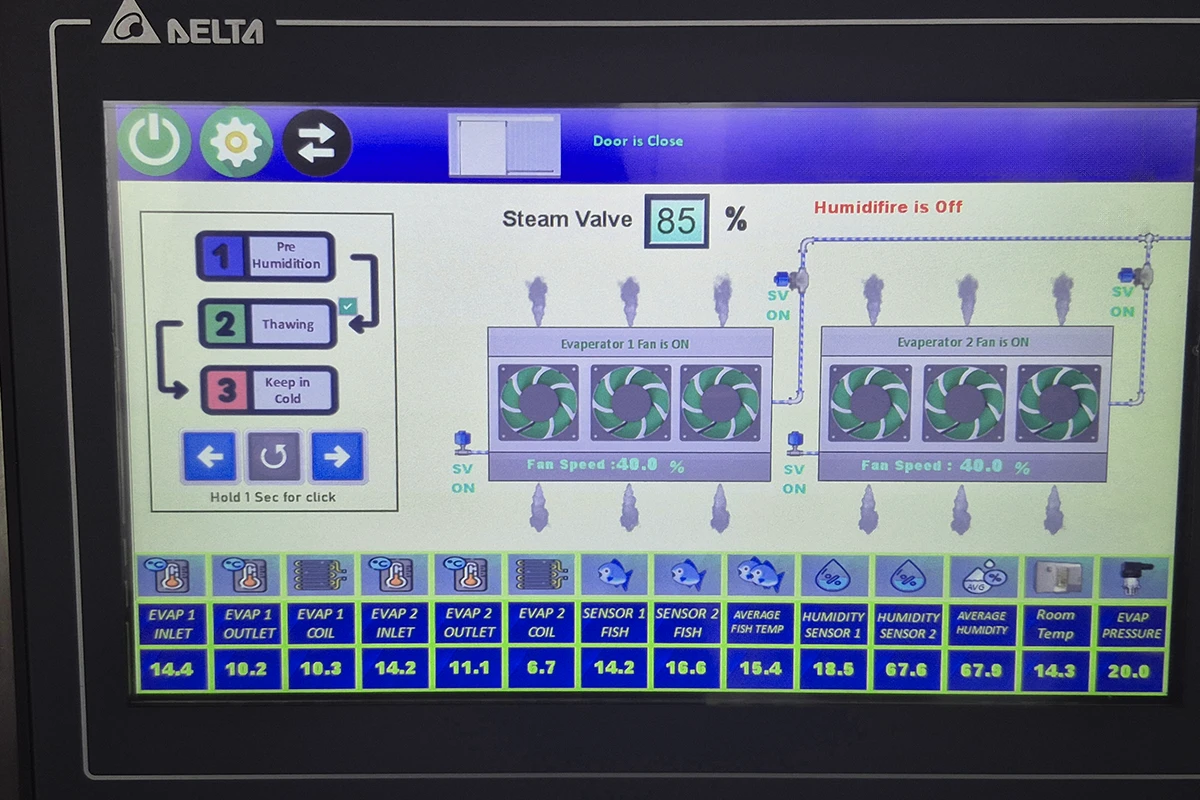
Our monitoring framework delivers real-time visibility into all critical performance parameters, including temperature, humidity, airflow, pressure differentials, energy consumption, and equipment operational status. This comprehensive data layer allows operators and facility managers to maintain precise environmental control while identifying inefficiencies before they impact performance.
Advanced analytics and intelligent alerting mechanisms enable early detection of anomalies, performance degradation, and emerging faults. By identifying deviations at an early stage, our system supports predictive maintenance strategies that significantly reduce unplanned downtime, extend equipment lifespan, and protect high-value assets.
Integration is a core strength of Afzali’s solutions. Our monitoring platforms are designed to interface seamlessly with existing BMS, SCADA, and automation systems, creating a centralized control environment rather than isolated data silos. This unified architecture enhances operational transparency and simplifies decision-making across engineering and management teams.
To ensure data integrity and system reliability, we implement industrial-grade sensors, secure communication protocols, and redundant system design where required. These measures guarantee high data accuracy, continuous availability, and dependable performance—even in mission-critical environments where failure is not an option.
Energy optimization is embedded into every Afzali monitoring solution. By analyzing real-time and historical performance data, we enable informed operational adjustments that reduce energy waste, balance system loads, and improve overall efficiency. Clients typically experience measurable reductions in energy consumption while maintaining or improving environmental stability.
To receive expert consultation and learn more about Monitoring and Management of HVAC Systems, contact our team via: +971 50 6348 577 & +971 4 288 6161
Core Technologies Used in Afzali Monitoring Systems
The effectiveness of any advanced monitoring system depends on the strength, reliability, and interoperability of its core technologies. At Afzali, monitoring systems are built on a carefully engineered technology stack that prioritizes accuracy, resilience, and long-term operational value. Each solution is designed to operate reliably in demanding industrial environments while remaining flexible enough to scale with future expansion.
Afzali monitoring systems utilize industrial-grade sensors capable of delivering high-precision measurements for temperature, humidity, pressure, airflow, and energy consumption. These sensors are selected based on environmental conditions, operational criticality, and compliance requirements, ensuring stable performance even under extreme operating loads.
Data acquisition and communication are handled through secure and robust industrial protocols, enabling real-time data transmission with minimal latency and maximum reliability. This architecture ensures uninterrupted visibility across HVAC and refrigeration assets while maintaining data integrity and cybersecurity standards.
At the control level, Afzali integrates advanced automation and control platforms that allow centralized monitoring, intelligent alarm management, and system-level optimization. These platforms are configured to support predictive maintenance, performance trend analysis, and operational decision-making based on real-time and historical data.
Trusted HVAC Consultants in Dubai and Abu Dhabi
Why Afzali?

Project Strategy
End-to-end HVAC & R planning

Compliance
HACCP & regulations fully met

Vendor-Neutral
Unbiased recommendations

ROI-Focused
Maximize your investment

Reliability
System reliability and operational stability
Types of HVAC System Monitoring and Management
Monitoring and Management of HVAC Systems, can take multiple forms depending on the scale of the facility, operational criticality, and regulatory requirements. Selecting the appropriate monitoring approach is essential to achieving system reliability, energy efficiency, and long-term operational control. At Afzali, monitoring solutions are engineered to align with real-world industrial demands rather than generic classifications.
PLC (Programmable Logic Controller)
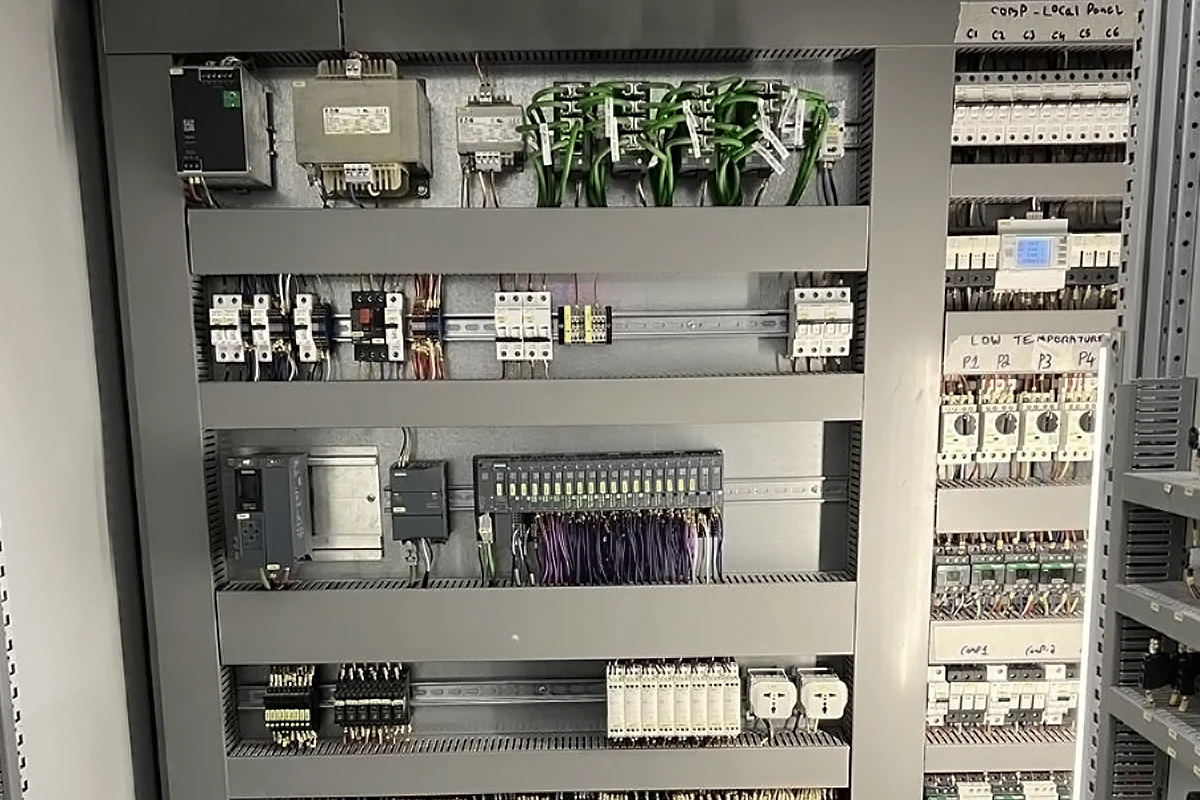
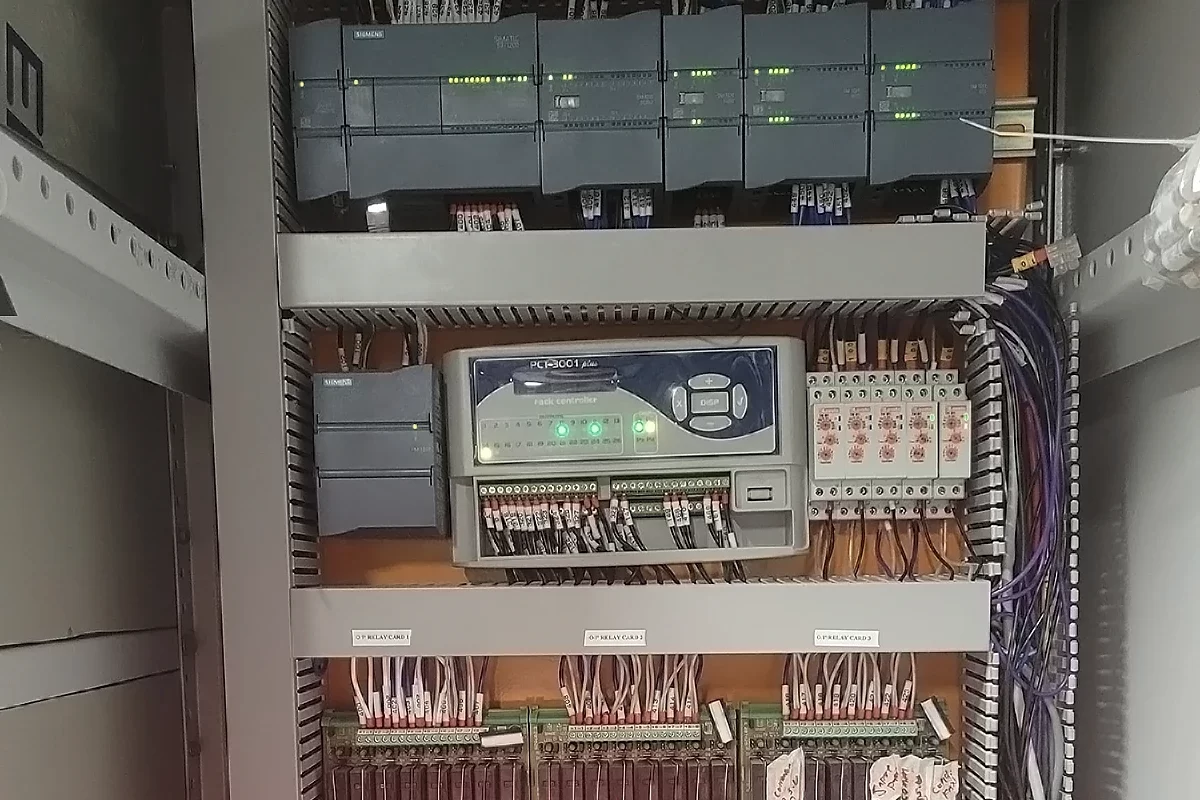
At the core of Afzali’s Monitoring and Management of HVAC Systems, architectures lies the Programmable Logic Controller (PLC)—a critical component responsible for real-time control, system logic execution, and reliable industrial automation. PLCs serve as the operational backbone of HVAC and refrigeration monitoring systems, enabling precise control over complex processes in demanding environments.
Afzali deploys industrial-grade PLC platforms designed for continuous operation, high reliability, and resilience under harsh conditions. These controllers collect real-time data from field sensors, execute predefined control logic, and issue commands to HVAC and refrigeration equipment with millisecond-level response accuracy. This capability ensures stable environmental conditions, rapid fault response, and uninterrupted system performance.
One of the key advantages of PLC-based control is deterministic operation. Unlike general-purpose computing systems, PLCs are engineered to execute control tasks predictably and consistently, making them ideal for mission-critical applications where timing accuracy and system stability are essential.
In Afzali monitoring systems, PLCs act as the central integration layer between physical equipment and higher-level monitoring platforms such as BMS or SCADA. This structured architecture allows seamless data flow, centralized supervision, and scalable system expansion without compromising control integrity.
SCADA (Supervisory Control and Data Acquisition)
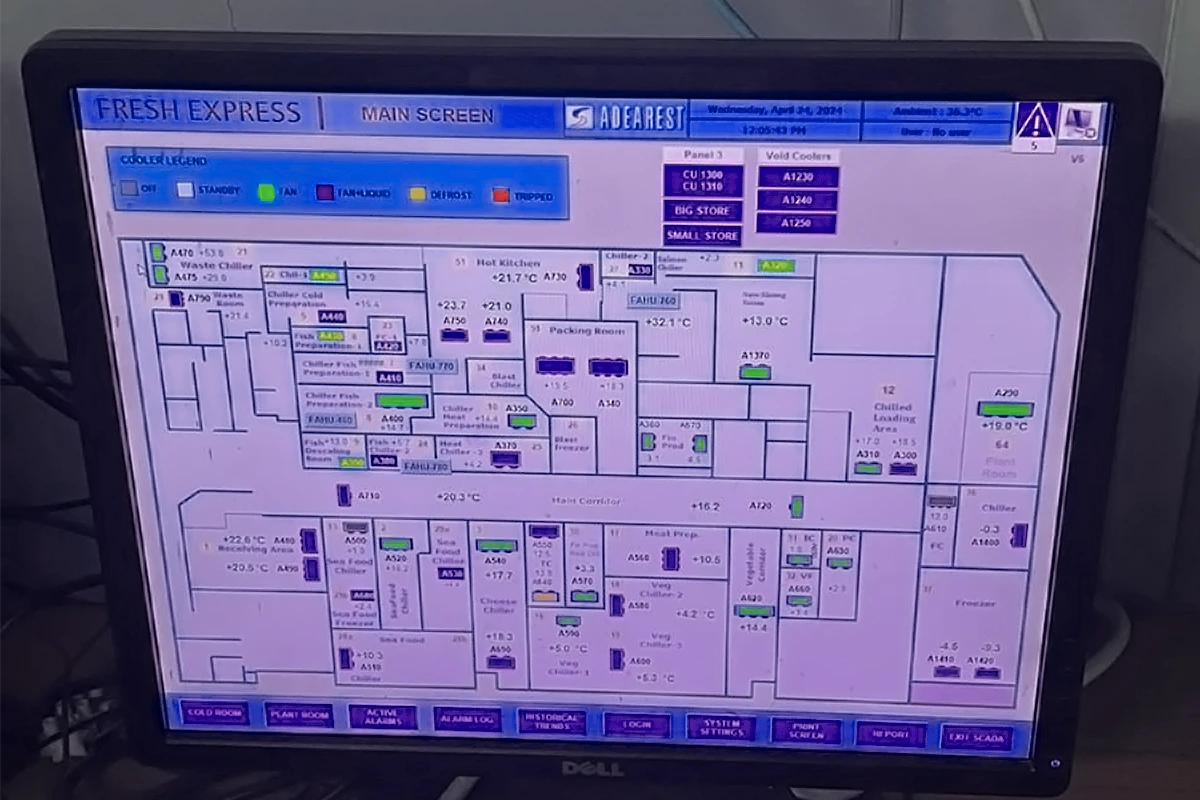
Within Afzali’s Monitoring and Management of HVAC Systems, SCADA systems serve as the central supervisory layer that enables real-time visibility, centralized control, and informed decision-making across HVAC and industrial refrigeration assets. SCADA transforms raw operational data into actionable intelligence, allowing operators to maintain control over complex systems from a single, unified interface.
Afzali-designed SCADA solutions continuously collect live data from PLCs, sensors, and field devices distributed throughout the facility. This data is processed, visualized, and presented through intuitive dashboards that reflect real-time system status, performance trends, and operational alerts. Such visibility is essential for maintaining environmental stability and operational continuity in mission-critical industrial environments.
Beyond monitoring, SCADA plays a key role in system supervision and control. Authorized operators can remotely adjust setpoints, manage operating sequences, acknowledge alarms, and respond to abnormal conditions without physical intervention. This capability significantly improves response time, reduces operational risk, and enhances system reliability.
Data logging and historical analysis are core strengths of Afzali’s SCADA implementations. By maintaining accurate and time-stamped records of system performance, SCADA supports performance optimization, root-cause analysis, and compliance documentation. These records are particularly valuable for regulated industries that require traceable operational data for audits and reporting.
Furthermore, sophisticated alarm tracking and management ensures that critical events are logged, acknowledged, and addressed promptly, complete with full historical audit trails essential for compliance reporting. Our engineers have vast experience setting up robust, high-performance SCADA dashboards, customised to the unique architectural layout and reporting requirements of large-scale industrial facilities.
FG Software (Full Gauge Software)
FG Software, developed by Full Gauge Controls, is a powerful supervisory and configuration platform designed for advanced monitoring, control, and data management in HVAC and industrial refrigeration systems. Within Afzali monitoring architectures, FG Software functions as a critical interface between field controllers and centralized monitoring environments, enabling precise system supervision and operational transparency.
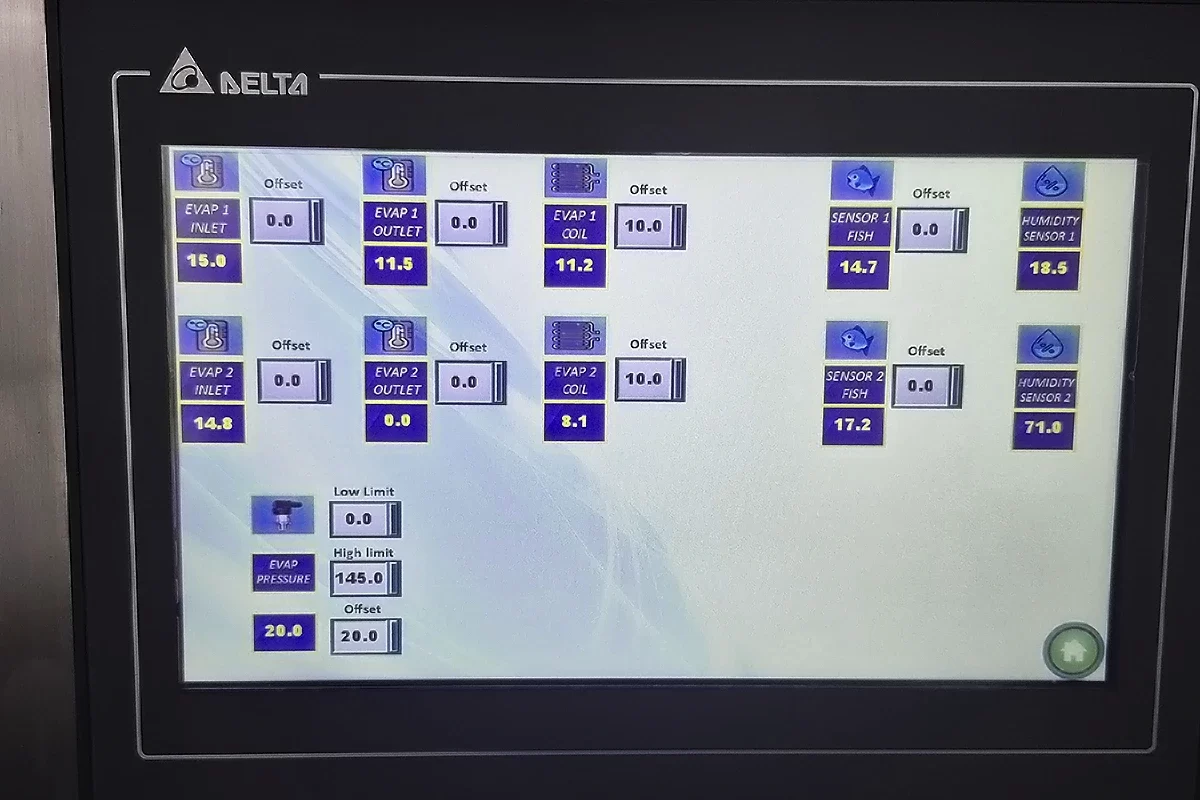
FG Software allows real-time communication with microprocessor-based controllers, providing continuous visibility into temperature, humidity, pressure, alarms, and system status. Through an intuitive graphical interface, operators can monitor live system behavior, adjust parameters, and respond to alarms efficiently—without direct physical interaction with equipment.
A key strength of FG Software lies in its data logging and historical analysis capabilities. The platform records operational data and events with accurate timestamps, supporting performance evaluation, troubleshooting, and compliance documentation. This historical data is essential for identifying recurring issues, optimizing system settings, and meeting regulatory and audit requirements.
FG Software also supports remote access and centralized management, making it ideal for facilities with multiple HVAC or refrigeration zones. Engineers and facility managers can oversee system performance, review alarms, and implement adjustments from a single location, improving response time and reducing operational risk.
Within Afzali solutions, FG Software is carefully configured and integrated to align with project-specific requirements. Rather than using default settings, Afzali engineers customize communication parameters, alarm logic, and reporting structures to ensure the software delivers actionable intelligence and long-term system reliability.
Microprocessor-Based Controllers
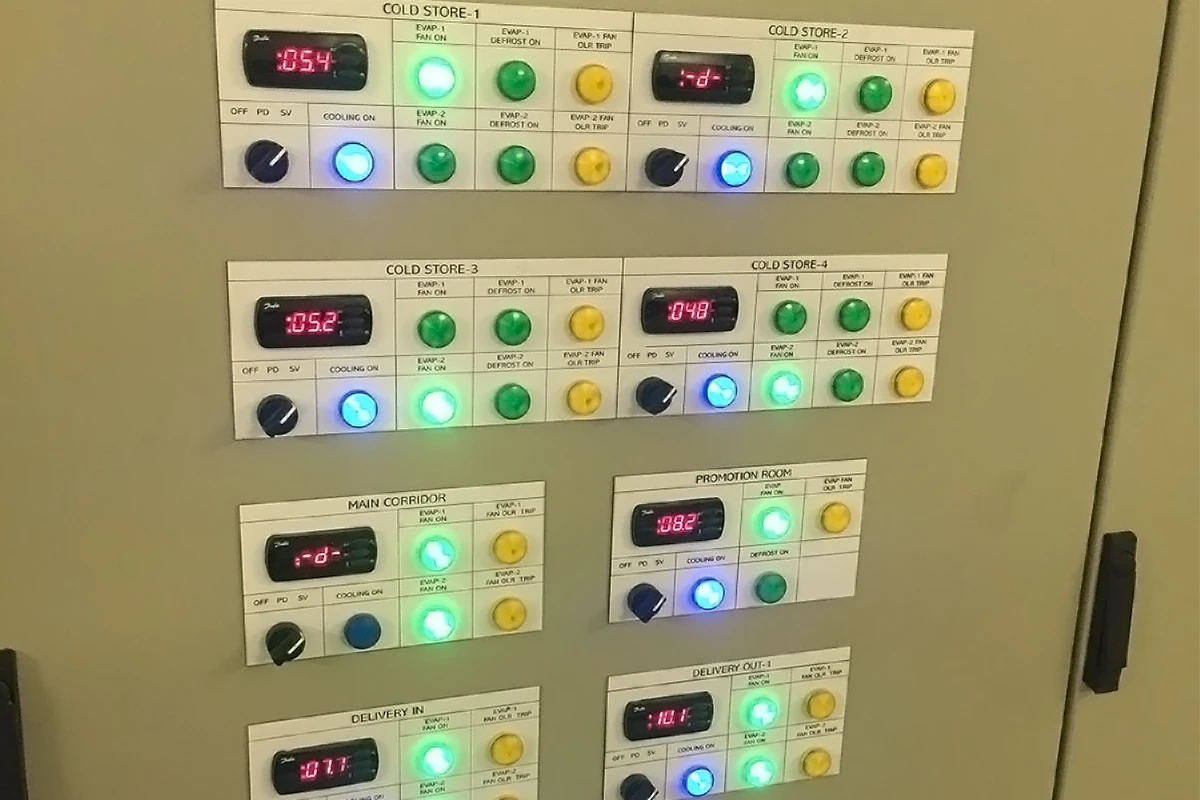
Microprocessor-based controllers form the intelligent execution layer of Afzali’s HVAC and industrial refrigeration monitoring systems. These controllers are responsible for real-time data processing, precise control logic execution, and autonomous system response at the equipment level—ensuring stable operation even in demanding industrial environments.
Within Afzali solutions, microprocessor-based controllers continuously receive input from sensors measuring temperature, humidity, pressure, and other critical parameters. Using embedded control algorithms, they instantly evaluate operating conditions and regulate system behavior accordingly. This localized intelligence allows HVAC and refrigeration equipment to react rapidly to changing conditions without reliance on higher-level systems.
One of the key advantages of microprocessor-based controllers is their high accuracy and responsiveness. Unlike purely mechanical or relay-based control systems, these controllers execute control decisions with consistent precision, enabling tighter environmental control and improved energy efficiency.
Microprocessor-based controllers also play a crucial role in system protection and fault prevention. By monitoring operating thresholds in real time, they can trigger alarms, initiate safety actions, or shut down equipment when abnormal conditions are detected. This proactive protection significantly reduces the risk of equipment damage, product loss, and unplanned downtime.
Performance Monitoring & Data Analytics
Performance monitoring and data analytics form the intelligence layer of Afzali’s HVAC and industrial refrigeration monitoring solutions. Beyond real-time visibility, this layer enables continuous performance evaluation, trend analysis, and informed decision-making based on accurate operational data.
Afzali systems continuously collect high-resolution data from HVAC and refrigeration assets, capturing both real-time conditions and long-term performance trends. This data is processed and analyzed to identify inefficiencies, deviations from optimal operating ranges, and early indicators of system degradation—often before issues escalate into failures.
Through advanced analytics, Afzali enables data-driven performance optimization. By correlating environmental parameters with energy consumption and equipment behavior, operators gain clear insight into how systems perform under varying loads and conditions. This approach supports precise tuning of setpoints, improved load distribution, and measurable reductions in energy waste.
For instance, an early warning based on analytical trend data can flag a degrading component, enabling a scheduled replacement during planned downtime, thereby dramatically reducing the risk of catastrophic system failure and associated operational disruption. This proactive approach significantly cuts downtime and extends the operational lifespan of expensive capital equipment. Furthermore, detailed data logging facilitates continuous energy cost optimisation. By analysing the correlation between ambient conditions, equipment loading, and energy consumption, Afzali engineers can fine-tune control strategies—such as implementing intelligent set-point resets or demand-side management—to minimise energy usage without compromising temperature integrity. This data-driven strategy not only provides a strong return on investment but also supports corporate sustainability goals, reinforcing the technical and financial justifications for engaging with HVAC Consultancy and Contracting Services for comprehensive system overhaul.
System Integration with Cold Rooms and HVAC Equipment
Effective Monitoring and Management of HVAC Systems can only be achieved when systems are fully and intelligently integrated with cold rooms and HVAC equipment at both the field and supervisory levels. At Afzali, system integration is approached as a core engineering discipline—ensuring seamless communication, coordinated control, and unified performance management across all thermal assets.
Afzali designs integration architectures that connect cold room components—including compressors, evaporators, condensers, valves, and sensors—with HVAC equipment such as air handling units, chillers, and ventilation systems. Through this unified framework, all systems operate within a shared control logic rather than as isolated subsystems, enabling consistent environmental conditions and optimized system interaction.
Integration is implemented using industrial-grade controllers, PLCs, and communication protocols that ensure reliable, real-time data exchange between equipment and supervisory platforms such as SCADA and FG Software. This allows operators to monitor system status, adjust operating parameters, and respond to events from a centralized interface—without compromising local equipment autonomy.
A key benefit of integrated cold room and HVAC monitoring is coordinated load management. By synchronizing refrigeration demand with HVAC operation, Afzali systems reduce energy peaks, prevent equipment overloading, and maintain thermal stability across interconnected spaces. This coordination is particularly critical in facilities where cold rooms and conditioned areas coexist within the same operational envelope.
Afzali’s integration approach also supports scalability and future expansion. Additional cold rooms, HVAC units, or monitoring points can be incorporated into the existing architecture without disrupting ongoing operations. This flexibility protects long-term investment value and supports evolving operational requirements.
By delivering fully integrated monitoring and control environments, Afzali ensures that cold rooms and HVAC equipment function as a single, intelligent ecosystem—maximizing reliability, efficiency, and operational transparency across industrial facilities.
Upgrading Monitoring and Management of HVAC Systems
As HVAC infrastructures age and operational demands increase, upgrading monitoring and management capabilities becomes essential to maintain performance, efficiency, and compliance. In many industrial and commercial facilities, existing HVAC systems continue to function mechanically but lack the intelligence, visibility, and control required for modern operational standards.
Afzali specializes in upgrading HVAC monitoring and management systems without unnecessary replacement of core mechanical assets. By retrofitting advanced sensors, controllers, and supervisory platforms, we transform legacy HVAC installations into intelligent, data-driven systems capable of meeting today’s performance and regulatory expectations.
Upgraded monitoring solutions provide real-time system visibility, enhanced alarm management, and centralized control—enabling operators to detect inefficiencies, respond to anomalies faster, and maintain stable environmental conditions. This modernization significantly reduces operational risk while improving system responsiveness and reliability.
A key advantage of upgrading rather than replacing HVAC systems is cost efficiency and minimal disruption. Afzali engineers carefully assess existing infrastructure to design upgrade paths that preserve operational continuity, avoid extended downtime, and maximize return on existing capital investments.
Upgrading also unlocks advanced analytics and energy optimization capabilities. By integrating historical data analysis, predictive maintenance logic, and intelligent control strategies, upgraded systems achieve measurable reductions in energy consumption and maintenance costs—without compromising comfort or temperature integrity.
Industries Served by Monitoring and Management of HVAC Systems
The monitoring and management of HVAC systems plays a critical role across a wide range of industries where environmental stability, energy efficiency, and operational reliability are essential. Afzali delivers tailored HVAC monitoring solutions designed to meet the specific technical, regulatory, and operational demands of each sector;
food storage
In the food storage and cold chain industry, precise HVAC and refrigeration monitoring is vital to preserving product quality, preventing spoilage, and maintaining compliance with food safety standards. Continuous temperature and humidity control ensures stable storage conditions across cold rooms, warehouses, and distribution centers.
pharmaceutical
The pharmaceutical and healthcare sector relies heavily on tightly controlled environments. HVAC monitoring systems support strict compliance requirements by maintaining validated temperature ranges, providing full data traceability, and enabling audit-ready reporting for laboratories, vaccine storage, and medical facilities.
industrial manufacturing
Within industrial manufacturing and processing facilities, HVAC monitoring ensures consistent environmental conditions for sensitive processes, equipment protection, and workforce safety. Centralized monitoring and analytics help optimize system performance, reduce downtime, and manage energy consumption in large-scale industrial plants.
logistics and warehousing sector
The logistics and warehousing sector benefits from HVAC monitoring through improved operational continuity and asset protection. Facilities with mixed-use environments—such as cold storage zones and conditioned workspaces—require coordinated HVAC control to maintain efficiency and prevent thermal imbalance.
commercial
In commercial and large-scale retail environments, HVAC monitoring enhances occupant comfort while controlling energy costs. Centralized management allows facility operators to balance performance, sustainability targets, and operational budgets across shopping centers, supermarkets, and high-traffic commercial spaces.
Work with Afzali for Reliability and Precision!
In mission-critical HVAC and industrial refrigeration environments, reliability and precision are not optional—they are fundamental to operational success. Afzali partners with industrial clients who demand certainty in system performance, consistency in environmental control, and confidence in long-term operational outcomes.
Afzali’s approach is rooted in engineering discipline, not generic system deployment. Every monitoring and management solution is designed with a clear understanding of operational risk, regulatory responsibility, and lifecycle performance. From system architecture and integration to analytics, optimization, and ongoing support, Afzali delivers solutions that perform predictably under real-world industrial conditions.
What distinguishes Afzali is the ability to act as both technical consultant and implementation partner. This dual role ensures that system design decisions translate directly into measurable performance gains, reduced downtime, and sustained energy efficiency. Clients benefit from solutions that are not only technically sound but also economically justified and future-ready.
By working with Afzali, organizations gain more than monitoring tools—they gain a trusted engineering partner focused on delivering stable environments, transparent system insight, and long-term operational resilience. Precision is engineered into every layer of the solution, and reliability is proven through performance, not promises.
Contact our experts directly via email and we will get back to you shortly with the best solutions and competitive prices.
Contact Afzali for a System Consultation
Contact Afzali’s expert hvac consultants today and receive strategic guidance tailored to your business.
Frequently Asked Questions
How does Afzali ensure our system complies with stringent UAE and international standards, such as Dubai Municipality's Al Sa'fat?
Compliance is engineered into the core of every Afzali monitoring system. We adhere rigorously to local requirements, including the Dubai Municipality's Al Sa'fat Green Building System and the UAE Fire & Safety Code, as well as international benchmarks like ASHRAE (90.1 for Energy, 62.1 for IAQ) and relevant ISO standards (e.g., ISO 50001 for Energy Management).
We have older refrigeration and HVAC equipment from various manufacturers. Can your modern monitoring systems be integrated through retrofitting?
Absolutely. Afzali specialises in the retrofitting and modernisation of legacy control infrastructure. Our methodology is designed to create a seamless digital layer over existing, disparate physical assets. We use advanced communication gateways and protocol converters to translate data from older proprietary systems into modern, open standards like BACnet/IP, Modbus TCP/IP, and OPC UA. This approach allows us to:
- Preserve Capital Investment: We leverage your existing functioning equipment (chillers, compressors, older PLCs) while providing them with a modern, intelligent interface.
- Achieve Centralised Visibility: All operational data, regardless of equipment age or manufacturer, is unified on the central SCADA platform for single-point monitoring and control.
- Unlock Predictive Maintenance: Even legacy equipment can benefit from predictive analytics once their operational data is streamed in real-time. This is a cost-effective path to achieving world-class operational efficiency.
What is the typical Return on Investment (ROI) for implementing an Afzali monitoring and predictive maintenance system?
The ROI is typically substantial and achieved quickly, often within 12 to 36 months, primarily through cost avoidance and efficiency gains. Industry data and our case studies demonstrate that predictive maintenance yields a potential return of up to 10 times the initial investment. Key financial benefits include:
- Reduced Unplanned Downtime: Predictive alerts catch failures early, cutting unplanned downtime by 30-50%. For industrial operations, this alone can save millions in lost product and production revenue.
- Lower Maintenance Costs: By shifting from reactive emergency repairs (which cost 3-10 times more) to scheduled, condition-based maintenance, clients can reduce overall maintenance costs by 25-40%.
- Energy Optimisation: Continuous monitoring allows for dynamic load shedding and optimal sequencing, resulting in energy savings that can be as high as 10-20% on utility bills.
- Extended Asset Lifespan: Equipment operates within peak parameters, extending its operational life by several years and deferring large capital expenditure on replacements.
What security measures are in place to protect the monitoring data and control network from cyber threats?
Cybersecurity is a critical design element, not an afterthought. Afzali employs a defence-in-depth strategy tailored to the industrial operational technology (OT) environment.
- Network Segmentation: We rigorously separate the SCADA/PLC control network (OT) from the corporate IT network, using firewalls and secure gateways to limit access and potential threat vectors.
- Secure Remote Access: Remote access for monitoring and diagnostics is established exclusively through highly encrypted VPN tunnels and multi-factor authentication, ensuring only authorised engineering personnel can interact with the system.
- Role-Based Access Control (RBAC): Access to different levels of control (e.g., viewing data vs. changing set points) is strictly managed via user roles, ensuring operational integrity.
- Data Integrity: All logged data, especially critical temperature records for compliance, is timestamped, authenticated, and stored in secure databases to prevent tampering and ensure its legal viability for audits.